
Divine Center
Damodara Tulasi KalyanamMarital Harmony & Prosperity Ritual

Damodara Tulasi Kalyanam

Book Experienced Vedic Pandits for the Sacred Tulasi Wedding Ceremony

Duration
1 hr 30 min
Pandits
Matching soon
Service
Online & doorstep
Online AvailableDoorstep Service

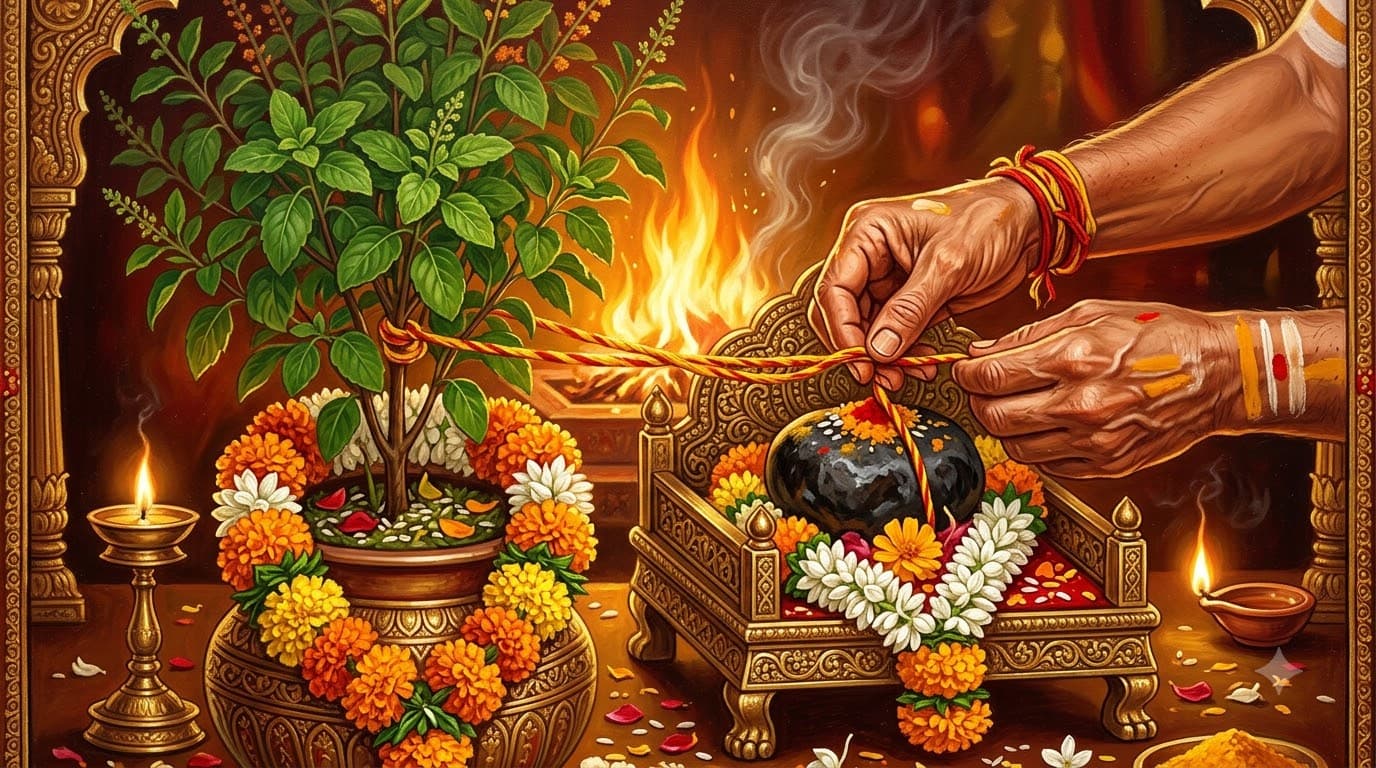
Damodara Tulasi Kalyanam, also known as Ksheerabdi Dwadasi or Tulasi Vivah, is the ceremonial marriage of Tulasi Devi to Lord Vishnu, performed at your home's tulasi plant with the full warmth of a real wedding. Rooted in the legend of Vrinda's devotion, this ceremony is traditionally kept for marital harmony and family prosperity. Our experienced pandits guide the complete ritual — from mandap setup to the wedding rites themselves — at your home.

Puja Samagri

Your pandit confirms the final list based on your tradition and location.

Puja Items

  • Kalash (sacred vessel)
  • Kumkum
  • Turmeric (haldi)
  • Akshata (turmeric-coated rice)
  • Camphor
  • Diya (oil lamp)
  • Incense sticks (agarbatti)
  • Bell
  • Rangoli powder

Vishnu/Tulasi Specific Items

  • Damodara/Krishna idol or Shaligram
  • Tulasi plant (in its usual pot or kota)
  • Sugarcane or bamboo stalks (for the mandap)
  • Betel leaves

Offerings

  • Seasonal fruits
  • Flowers and garlands
  • Panchamrit
  • Sweets (prasad)
  • Coconut
  • Betel nuts

Clothing & Ritual Items

  • Small red or yellow bridal cloth (for the tulasi “bride”)
  • Bangles
  • Bindi/sindoor
  • Mangalsutra-style thread
  • New cloth (vastram) for the Damodara idol
  • Coin

Miscellaneous

  • Puja plates and bowls
  • Spoon
  • Matchbox
  • Camphor holder
  • Small decorative torans/garlands for the mandap

What is Damodara Tulasi Kalyanam?

Damodara Tulasi Kalyanam, also known as Ksheerabdi Dwadasi or Tulasi Vivah, is the ceremonial wedding of Tulasi Devi to Lord Vishnu in his Damodara form. Performed at the tulasi plant with the warmth and ritual detail of a real wedding — a small mandap, turmeric, and wedding songs — it commemorates the sacred union of devotion and grace.

The ceremony is observed within Karthika Masam, most commonly on Karthika Shukla Dwadashi, though the exact tithi varies by regional and family tradition.

Spiritual Significance

The ritual traces back to the story of Vrinda, a devoted wife whose chastity made her husband Jalandhara invincible. Tradition holds that Lord Vishnu took Jalandhara's form to break Vrinda's protective devotion so the demon could be defeated. On learning the truth, a heartbroken Vrinda is said to have cursed Vishnu into stone — the Shaligram — before taking the form of the Tulasi plant herself.

To honour his promise to marry her in this new form, Vishnu is said to wed Tulasi (as Shaligram/Damodara) each year — the origin of the Tulasi Kalyanam ceremony performed in households to this day.

Many traditions also connect this period to Vishnu's awakening from his four months of cosmic sleep (Yoga Nidra) during Chaturmas, and to the Samudra Manthan, the churning of the ocean of milk. Devotees observe this vratam seeking marital harmony, prosperity, and the blessings of renewed devotion — held by tradition and faith, not as medical or scientific claims.

Ritual Process

  1. ● Tulasi Kota Purification and Decoration — cleaning the platform, applying rangoli, and decorating the plant with flowers and turmeric
  2. ● Mandap Setup — a small ceremonial canopy, traditionally of sugarcane or bamboo, erected over the tulasi plant
  3. ● Sankalp — a formal declaration of intent, naming the devotee, family, and purpose of the ceremony
  4. ● Placing the Groom — a Damodara/Krishna idol or Shaligram positioned beside the tulasi plant
  5. ● The Wedding Ceremony — kanyadan-style rites uniting the tulasi plant (bride) and Damodara (groom)
  6. ● Chanting — recitation of Vishnu Sahasranamam, Tulasi stotras, and traditional wedding songs
  7. ● Deeparadhana — lamp-lighting at the tulasi kota, considered especially meritorious on this day
  8. ● Aarti and Prasad Distribution — closing the ceremony with aarti and sharing prasad with family

When is Damodara Tulasi Kalyanam Performed?

Damodara Tulasi Kalyanam 2026 is observed on Sunday, November 22, 2026 in Telangana and Andhra Pradesh, falling on Karthika Shukla Dwadashi — two days before Karthika Pournami. Regional traditions elsewhere in India observe the same ceremony anywhere between Prabodhini Ekadashi and Karthika Purnima.

Common reasons families book this puja:

  1. ● Continuing an annual family tradition of Tulasi Kalyanam within Karthika Masam
  2. ● Seeking marital harmony and household prosperity
  3. ● Marking the household's tulasi plant with a formal, guided ceremony rather than an informal observance
  4. ● Wanting the ritual performed correctly with proper mantras and sankalp

As with all tithi-based dates, exact timing shifts slightly by location — we recommend confirming the precise muhurat for your area before the day.

What is Included in Our Damodara Tulasi Kalyanam Service?

  1. ● An experienced pandit to guide or perform the complete wedding ceremony at your home
  2. ● Muhurat consultation to confirm the exact Dwadashi tithi timing for your location
  3. ● Setup guidance for the mandap and tulasi kota decoration
  4. ● Guided chanting of Vishnu Sahasranamam and Tulasi stotras
  5. ● Personalized sankalp naming your family and the specific purpose of the ceremony
  6. ● Guidance on arranging the wedding samagri, from the bridal cloth to the offerings

Why Choose Our Damodara Tulasi Kalyanam Service?

  1. ● Experienced, Telugu-speaking priests trained in the traditional wedding ritual sequence
  2. ● Unrushed, complete recitation of all mantras and steps — nothing shortened
  3. ● Doorstep service across Hyderabad, with pan-India availability on request
  4. ● Transparent, upfront pricing with no hidden charges
  5. ● Guidance available in Telugu, Hindi, and English

With Divine Center, your family's Tulasi Kalyanam is performed with the same care and authenticity as a wedding passed down through generations — without needing to source every ritual detail yourself.

Booking assurance

Professional support from booking to ritual completion

  • Verified pandit identity and profile checks
  • On-time ceremony coordination and reminder support
  • Guidance on ritual preparation and samagri essentials
  • Support team available for booking or service questions

What devotees say

Families who booked Damodara Tulasi Kalyanam through Divine Center

“Our pandit arrived on time and performed the ceremony with complete Vedic authenticity. Booking was seamless.”

Priya Sharma · HyderabadGriha Pravesh

“Transparent pricing and a verified Acharya made us confident. The online coordination was excellent.”

Ravi Kumar · BengaluruSatyanarayan Puja

“Divine Center helped us find the right pandit for our family tradition. Highly recommend for life-cycle rituals.”

Anitha Reddy · ChennaiNamakaran

Damodara Tulasi Kalyanam