
Divine Center
Pitru PakshaAncestral Rituals & Shraddha

Pitru Paksha

Book Experienced Vedic Pandits for Shraddha & Tarpanam This Pitru Paksha

Duration
1 hr 30 min
Pandits
Matching soon
Service
Online & doorstep
Online AvailableDoorstep Service

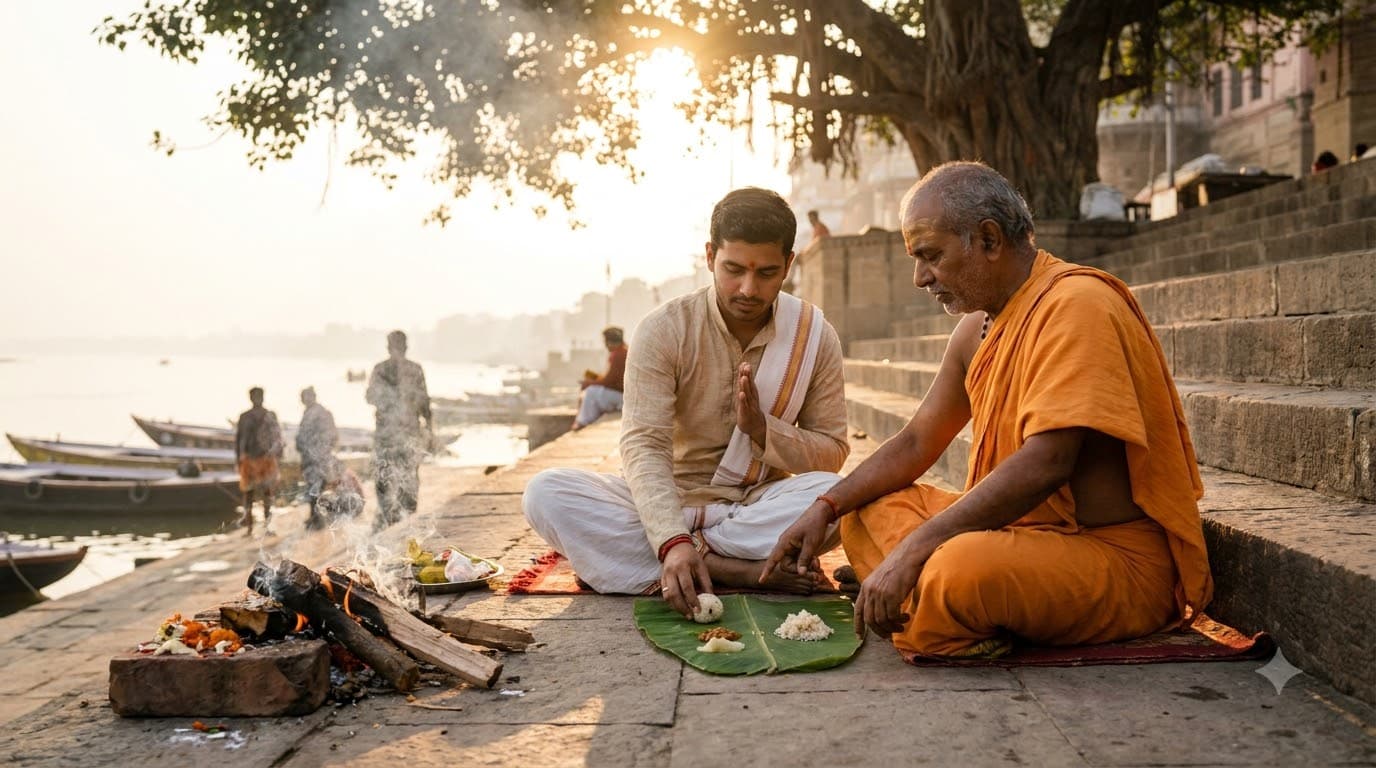
Pitru Paksha is a sixteen-day period each year set aside for remembering and honoring one's ancestors (Pitrus), through Tarpanam and Shraddha performed on the tithi that matches an ancestor's date of passing. Our pandit guides the full ritual — Sankalp, Tarpanam, Pinda Pradanam, and the offerings that follow — either on the specific tithi that applies to your family or on Mahalaya Amavasya, the day set aside for all ancestors together.

Puja Samagri

Your pandit confirms the final list based on your tradition and location.

Puja Items

  • Kalash (brass or copper pot)
  • Kumkum
  • Turmeric powder
  • Sandalwood paste
  • Incense sticks
  • Camphor
  • Oil lamp (Diya) and cotton wicks
  • Betel leaves and betel nuts

Tarpanam & Shraddha-Specific Items

  • Darbha grass (kusha grass)
  • Black sesame seeds (til)
  • Raw rice
  • Barley flour
  • Ghee
  • A copper or silver vessel for water offerings
  • Black cloth or sesame-oil lamp, where used per family tradition

Offerings

  • Kheer (rice pudding)
  • Dal
  • Seasonal vegetables
  • Seasonal fruits
  • Coconut
  • A small portion set aside for crows, cows, and dogs

Clothing & Ritual Items

  • White or cream cloth for the altar
  • New white cloth or dhoti, if gifted to a Brahmin or priest
  • Sacred thread (Kalava/Moli), per family tradition

Miscellaneous

  • Plate (Thali)
  • Bowls
  • Bell
  • Spoon (Achamani)
  • Matchbox
  • Camphor holder

What is Pitru Paksha?
What is Pitru Paksha?

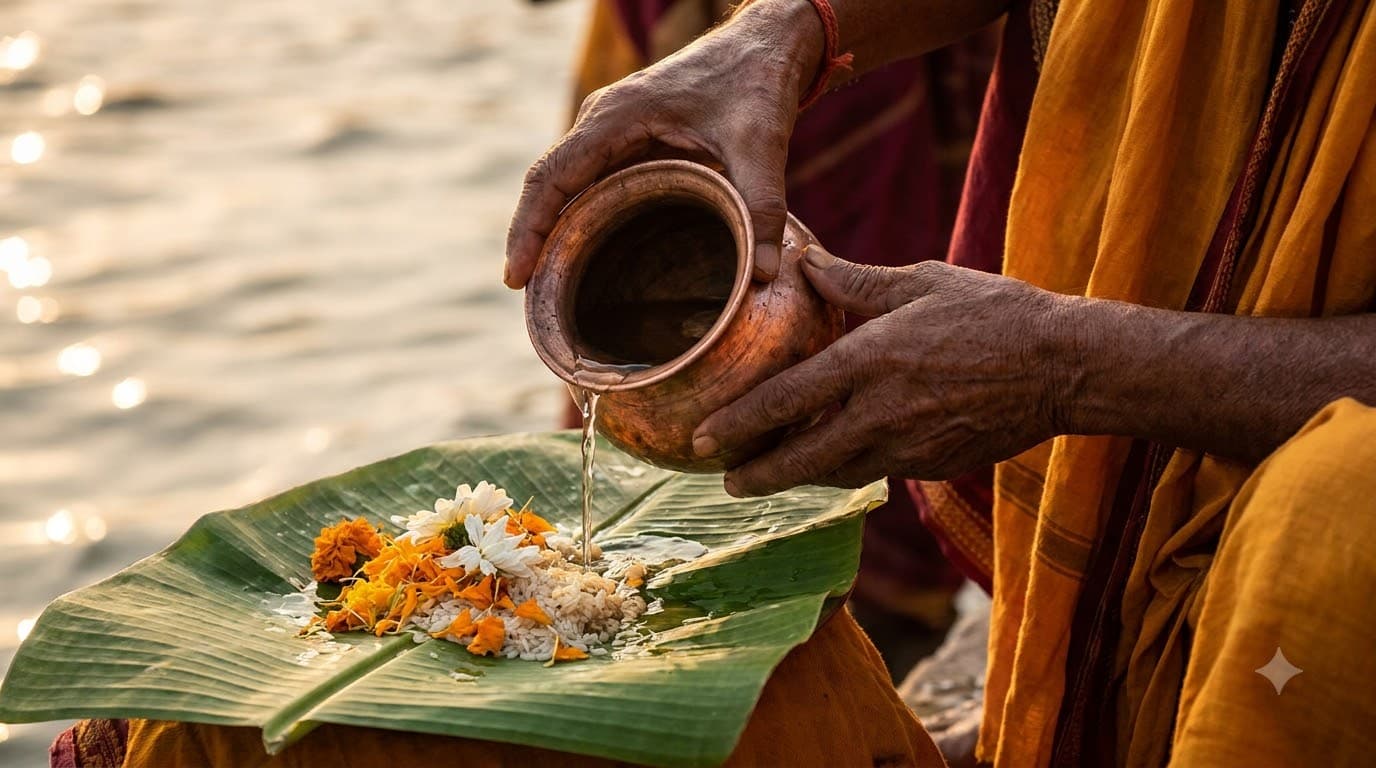
Pitru Paksha — also called Mahalaya Paksha — is a sixteen-day period in the Hindu calendar set aside for honoring departed ancestors (Pitrus). Rituals performed during this time are broadly referred to as Shraddha, with the specific water-offering component called Tarpanam; the two terms are often used interchangeably for the same overall observance. Each of the sixteen days corresponds to a particular lunar tithi, and families traditionally perform the ritual on the tithi matching the date their ancestor passed away. The final day, Mahalaya Amavasya (also called Sarvapitri Amavasya), is the most significant day of the fortnight — a catch-all opportunity for offering Shraddha to all ancestors, including those whose exact date of passing isn't known or was missed earlier in the fortnight.
Spiritual Significance of Pitru Paksha

Spiritual Significance of Pitru Paksha

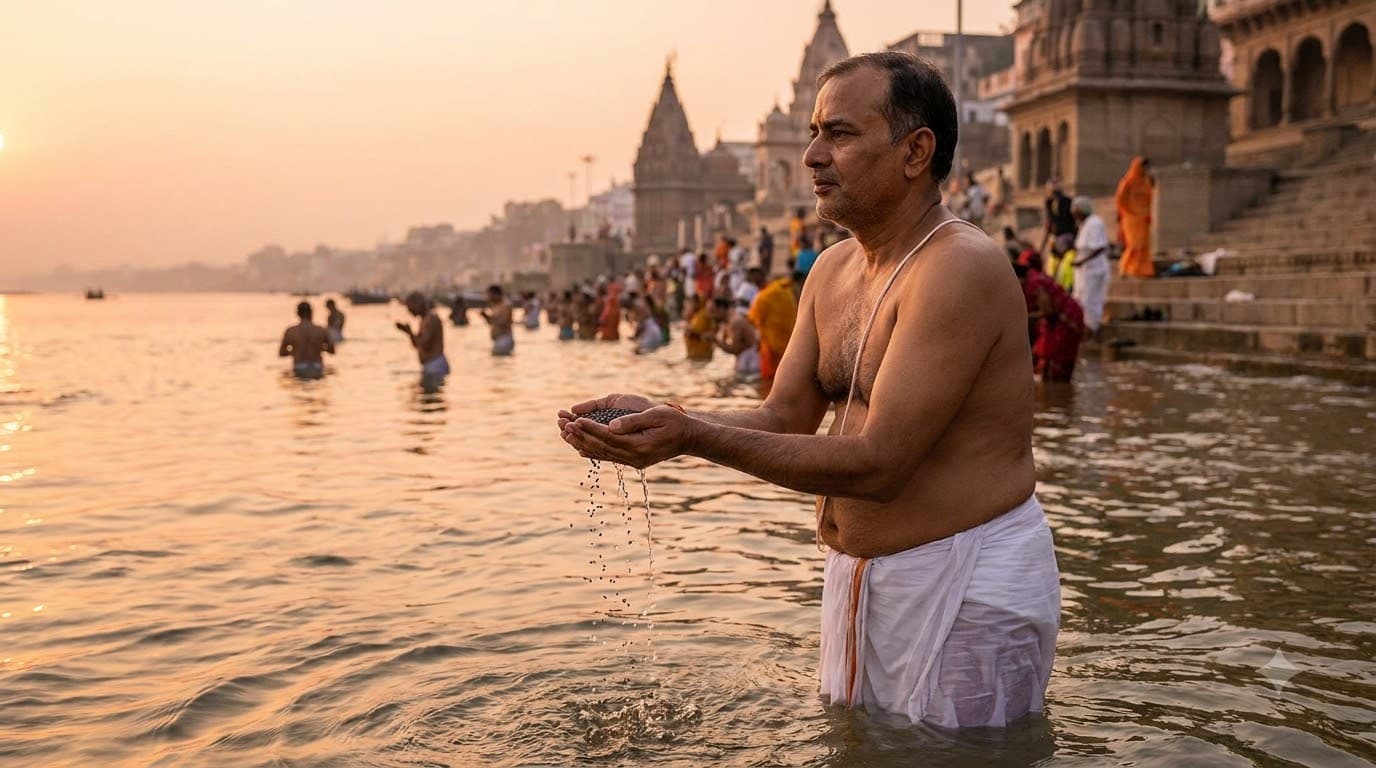
Tradition holds that the water and food offered during Tarpanam and Shraddha reach and nourish the ancestors in their current state, easing their journey and helping them progress toward peace. Performing these rituals is also considered an expression of gratitude — repaying what is called Pitru Rin, the debt owed to one's forebears for the life one has been given.

Neglecting Shraddha, tradition holds, can leave ancestors unsettled, which is part of why Mahalaya Amavasya exists as a final, comprehensive opportunity — a way of ensuring no ancestor is overlooked even if an earlier tithi in the fortnight was missed.

Ritual Process of Pitru Paksha

The ceremony follows this general sequence, whether performed on an ancestor's specific tithi or on Mahalaya Amavasya:

  1. ● Sankalp (formal intention-setting, naming the ancestor(s) being honored)
  2. ● Tarpanam — water, black sesame (til), and darbha grass offered with prescribed mantras
  3. ● Pinda Pradanam — rice or barley flour balls, mixed with ghee and sesame, offered to the ancestors
  4. ● Food offerings — dishes such as kheer, dal, and vegetables prepared specifically for the ritual
  5. ● A portion of the food is set aside for crows, cows, and dogs, traditionally regarded as messengers who carry the offering onward
  6. ● Feeding of Brahmins or family members, concluding the ritual

Each step is guided by the pandit start to finish, with the mantras and sequence matched to your family's specific tradition.

When is Pitru Paksha Observed in 2026?

Pitru Paksha 2026 runs from around September 26-27 through to Saturday, October 10, 2026 — the final day, Mahalaya Amavasya (Sarvapitri Amavasya), being the most widely observed and significant date of the fortnight. Within this window, Shraddha is ideally performed on the specific tithi matching your ancestor's date of passing; Mahalaya Amavasya itself is available to everyone, whether or not the specific tithi was observed earlier. Our pandit will confirm the exact tithi applicable to your family, along with the correct date for your city, at the time of booking.

What is Included in Our Pitru Paksha Service?

We bring a complete Pitru Paksha Shraddha and Tarpanam experience to your home, guided correctly from start to finish.

  1. ● Experienced & qualified Vedic pandit
  2. ● Tithi consultation to confirm the correct date for your ancestor(s)
  3. ● Full Tarpanam and Pinda Pradanam performed with the correct mantras
  4. ● Guidance on food offerings and the feeding of Brahmins/family members
  5. ● Mahalaya Amavasya (Sarvapitri) Shraddha available for all ancestors collectively
  6. ● Your family's specific customs and sampradaya accommodated

Every step is performed in the correct sequence, matched to what your family's own tradition requires.

Why Choose Our Pitru Paksha Service?

Shraddha rituals carry real weight for most families, and getting the tithi, the mantras, and the sequence right matters. Our pandits perform this every year and know the details precisely.

  1. ● Trusted, experienced priests familiar with Shraddha and Tarpanam traditions
  2. ● Doorstep service, on the correct tithi, on time
  3. ● Transparent pricing — no hidden charges
  4. ● Rituals performed in Sanskrit, Telugu, Hindi & more, on request
  5. ● Available across Hyderabad and pan-India via our network of pandits

Honoring your ancestors deserves to be done with care and the correct tradition — we make sure it is.

Frequently Asked Questions

Q1. What is the difference between Shraddha and Tarpanam?+

Tarpanam refers specifically to the water offering made to ancestors, while Shraddha is the fuller ritual that includes Tarpanam along with Pinda Pradanam and food offerings. In everyday use, the two terms are often used interchangeably for the same overall observance.

Q2. When is Pitru Paksha in 2026?+

It runs from around September 26-27 through Saturday, October 10, 2026, with October 10 being Mahalaya Amavasya (Sarvapitri Amavasya), the most significant and widely observed date of the fortnight.

Q3. What if I don't know the exact tithi my ancestor passed away on?+

Mahalaya Amavasya, the final day of Pitru Paksha, exists specifically for this — it's a catch-all day when Shraddha can be offered to all ancestors collectively, regardless of whether the exact tithi is known or was observed earlier in the fortnight.

Q4. Do North Indian and South Indian families perform Pitru Paksha differently?+

No — the core ritual (Tarpanam, Pinda Pradanam, food offerings, and Mahalaya Amavasya as the closing day) is the same across regions. Some sources describe a difference in which lunar month the fortnight is named after, but that's a calendar-naming convention, not a different process.

Q5. Why is food set aside for crows during Shraddha?+

Crows are traditionally regarded as messengers of Yama, the god of death, and the offering is considered accepted by the ancestors if a crow eats from it. Portions are also commonly set aside for cows and dogs.

Q6. Do I need a pandit for Pitru Paksha rituals, or can I perform them myself?+

Many families prefer a pandit for Shraddha and Tarpanam specifically because the mantras, the tithi calculation, and the sequence need to be correct — this is one of the rituals most families choose not to attempt entirely on their own.

Q7. Can Shraddha be performed if my parents are still alive?+

Shraddha and Tarpanam during Pitru Paksha are specifically for ancestors who have passed away. If your parents are living, this particular observance wouldn't apply to them, though family traditions can vary on related practices.

Q8. Is Pitru Paksha the same as Gaya Shraddha or Pind Daan at Gaya?+

Pind Daan performed at Gaya is a specific pilgrimage-based ritual that many families undertake at some point, separate from the annual home-based Shraddha performed during Pitru Paksha. They serve a related purpose but aren't the same observance.

Booking assurance

Professional support from booking to ritual completion

  • Verified pandit identity and profile checks
  • On-time ceremony coordination and reminder support
  • Guidance on ritual preparation and samagri essentials
  • Support team available for booking or service questions

What devotees say

Families who booked Pitru Paksha through Divine Center

“Our pandit arrived on time and performed the ceremony with complete Vedic authenticity. Booking was seamless.”

Priya Sharma · HyderabadGriha Pravesh

“Transparent pricing and a verified Acharya made us confident. The online coordination was excellent.”

Ravi Kumar · BengaluruSatyanarayan Puja

“Divine Center helped us find the right pandit for our family tradition. Highly recommend for life-cycle rituals.”

Anitha Reddy · ChennaiNamakaran

Pitru Paksha