
Vishnupad Temple, Gaya
The most revered Pinda Daanam site in India. Many families travel to Gaya during Pitru Paksha; others perform Shraddha at home and plan a Gaya pilgrimage separately.
Bhadrapada Krishna Paksha (Sep–Oct) · Telangana · Andhra Pradesh
Mahalaya Paksha — Shraddha, Tarpanam, and Pinda Daanam for your ancestors.
Festival guide
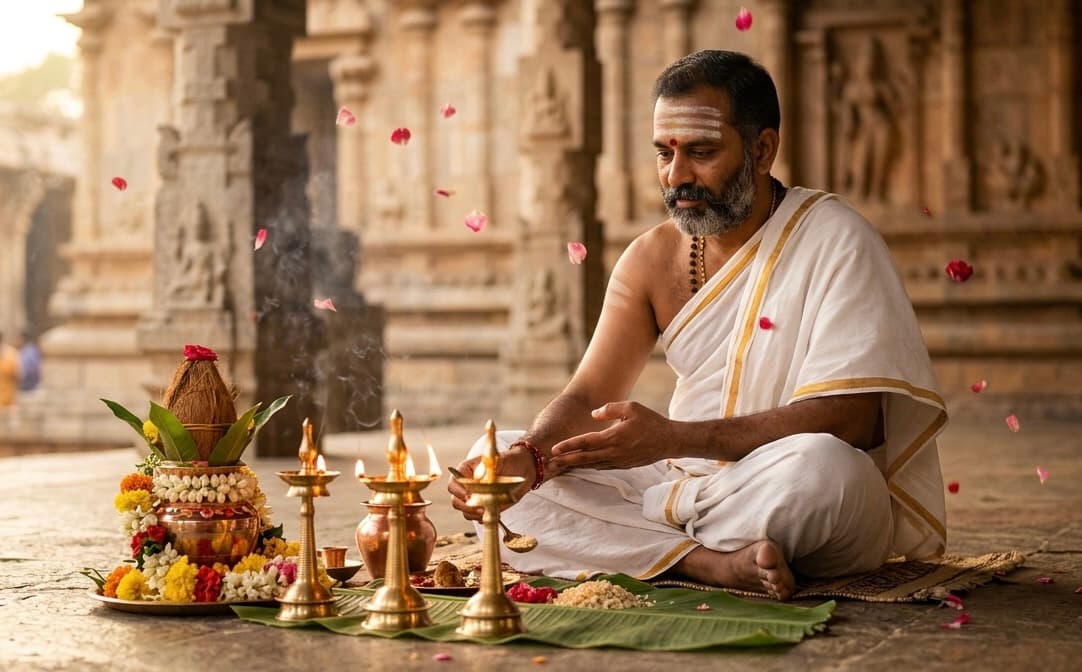
Pitru Paksha is the fortnight dedicated to one's ancestors. In 2026 it runs from 26 September to 10 October, ending on Mahalaya (Sarva Pitru) Amavasya. Families perform Shraddha on the ancestor's tithi and offer Tarpanam with sesame and water, guided by a pandit.
Purpose
Pitru Paksha repays the debt to one's ancestors (Pitru Runa). Shraddha and Tarpanam offered with devotion are believed to nourish departed souls, bring them peace, and return blessings of health, harmony, and continuity to the family.
Pitru Paksha, also called Mahalaya Paksha, falls in the dark fortnight of Bhadrapada (Ashwayuja in the Amavasyant calendar used in Telangana and Andhra Pradesh). Shraddha performed in these days is believed to bring peace to departed souls and relieve Pitru Dosha.
Each ancestor's Shraddha is traditionally done on the tithi of their passing. Mahalaya Amavasya covers all ancestors, including those whose tithi is not known. Divine Center pandits perform the rituals at home, at river ghats, or guide NRI families live online.
Origins & heritage
How this festival evolved across Telangana and Andhra Pradesh.
The Garuda Purana and Dharma Shastras describe Shraddha as a core household duty. The Mahabharata tells of Karna, who in the afterlife received gold instead of food because he had never offered food to his ancestors; he was allowed to return to earth for a fortnight to perform Shraddha — the origin traditionally given for Pitru Paksha.
Gaya in Bihar has been the foremost Pinda Daanam site for centuries, and river ghats on the Godavari and Krishna serve the same role for Telugu families. Today many families combine home Shraddha with online sessions for relatives abroad.
Devotee guide
Practical steps for families observing Pitru Paksha.
Day by day
The typical sequence of rituals and events during this festival.
Morning: Bath, clean the space, and arrange samagri; the performer wears the sacred thread over the right shoulder (prachinaveeti)
Sankalpam: Pandit recites gotra and ancestors' names
Tarpanam: Sesame water offered through darbha grass, facing south
Pinda Daanam: Rice balls offered to three generations
Offerings: Brahmana Bhojanam or Hiranya Daanam; Kaka Bali and Go Grasam
Close: Concluding prayers; the family eats only after the rituals are complete
Temples & towns
Temples and cities where this festival holds special significance.
The most revered Pinda Daanam site in India. Many families travel to Gaya during Pitru Paksha; others perform Shraddha at home and plan a Gaya pilgrimage separately.
Pushkar Ghat and nearby ghats on the Godavari are traditional sites for pitru tarpanam in Andhra Pradesh, busiest on Mahalaya Amavasya.
Book pandits in Rajamahendravaram →Most Hyderabad families perform Shraddha at home with a pandit on the ancestor's tithi. Book early for Mahalaya Amavasya, when demand peaks.
Book pandits in Hyderabad →Traditions & rituals
Common rituals, samagri, and practices families follow.
Book locally
Find verified pandits in cities that observe this festival.
Related rituals
Book verified Acharyas for ceremonies commonly performed during this festival.
Celebrating Pitru Paksha from abroad?
NRIs can join live video pujas with family in India — samagri guidance included.
NRI puja servicesSimple & secure
From search to confirmation — the same trusted process used by devotees across India.
Browse verified pandits serving your area or filter by puja type and availability.
Review experience, languages, pricing, and devotee ratings before you choose.
Select doorstep service at home or an online ceremony via video call.
Complete booking with transparent Razorpay payment — no hidden charges.
Get instant confirmation and coordinate samagri and muhurat with your Acharya.
Explore more
Andhra Pradesh
Godavari Pushkaram is a once-in-12-years sacred river festival when Jupiter (Guru) enters Simha rashi — marking approximately 12 days of holy dips, pitru tarpanam, and temple rituals on the Godavari at Rajahmundry (Rajamahendravaram), Kovvur, and other ghats. Rajahmundry is the central city; crores of pilgrims attend. Families perform ancestral rites and book pandits for ghat-side or home puja during Pushkaram — demand for Acharyas is exceptionally high.
Telangana · Andhra Pradesh
Dasara spans nine nights of Navaratri worship culminating in Vijaya Dasami — the day of victory of good over evil. Telangana and Andhra Pradesh families perform Golu displays, Ayudha Puja, Saraswati puja for children, and start new ventures on Vijaya Dasami muhurat. Kanaka Durga Temple in Vijayawada hosts one of India's grandest Dasara celebrations with daily alankarams. Ayudha Puja sanctifies tools, vehicles, and books; Vidyarambham initiates toddlers into learning.
Telangana · Andhra Pradesh
Deepavali (Diwali) celebrates the victory of light over darkness on Amavasya of Kartika masam. Telugu and Telangana families perform Lakshmi Ganesh puja in the evening, light diyas and fireworks, draw rangoli, and exchange sweets. Merchants worship new account books (Chopda Pujan). Pandits are in peak demand for evening muhurat puja across Hyderabad, Vijayawada, Visakhapatnam, and Tirupati. The day before, Naraka Chaturdashi (Choti Diwali) involves early oil bath and cleansing rituals.
Common questions
Pitru Paksha 2026 runs from 26 September to 10 October, ending on Mahalaya (Sarva Pitru) Amavasya on 10 October.
Perform it on Mahalaya Amavasya, which covers all ancestors. You can also share the date of passing and our pandit will work out the tithi.
Yes. Divine Center connects families with verified pandits for Shraddha, Tarpanam, and Pinda Daanam — at home, at a river ghat, or online. Request a quote from the puja page or message us on WhatsApp.
Yes. The pandit guides you live on video through the Sankalpam, Tarpanam, and offerings, and shares a samagri list you can arrange locally.
Tarpanam is the offering of sesame water to ancestors. Shraddha is a fuller ritual that includes Tarpanam, Pinda Daanam, and food or dakshina offerings.
Verified Acharyas · Transparent pricing · Doorstep & online puja