Hanuman Jayanti: Rituals, Timings, and 41-Day Deeksha
By Divine Center ·
A comprehensive guide to celebrating Hanuman Janmotsav. Discover the significance of the 41-day Deeksha, auspicious Muhurat timings, and how to perform the puja at home.
The Significance of Lord Anjaneya’s Birth
Lord Hanuman, son of Anjana and Kesari, symbolizes selfless devotion, courage, and immense strength. Hanuman Jayanti marks the start of a sacred 41-day “Mandala Deeksha,” a period of discipline and spiritual focus that culminates in Hanuman Jayanti in the Vaishakha month. Devotees see Hanuman as Sankat Mochan—the remover of obstacles—especially relevant in today’s fast-paced, stressful life.
Across the city, from historic temples to modern neighborhoods, chants of “Jai Shri Ram” echo as people seek protection, balance, and blessings for new homes, careers, and ventures. During Deeksha, devotees wear the Hanuman Mala, dress in saffron, walk barefoot, and follow a strict satvik lifestyle. Beginning this journey on Chaitra Purnima, April 2, 2026, is believed to align mind, body, and spirit, offering clarity, strength, and resilience for students, professionals, and families alike.
Auspicious Timings and Traditional Vidhi
Timing is the soul of Vedic rituals, and following the Panchangam ensures planetary energies are aligned correctly. On April 2, the Purnima Tithi is the main window for Hanuman birth celebrations. The most powerful time is the Abhijit Muhurat from 11:50 AM to 12:40 PM, ideal for performing the main Abhishekam using Panchamrutham—milk, curd, honey, sugar, and ghee—while chanting the Purusha Suktam or Hanuman Ashtakam.
Another auspicious period is the Evening Sandhya Muhurat from 6:30 PM to 8:15 PM, perfect for a Sundarkand Path at home or in community gatherings. Reciting Sundarkand is believed to remove Vastu Dosha and invite protection and positivity. Use Chameli oil mixed with pure Sindoor for the ritual, symbolizing strength and longevity.
For group pujas, a Vedic Pandit ensures the Sankalp is recited with your family’s Gothra and Nakshatra, personalizing the blessings. From Kalash Sthapana to Purnahuti, each step becomes a path to spiritual harmony and divine grace
Setting Up the Sacred Space in Your Home
Preparation is the first step toward a successful puja. To turn a corner of your home into a sacred space, gather the essential Samagri. In the local markets you can find fresh items. You will need a wooden chowki, a new saffron or red cloth, a brass or copper Kalash, mango leaves, a coconut, and betel leaves. A garland of 108 betel leaves is considered a powerful offering to Lord Hanuman.
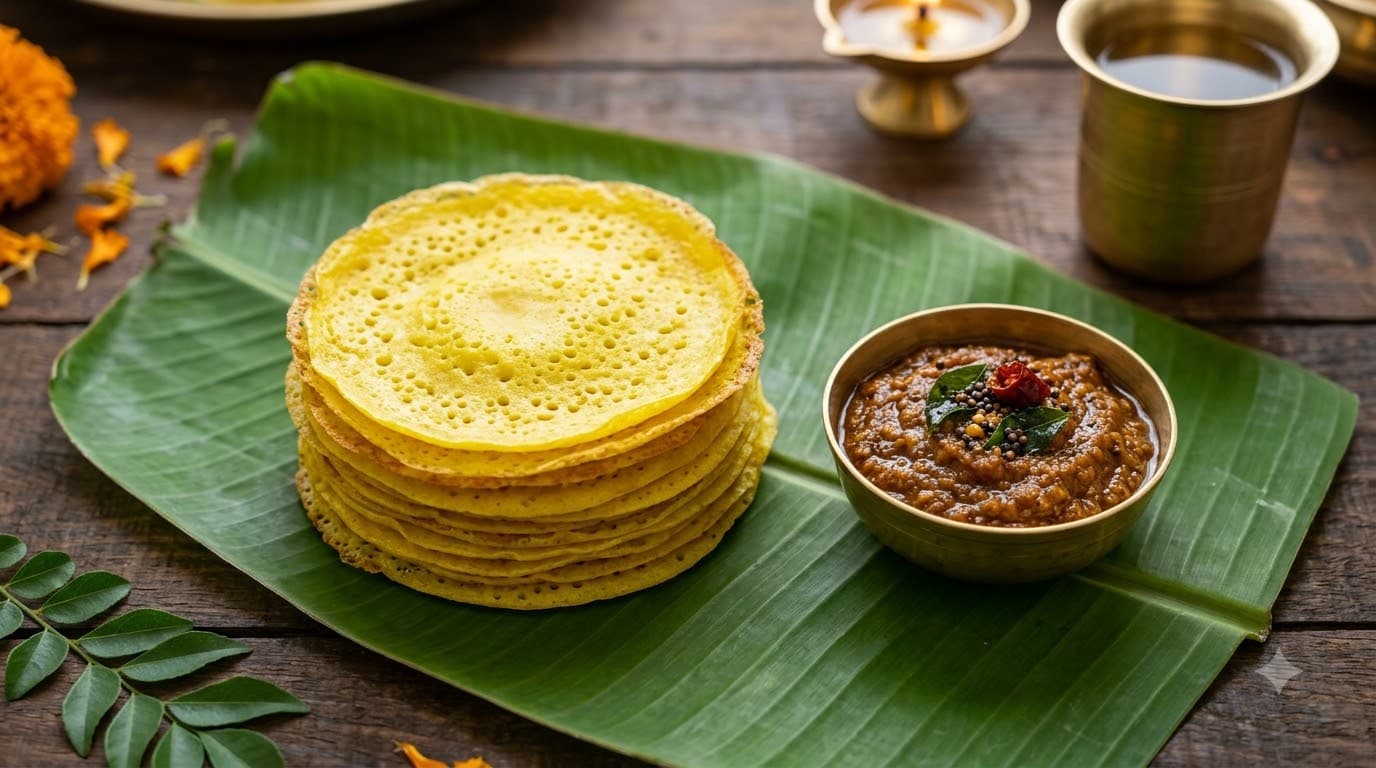
For Prasadam, traditional homes prepare Vadapappu (soaked moong dal) and Panakam (jaggery, pepper, and cardamom drink), perfect for cooling the body in the April heat. Chalividi, made from rice flour and jaggery, is another beloved offering. Sharing these with neighbors spreads blessings and builds community spirit.
For the Deepam, use cow ghee or jasmine oil, whose fragrance is believed to attract divine energy. Recite the Deepa Jyothi mantra while lighting the lamp. If arranging everything feels overwhelming, a complete puja kit with Pandit booking ensures every detail—from Akshata to purification items—is covered, bringing a temple-like experience right to your home.
Frequently Asked Questions
Can I perform Hanuman Puja at home if there is a 'Sutak' (birth/death impurity) in the family?
Traditionally, during Sutak one should avoid elaborate rituals or touching idols. However, mental chanting (Manasik Jaap) of the Hanuman Chalisa is always allowed and strongly encouraged to maintain spiritual strength during sensitive times.
What is the significance of the number 11 in Hanuman Puja?
Lord Hanuman is revered as the 11th Rudra Avatar of Lord Shiva. Reciting the Hanuman Chalisa 11 times or offering 11 bananas or 11 betel leaves is believed to align spiritually with his divine energy.
How do I conclude the 41-day Deeksha started today?
The Deeksha concludes on Hanuman Jayanti with Mala Visarjan and Annadanam (food donation). Booking a Pandit for the concluding ritual helps complete the vow with full Vedic honor.
Can women perform Hanuman Puja?
Absolutely. Women can perform Aarti, light lamps, and recite hymns like Bajrang Baan and Hanuman Ashtakam. Many women lead Hanuman Chalisa groups and devotional gatherings with great devotion and success.