Jagannath Rath Yatra: The Sacred Festival of Ashadha Masam(2026)
By Divine Center ·
Explore the rich history, sacred rituals, and profound spiritual significance of Jagannath Rath Yatra, the world-famous chariot festival in Puri that symbolizes devotion, equality, and divine blessings for all.
Jagannath Rath Yatra: The Sacred Festival of Ashadha Masam
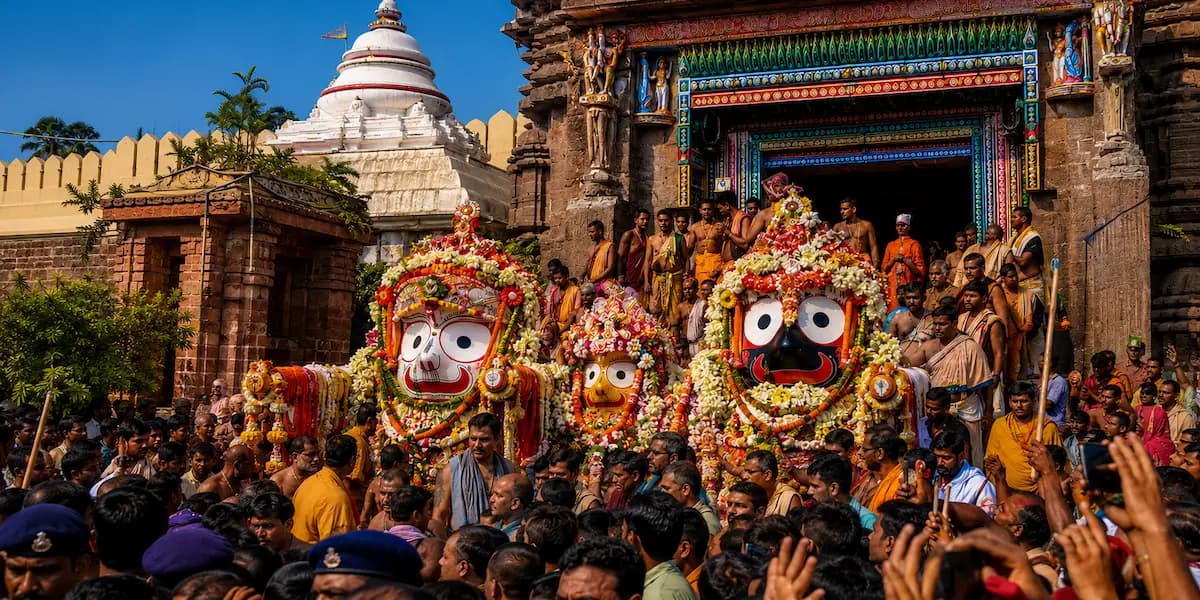
The first monsoon clouds are gathering over Odisha's coast. In Puri, the air already hums with anticipation. Within days, three towering wooden chariots will roll down the Grand Avenue, pulled by thousands of hands, carrying gods who have chosen, for nine days, to leave their sanctum and walk among ordinary people.
This is Jagannath Rath Yatra, and it isn't just India's biggest chariot festival. It's a yearly proof that the divine wants to be close to us, not distant from us.
Why Is Jagannath Rath Yatra Celebrated?
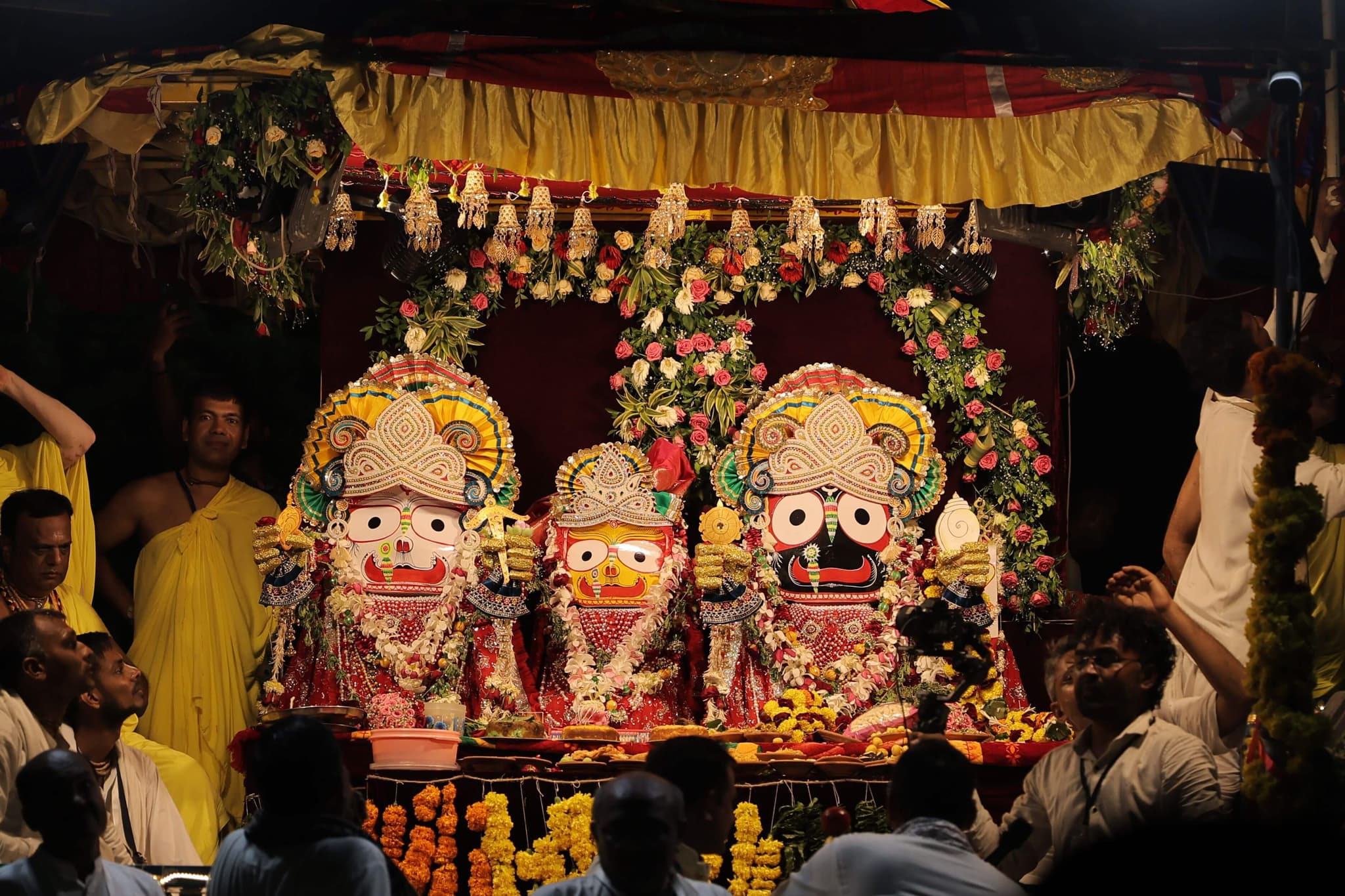
At its core, the festival celebrates a homecoming. Lord Jagannath, Lord Balabhadra, and Goddess Subhadra travel from the Puri Jagannath Temple to the Gundicha Temple, believed to represent their aunt's home or birthplace.
But there's a deeper reason devotees hold this festival so close to heart. Inside the temple, certain restrictions apply to who can approach the deities. Outside, on the open road, none of that matters. Rath Yatra dissolves the usual boundaries between devotee and deity, offering darshan to everyone, regardless of caste, class, or background.
This isn't a recent tradition either. Historical records, including the Puri temple's own chronicles, point to organized Rath Yatra celebrations as far back as the 12th century, around the same era the present Jagannath Temple was built. Centuries of continuous observance have shaped it into the festival millions recognize today.
Why Does Rath Yatra Fall During Ashadha Masam?
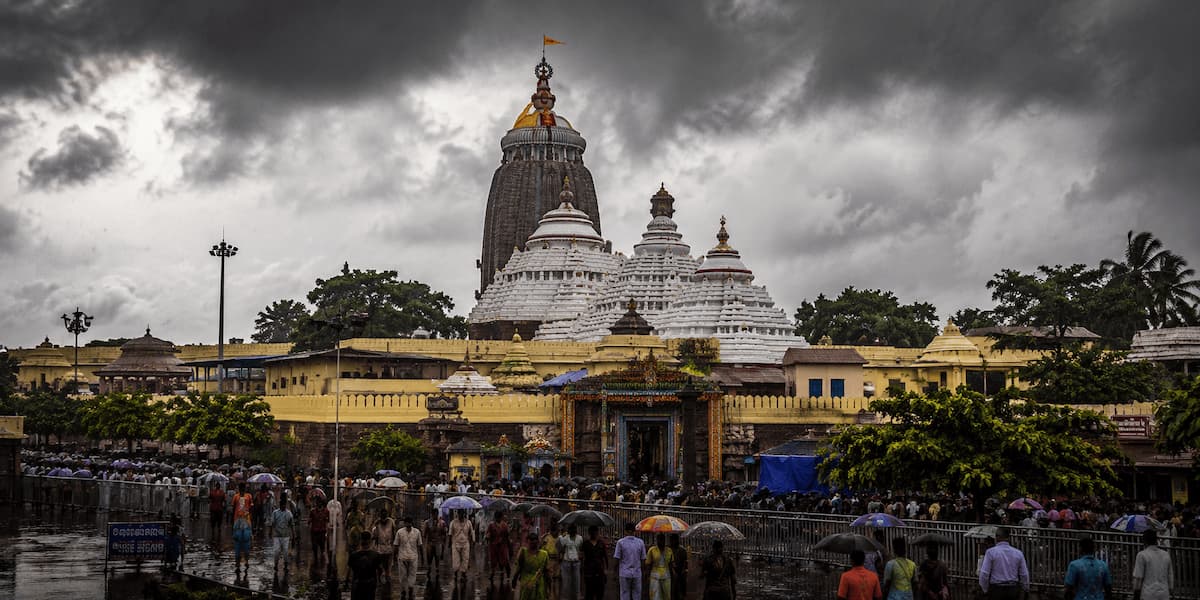
The Yatra begins on Dwitiya, the second day of Ashadha's bright fortnight, following the temple's Odia panchangam. This date isn't arbitrary. Weeks earlier, the deities undergo Snana Purnima, a grand ceremonial bath, after which tradition holds they fall ill and withdraw into seclusion for about two weeks. Only once this rest ends, right as Ashadha begins, are they considered ready to journey out and meet their devotees.
Just as the monsoon revives parched earth, the Lord's yearly outing is meant to revive something in the devotee too, a renewed sense of closeness to the divine.
What Happens During the Rath Yatra?
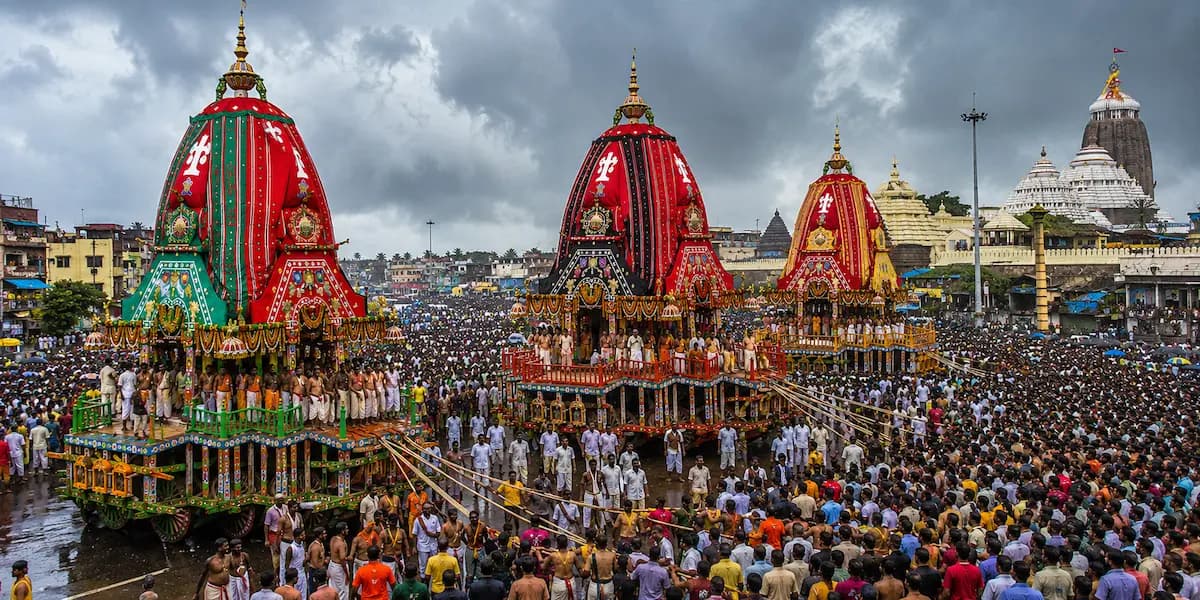
Nandighosa
Lord Jagannath's chariot, wrapped in red and yellow, standing tallest of the three.
Taladhwaja
Lord Balabhadra's chariot, marked by a palm tree emblem, draped in red and blue.
Darpadalana
Goddess Subhadra's chariot, whose name means "trampler of pride," covered in red and black.
On the day itself, the deities are carried out in a ceremonial procession called Pahandi and placed onto their chariots. Then comes the moment the crowd has waited for all year: thousands of devotees grip the massive ropes and pull the chariots together down the Bada Danda, the Grand Road of Puri.
Midway through the nine-day celebration comes a lesser-known but deeply loved episode called Hera Panchami. Tradition holds that Goddess Lakshmi, finding herself left behind, visits the Gundicha Temple in gentle protest, and devotees reenact this story with playful ritual drama. It's a reminder that even divine relationships carry warmth, longing, and humor.
Once the deities have rested at Gundicha, the return journey begins. This is Bahuda Yatra. Departure and return, going out and coming home, mirror the soul's own journey away from and back toward the divine. On this return leg, the deities are adorned in gold ornaments during Suna Besha, one of the festival's most breathtaking sights.
Why Do Millions of Devotees Participate?
Ask a pilgrim in Puri why they've traveled hundreds of miles just to pull a rope, and you'll likely hear some version of the same answer: because for a few hours, nothing else matters but this. Tradition says that even kings once swept the road before the chariots with a golden broom, a gesture that stripped away rank and status in front of the divine.
That single act, a king sweeping the road himself, still shapes why crowds return every year. It's the rare, tangible chance to stand shoulder to shoulder with strangers, all reaching for the same rope, all equal in that moment.
What Spiritual Lessons Does Rath Yatra Teach Us?
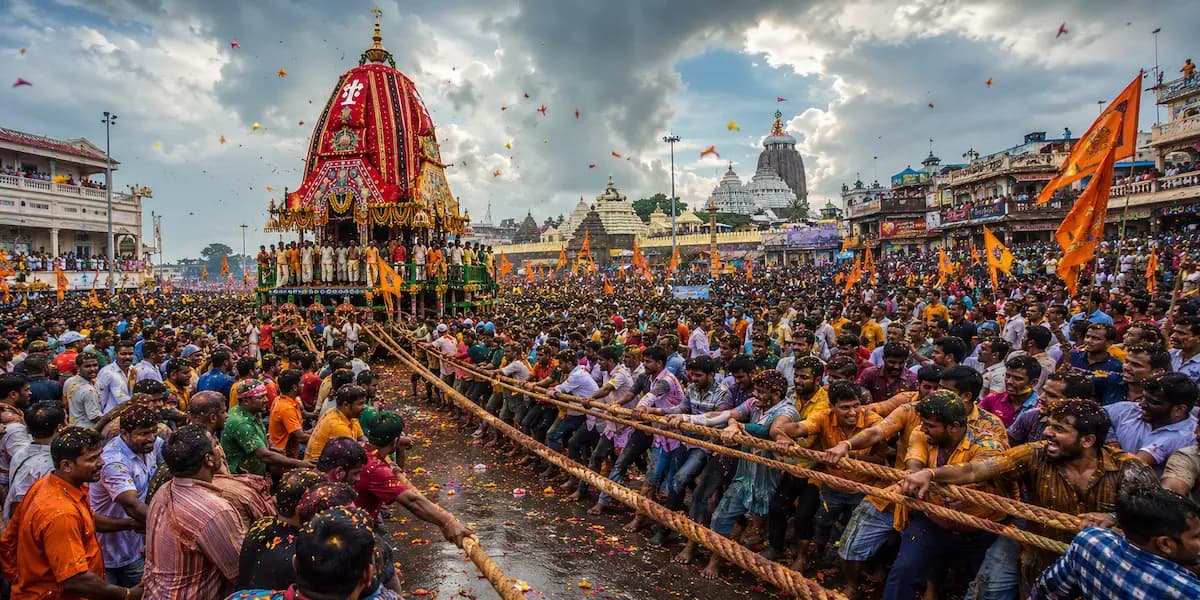
- Watching the chariots pass is said to bring blessings.
- Pulling the ropes is believed to cleanse past karma.
- Chanting the Lord's names quiets the mind and opens the heart.
- Praying with sincerity, wherever you are, is considered enough.
The deeper lesson sits underneath all of this: devotion was never meant to be about grand gestures or perfect ritual. It's about showing up, however small the offering.
A few facts worth remembering: the chariots are rebuilt every single year from sacred wood, without a single nail. Lakhs of devotees, sometimes crossing a million, gather in Puri each season. The tradition has earned a place on India's National Inventory of Intangible Cultural Heritage, and efforts are now underway to seek UNESCO recognition. Meanwhile, ISKCON temples from London to New York to Sydney carry the same spirit of celebration far beyond Odisha's shores.
Final Thoughts
Jagannath Rath Yatra isn't a festival you simply watch. It's one you feel, in the pull of a rope, the rhythm of a chant, the sight of a god who came outside just to see you. May that spirit of humility and devotion follow you long after the chariots come to rest. Jai Jagannath.
Frequently Asked Questions
What is Jagannath Rath Yatra?
It's the annual chariot procession of Lord Jagannath, Lord Balabhadra, and Goddess Subhadra from the Puri Jagannath Temple to the Gundicha Temple.
When is Rath Yatra celebrated?
On Dwitiya, the second day of Ashadha's bright fortnight, according to the temple's Odia panchangam.
What is Bahuda Yatra?
The return journey of the deities from the Gundicha Temple back to the main Puri Jagannath Temple.
What are the names of the three Rath Yatra chariots?
Nandighosa (Lord Jagannath), Taladhwaja (Lord Balabhadra), and Darpadalana (Goddess Subhadra).
What is the date of Jagannath Rath Yatra 2026?
Jagannath Rath Yatra 2026 falls on Thursday, July 16, 2026, and marks the beginning of the annual chariot festival during Ashadha Masam.