Vinayaka Chavithi 2026: History, Story & Telugu Puja Guide
By Divinecenter Team ·
A complete guide to Vinayaka Chavithi 2026 — history, the story of Ganesha's birth, Bal Gangadhar Tilak's role in the public Ganeshotsav, Telugu puja vidhanam, puja samagri list, the 21 sacred patralu, and FAQs. Includes a link to book a verified pandit.
Vinayaka Chavithi 2026
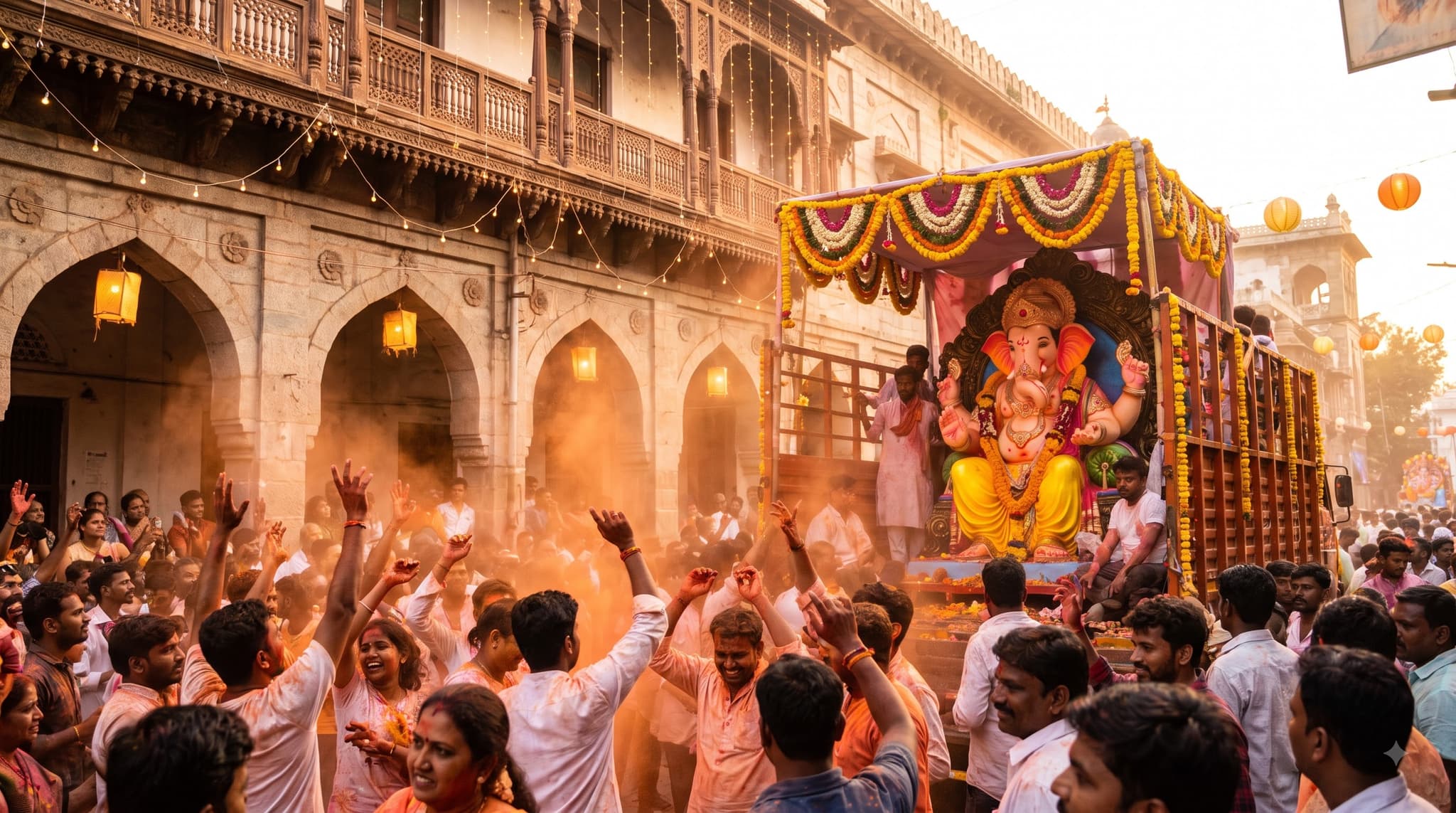
Vinayaka Chavithi 2026 falls on Monday, 14 September 2026 (Bhadrapada Shudda Chaviti). The Madhyahna (mid-day) puja muhurat — considered the most auspicious window for Ganesha Sthapana — is typically in the late morning to early afternoon; timings shift slightly by city, so it's best to confirm exact muhurat timings for your location with a local panchangam or your pandit. The 10-day Ganeshotsav concludes with Nimajjanam (Visarjan) on Anant Chaturdashi, Friday, 25 September 2026, though many families immerse the idol earlier — after 1½, 3, 5, or 9 days — depending on their family tradition.
History of Vinayaka Chavithi
The worship of Lord Ganesha as an independent deity goes back many centuries, with references found in the Puranas — particularly the Ganesha Purana and Mudgala Purana — which describe his forms and the significance of invoking him before starting any new venture. For most of its history, this was primarily a household observance: families sculpted an idol from natural clay, invoked life into it through the Prana Pratishtha ritual, and worshipped it for a fixed number of days before immersion. Some regional accounts also associate Ganesh Chaturthi with the Maratha rulers, including Chhatrapati Shivaji Maharaj and the Peshwas of Pune, who are said to have supported its celebration in some form. As with much oral and regional history, the details vary between sources, but what's well documented is what happened next — the festival's transformation into a large public celebration in the late 19th century.
The Story Behind Vinayaka Chavithi: Birth of Lord Ganesha
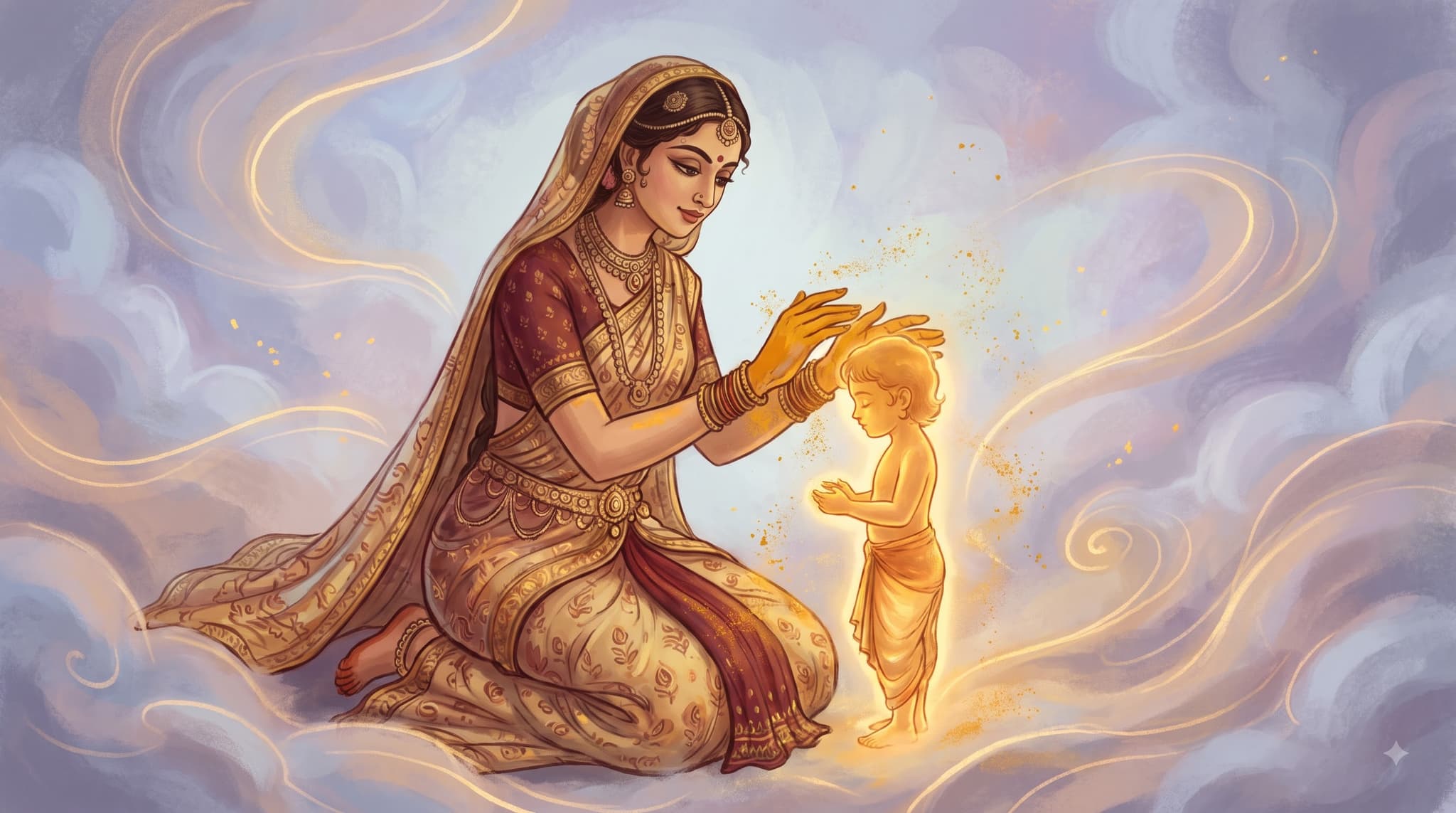
Goddess Parvati, wanting a guard while she bathed, created a boy from turmeric paste (or clay, in some versions) and breathed life into him, instructing him to guard the entrance and let no one in. When Lord Shiva returned and tried to enter, the boy — unaware that Shiva was Parvati's husband — refused to let him pass. An enraged Shiva severed the boy's head. Parvati's grief was so intense that Shiva promised to restore the child to life. His attendants were sent to bring the head of the first living being they found lying with its head facing north — which turned out to be an elephant. The elephant's head was attached to the boy's body, he was brought back to life, named Ganesha, and blessed to be worshipped before all other gods. A second tale recited during the Vinayaka Chavithi Vratam even today is the story of Syamantakopakhyanam. According to this legend, Ganesha once cursed the Moon (Chandra) for mocking his appearance, decreeing that anyone who looks at the moon on Bhadrapada Shukla Chaturthi would face false accusations. This is said to have played out later when Lord Krishna glimpsed the moon on this day and was falsely blamed for stealing the Syamantaka gem — a story still read out to devotees who accidentally see the moon on Chavithi night.
Bal Gangadhar Tilak and the Public Ganesh Utsav
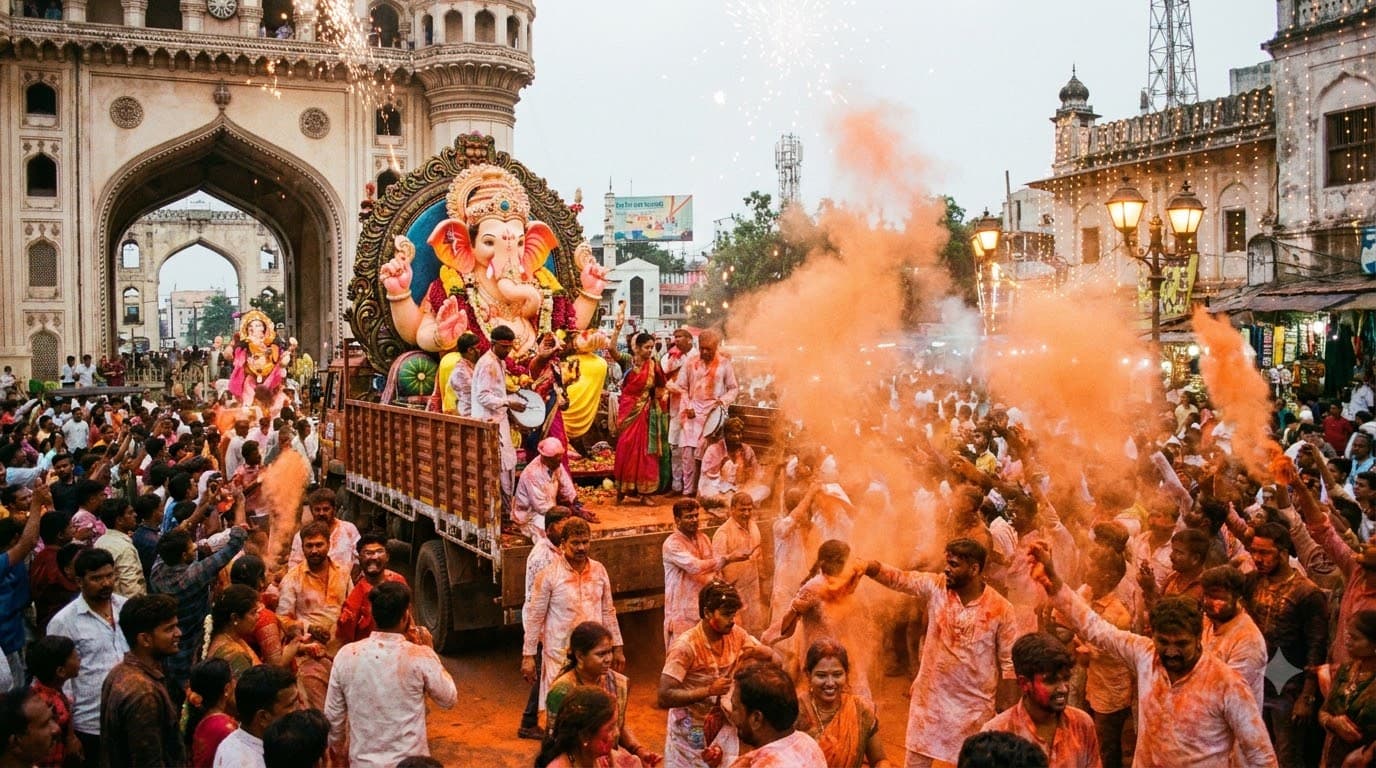
While Vinayaka Chavithi has ancient religious roots, its modern identity as a grand public festival owes much to freedom fighter Bal Gangadhar Tilak. In 1893, during British colonial rule, Tilak is widely credited with popularising the public, community celebration of Ganesha (Sarvajanik Ganeshotsav) in Pune, building on smaller earlier community efforts.
His objectives are generally understood to have been both spiritual and political:
- Uniting communities — At a time when public political gatherings were restricted, religious festivals were exempt. Tilak is said to have used this space to bring people of different castes and backgrounds together to worship Ganesha collectively.
- Nurturing nationalism — The community pandals became venues for cultural programs and gatherings that helped build a shared public identity during the freedom movement.
- Creating a shared celebration — What was largely a private, household festival grew into a multi-day community event with public idols, processions, and grand immersions — a format that continues to shape celebrations today, from Mumbai's famous pandals to Hyderabad's iconic Khairatabad Ganesh.
Tilak's contribution is why Ganesh Chaturthi is remembered not only as a religious observance but as a festival that once carried undertones of India's freedom movement.
Telugu Style of Vinayaka Puja
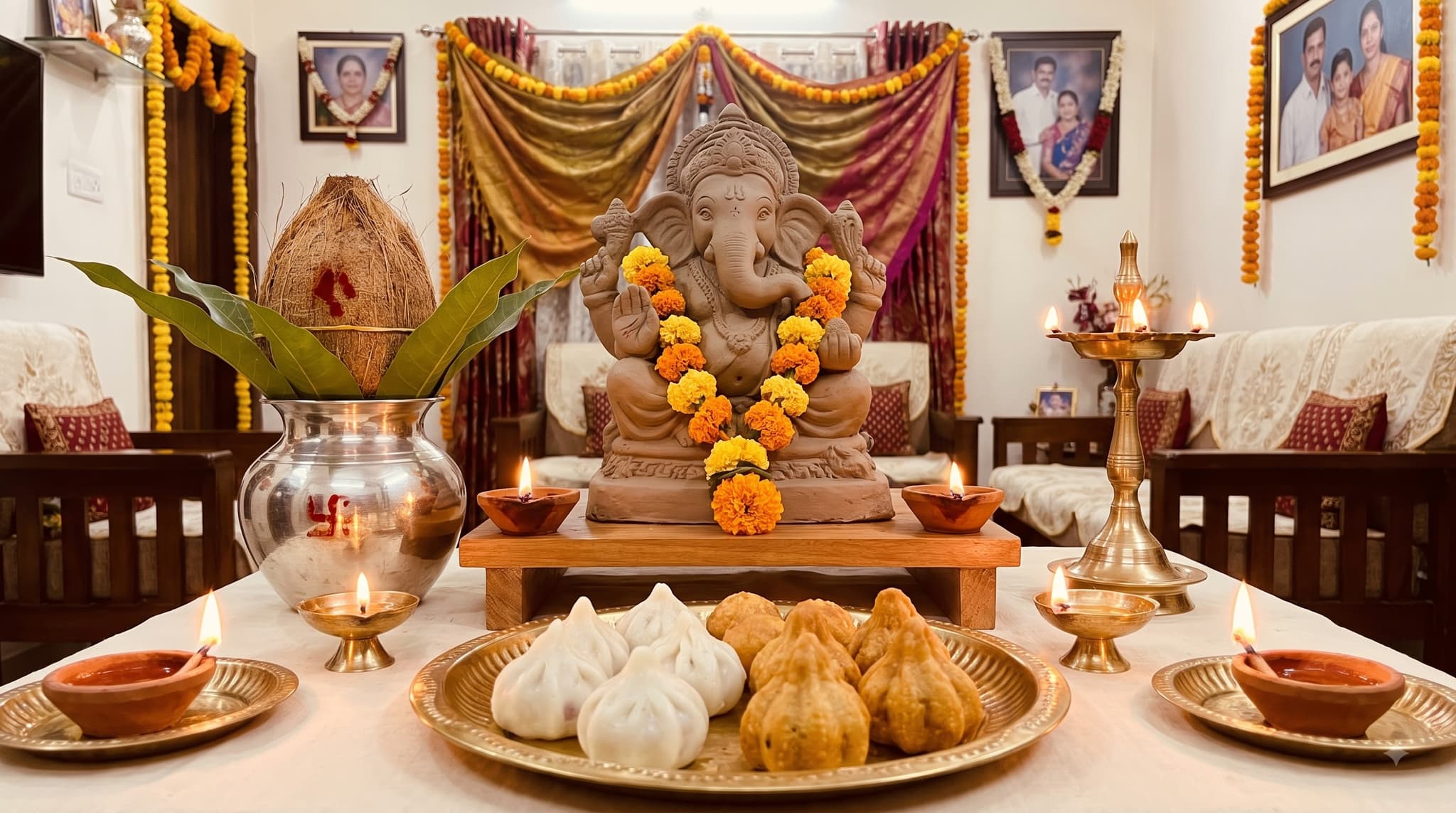
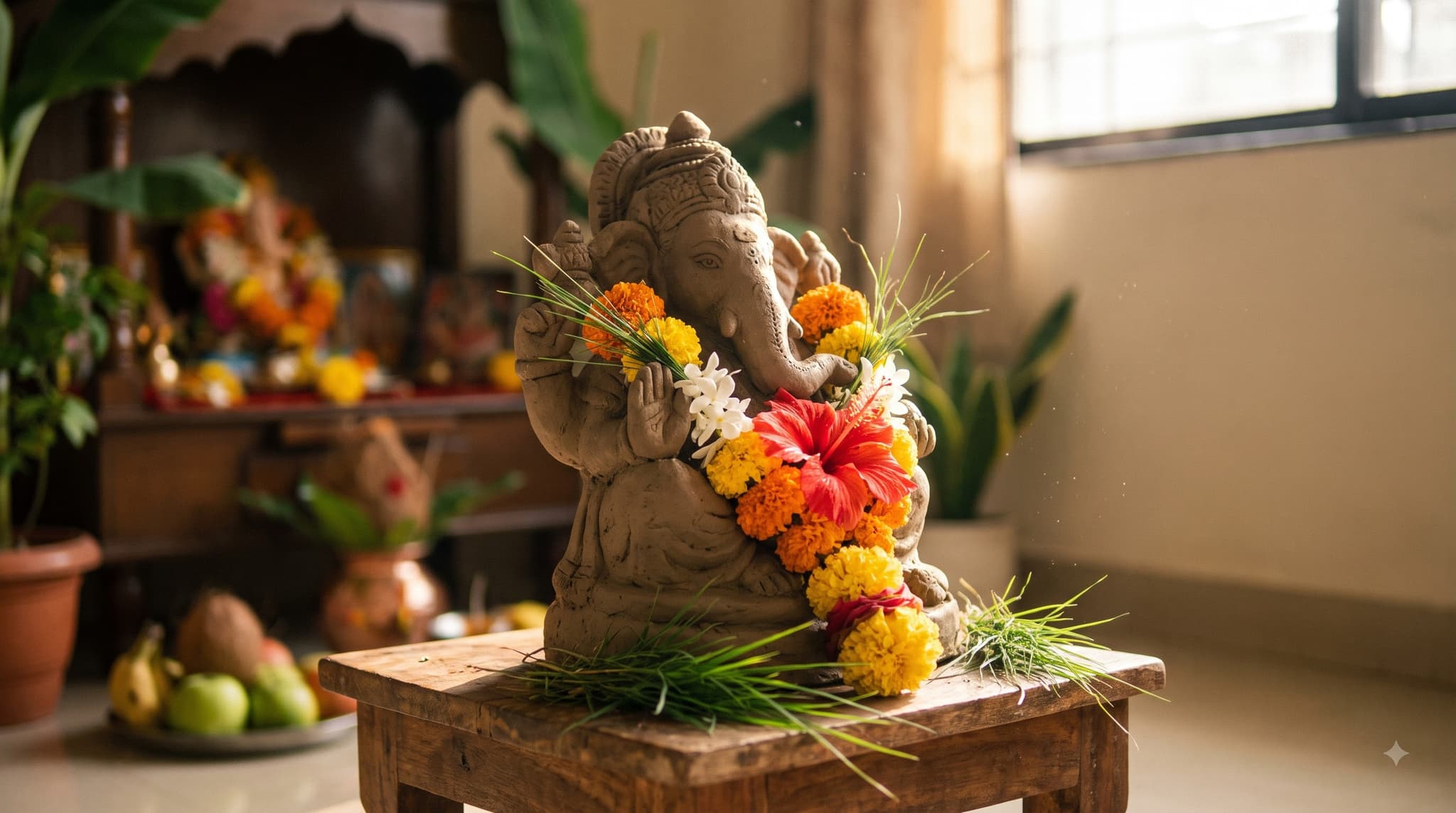
- Matti Vinayakudu (clay idol) — Traditionally, many Telugu families prefer an idol made from natural, unbaked clay (matti), in keeping with eco-conscious customs passed down through generations, and avoid Plaster of Paris or heavily painted idols.
- Kalasa Sthapana and Prana Pratishtha — The puja typically begins with setting up a kalasham (sacred pot), followed by invoking life into the idol.
- Vratha Kalpam recitation — Families read the Sri Vinayaka Vrata Kalpam, narrating the significance of the vratam along with the Syamantakopakhyanam story.
- Ekavimshati Patra Puja — Worship with 21 different sacred leaves (detailed below), each associated with one of Ganesha's names.
- Modak and Undrallu offering — Steamed rice-flour dumplings called Undrallu, along with Kudumulu and modakams, are commonly prepared as naivedyam, believed to be among Ganesha's favourite foods.
- Ganapati Homam — Some families also perform a homam invoking Ganesha's blessings for the removal of obstacles (Vighna Nivarana).
- Chandra Darshana Dosha Nivarana — Because of the moon-related legend, many recite a specific mantra or story if they happen to see the moon on Chavithi night.
- Nimajjanam — On the concluding day, the idol is immersed in a pond, lake, or river with the chant "Ganapati Bappa Morya, Purchya Varshi Laukariya," wishing him a swift return the following year.
Vinayaka Chavithi Puja Samagri List
- Clay (matti) Vinayaka idol
- Kalasham (sacred pot) with water
- Turmeric (pasupu) and kumkum
- Akshintalu (turmeric-coated rice)
- Durva/Garika grass
- The 21 patralu (see table below)
- Fresh flowers and garlands
- Fruits and coconut
- Betel leaves and betel nuts (tamalapaku, vakka)
- Undrallu, kudumulu, and modakam for naivedyam
- Panchamrutham ingredients
- Agarbatti (incense) and camphor
- Deepam (lamp) with oil or ghee, cotton wicks
- Yellow or red cloth for the mandapam
- Vinayaka Vrata Kalpam puja book
- A plate/tray for the puja items and a bell (mani)
The 21 Sacred Patras (Leaves) Used in Vinayaka Puja
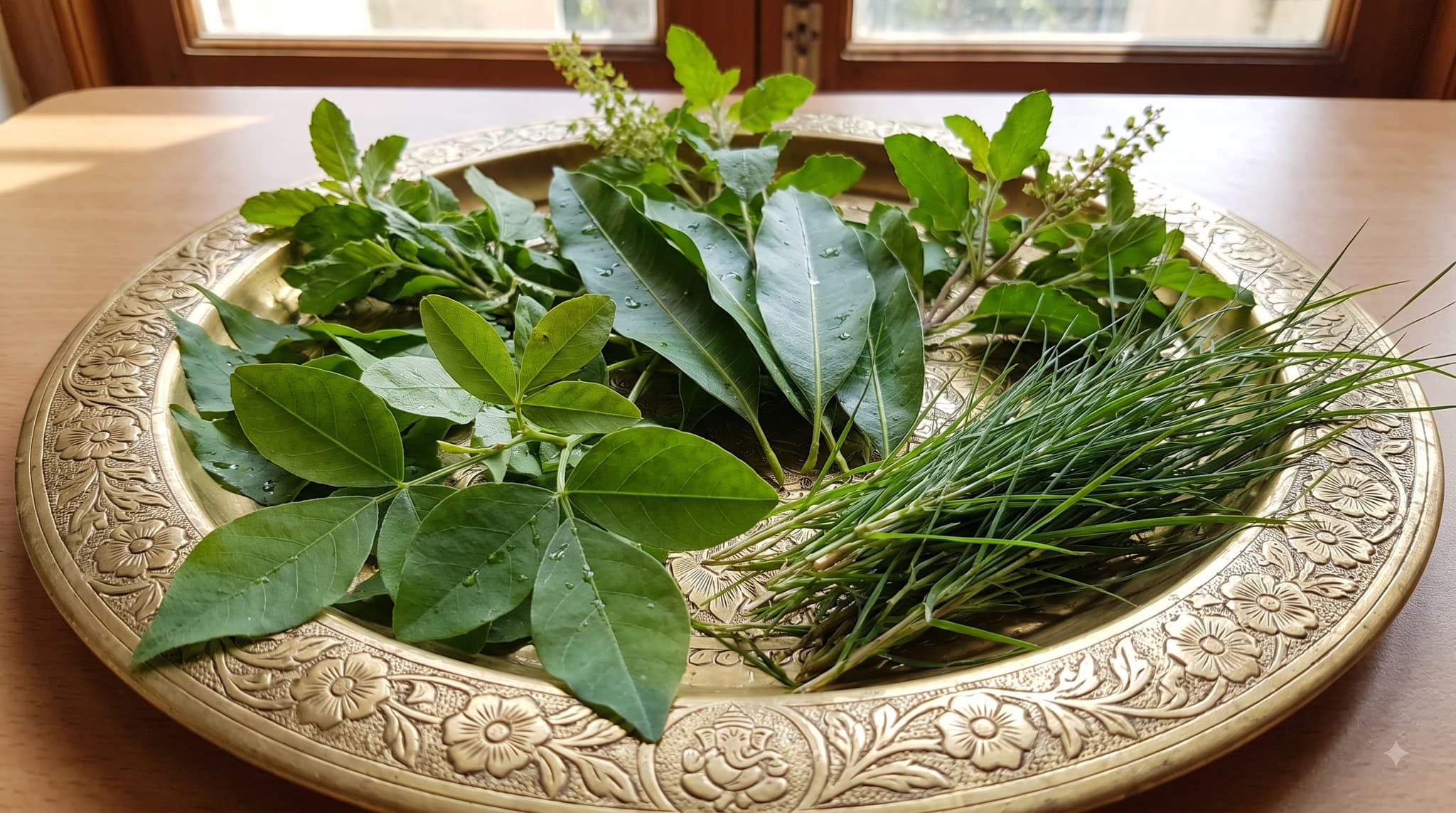
A distinctive part of Telugu-style Vinayaka Puja is Ekavimshati Patra Puja — offering 21 types of leaves, most of which are also traditionally recognised medicinal plants. Popular belief holds that keeping these plants at home during the festival is beneficial for the household — a traditional practice rather than a scientifically verified claim, and one worth treating as cultural belief rather than established fact. The 21 patralu, in order, are:
- Machi Patri — Wormwood/Machipatram (Artemisia sp.)
- Brihati Patri — Wild eggplant/Chittimutti (Solanum indicum)
- Bilva Patri — Bael leaf/Maredu (Aegle marmelos)
- Durva Yugma Patri — Bermuda grass/Garika (Cynodon dactylon)
- Dattura Patri — Thorn apple/Ummetta (Datura sp.)
- Badari Patri — Indian jujube/Regu (Ziziphus mauritiana)
- Apamarga Patri — Prickly chaff flower/Uttareni (Achyranthes aspera)
- Tulasi Patri — Holy basil (Ocimum tenuiflorum)
- Chuta Patri — Mango leaf/Mamidi (Mangifera indica)
- Karaveera Patri — Oleander/Ganneru (Nerium oleander)
- Vishnukranta Patri — Vishnukranti (Evolvulus alsinoides)
- Dadimi Patri — Pomegranate leaf/Danimma (Punica granatum)
- Devadaru Patri — Devadaru (Cedrus deodara)
- Maruvaka Patri — Marjoram/Maruvam (Origanum majorana)
- Sindhuvara Patri — Chaste tree/Vavili (Vitex negundo)
- Jaji Patri — Jasmine leaf (Jasminum sp.)
- Gandaki Patri — Pongamia/Ganuga (Pongamia pinnata)
- Shami Patri — Shami/Jammi (Prosopis cineraria)
- Ashwattha Patri — Peepal leaf/Ravi (Ficus religiosa)
- Arjuna Patri — Arjuna/Tella Maddi (Terminalia arjuna)
- Arka Patri — Crown flower/Jilledu (Calotropis gigantea)
Note: Tulasi is normally not offered to Lord Ganesha, owing to a legend of a curse between Tulasi Devi and Ganesha mentioned in the Ganesha Purana. An exception is made specifically for this 21-patra puja on Vinayaka Chavithi.
Need Help Performing the Complete Vinayaka Chavithi Puja?
Performing the Vinayaka Chavithi puja correctly — from Kalasa Sthapana to the Ekavimshati Patra Puja and Uttara Puja — is best done under the guidance of an experienced pandit who knows the Telugu Vratha Kalpam and mantras.
Book a verified, Telugu-speaking pandit for your Vinayaka Chavithi / Ganesh Chaturthi puja with Divine Center — home puja and online puja options, transparent pricing, puja samagri assistance, and availability across Hyderabad, Telangana, and other cities in India.
Frequently Asked Questions
1. What is the difference between Vinayaka Chavithi and Ganesh Chaturthi?
There is no difference — Vinayaka Chavithi is the Telugu name for the same festival celebrated across India as Ganesh Chaturthi. "Chavithi" means "fourth" in Telugu, referring to the Chaturthi tithi.
2. When is Vinayaka Chavithi in 2026?
Vinayaka Chavithi 2026 falls on Monday, 14 September 2026, with the concluding Nimajjanam on Anant Chaturdashi, Friday, 25 September 2026. Please verify exact local muhurat timings with a panchangam or your pandit.
3. Why should we avoid looking at the moon on Vinayaka Chavithi?
As per the Syamantakopakhyanam legend, viewing the moon on this day is believed to invite false accusations, just as Lord Krishna is said to have faced. Devotees who accidentally see the moon are often advised to recite or listen to this story.
4. How many days is the idol kept before immersion?
This varies by family and regional tradition — commonly 1½, 3, 5, 9, or the full 10/11 days ending on Anant Chaturdashi.
5. Why is Lord Ganesha worshipped first before other deities?
As per tradition, Ganesha was granted the boon of being worshipped before other gods and at the start of new ventures, earning him the title "Vighnaharta" (remover of obstacles) and "Pratham Pujya
8. What is naivedyam offered to Lord Ganesha?
Modakam, Undrallu, Kudumulu, and other rice- or jaggery-based sweets are the most common offerings, traditionally regarded as Ganesha's favourites.