Maa Shailputri 2026: Puja Vidhi, Mantra and Significance
By Divine Center ·
Who is Maa Shailputri? Explore Navratri Day 1 in 2026, the Goddess's story, puja vidhi, mantra, traditional bhog, symbolism and home worship rituals.
Who Is Maa Shailputri?
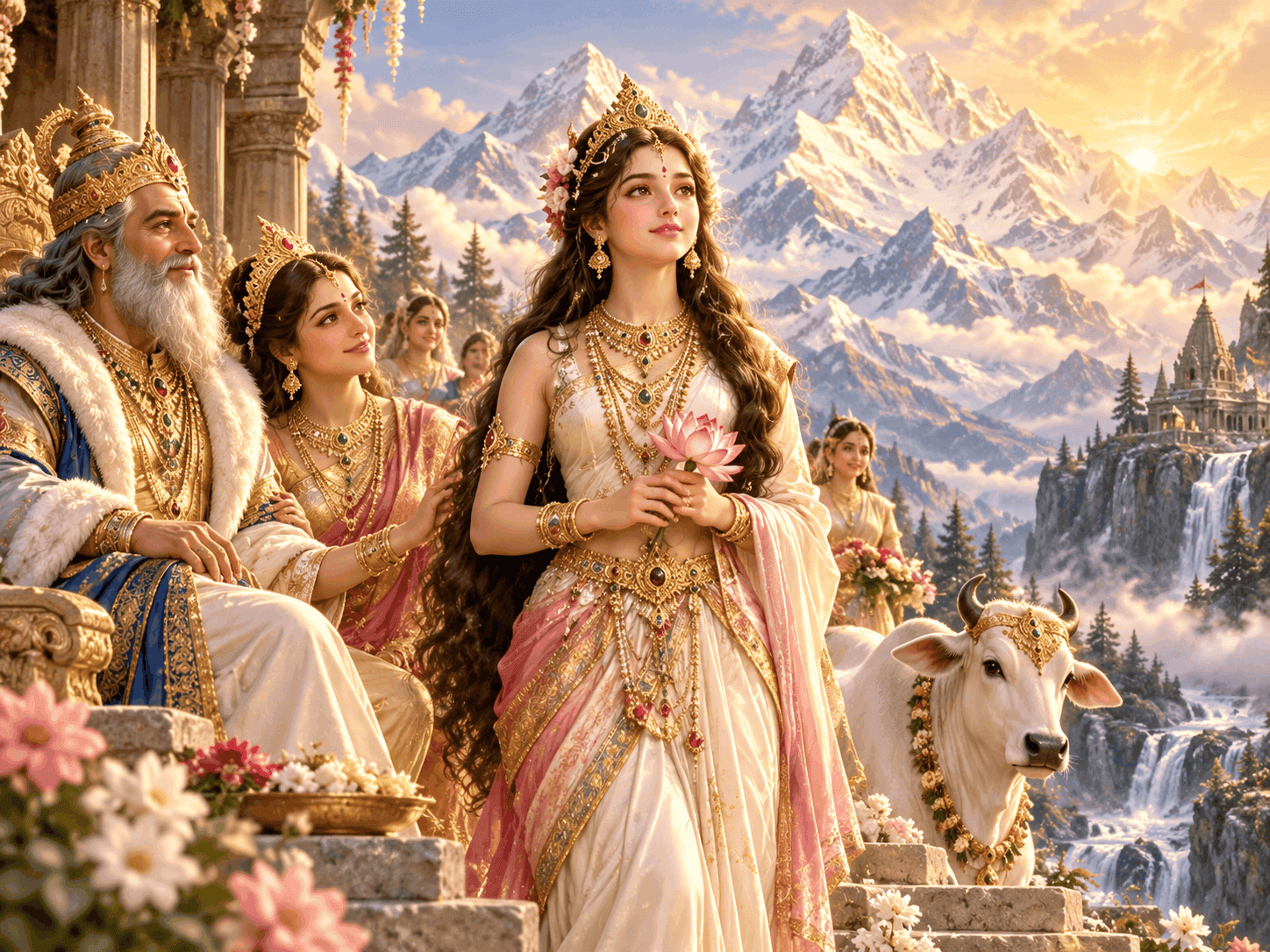
Maa Shailputri is the first of the nine forms of Goddess Durga, collectively known as Navdurga. She is worshipped on the first day of Navratri, known as Pratipada.
The name Shailputri means "Daughter of the Mountain." In Hindu tradition, she is identified with Goddess Parvati, the daughter of Himavan, the personification of the Himalayas.
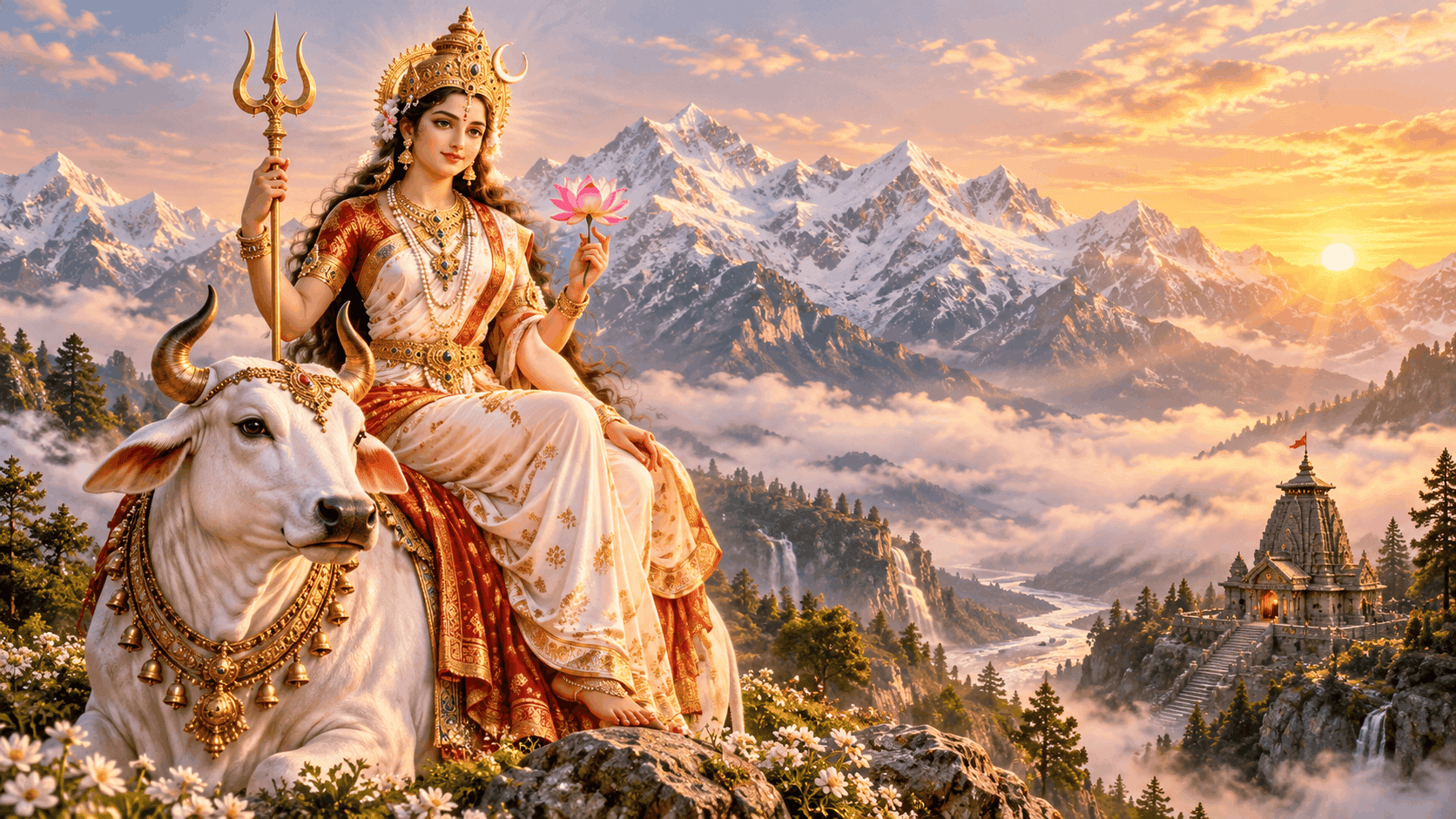
Maa Shailputri is traditionally depicted riding a bull, holding a trident in one hand and a lotus in the other. Her appearance represents strength, patience, purity and determination.
Maa Shailputri Puja in 2026: During Sharad Navratri, Maa Shailputri is worshipped on Sunday, October 11, 2026.
Her worship marks the beginning of the nine-day spiritual celebration dedicated to Goddess Durga.
Maa Shailputri Story and Origin
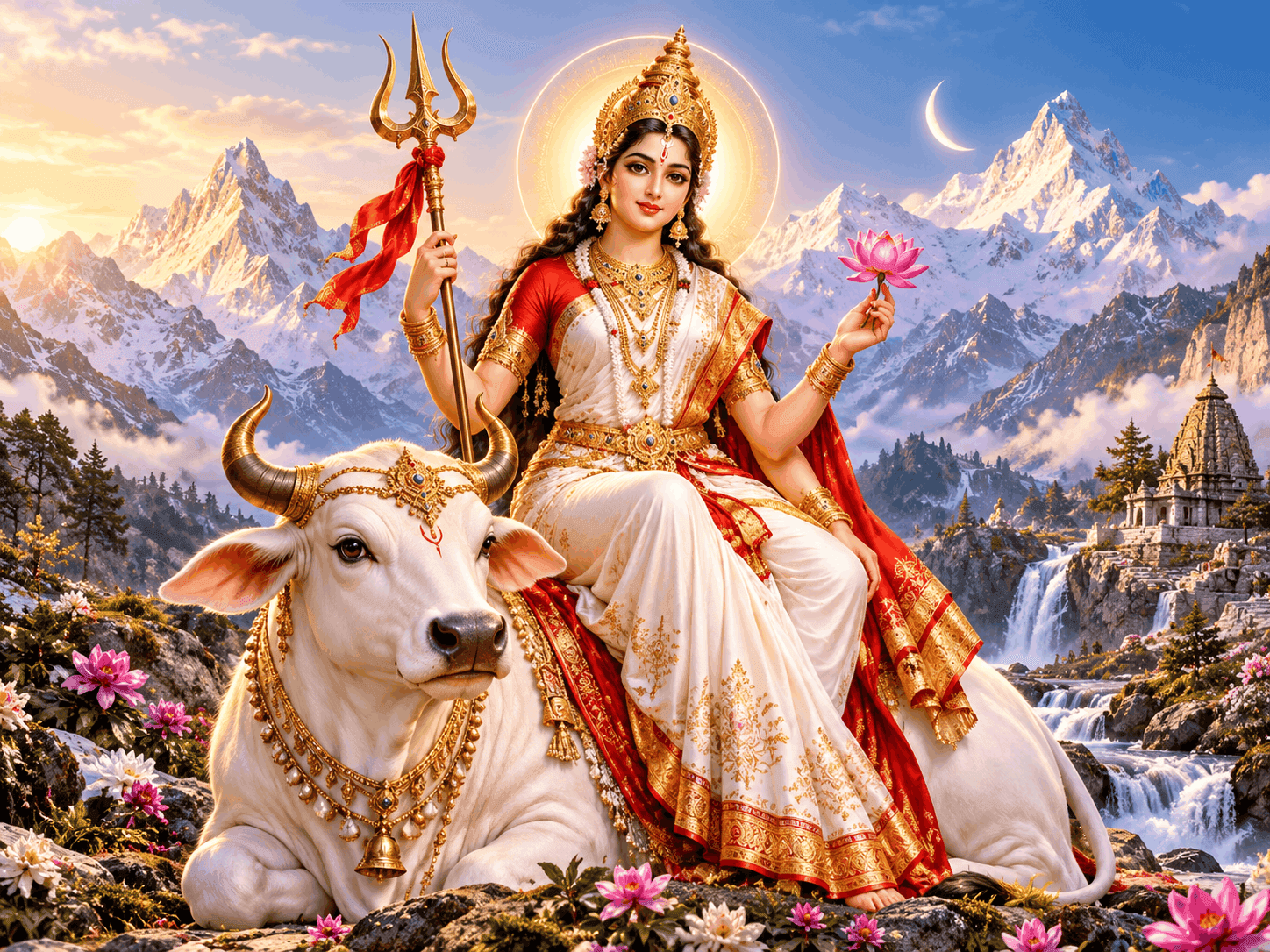
According to Hindu Puranic traditions, Maa Shailputri is associated with the rebirth of Goddess Sati as Parvati.
The story of Goddess Sati
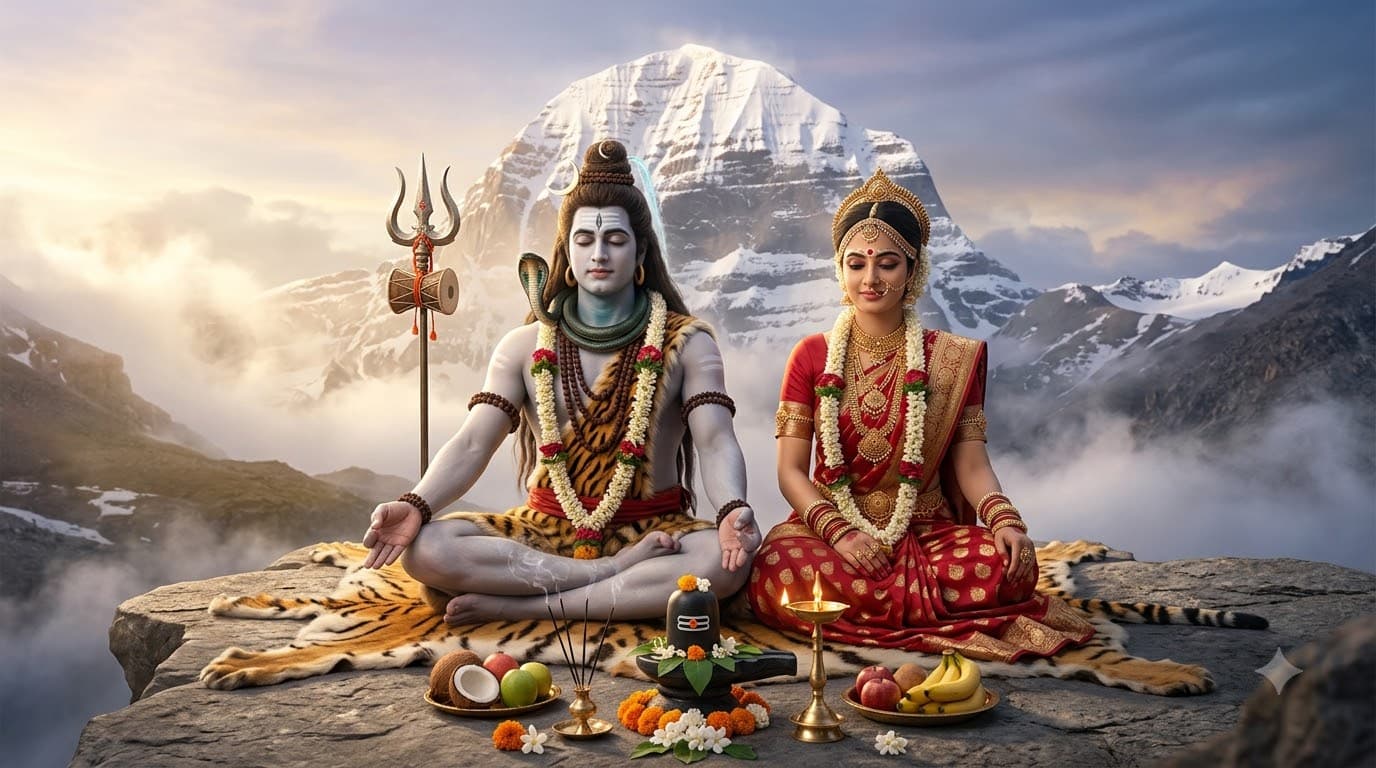
Goddess Sati was the daughter of Daksha Prajapati and the consort of Lord Shiva. During a grand yajna organized by Daksha, Lord Shiva was dishonoured.
Deeply distressed by the insult, Sati gave up her life at the sacrificial ceremony.
Rebirth as Goddess Parvati
In her next birth, Sati was born as Parvati, the daughter of the mountain king Himavan.
Because she was born as the daughter of the Himalayas, she became known as Shailputri.
The story is traditionally associated with unwavering devotion, determination and the divine relationship between Shiva and Shakti.
Spiritual lesson: Maa Shailputri's story reminds devotees of the importance of courage, perseverance and remaining committed to one's values even during difficult circumstances.
Maa Shailputri Symbolism
Every element of Maa Shailputri's traditional appearance carries spiritual meaning.
- Bull (Nandi): Represents stability, patience and perseverance.
- Trident (Trishul): Symbolizes divine strength and the overcoming of obstacles.
- Lotus: Represents purity, devotion and spiritual awakening.
- Crescent Moon: Reflects her association with Lord Shiva.
- Mountains: Symbolize firmness, endurance and a strong spiritual foundation.
Maa Shailputri and Muladhara Chakra
In certain yogic and devotional interpretations, Maa Shailputri is associated with the Muladhara Chakra, also called the Root Chakra.
This chakra is traditionally connected with grounding and stability.
Worshipping Maa Shailputri at the beginning of Navratri is therefore understood as a symbolic first step toward inner discipline and spiritual growth.
These interpretations form part of spiritual tradition and should not be confused with scientifically established medical effects.
Maa Shailputri Puja Vidhi at Home
Maa Shailputri Puja can be performed at home with devotion and simple offerings. The exact procedure may vary depending on family customs, region and religious tradition.
Puja items required
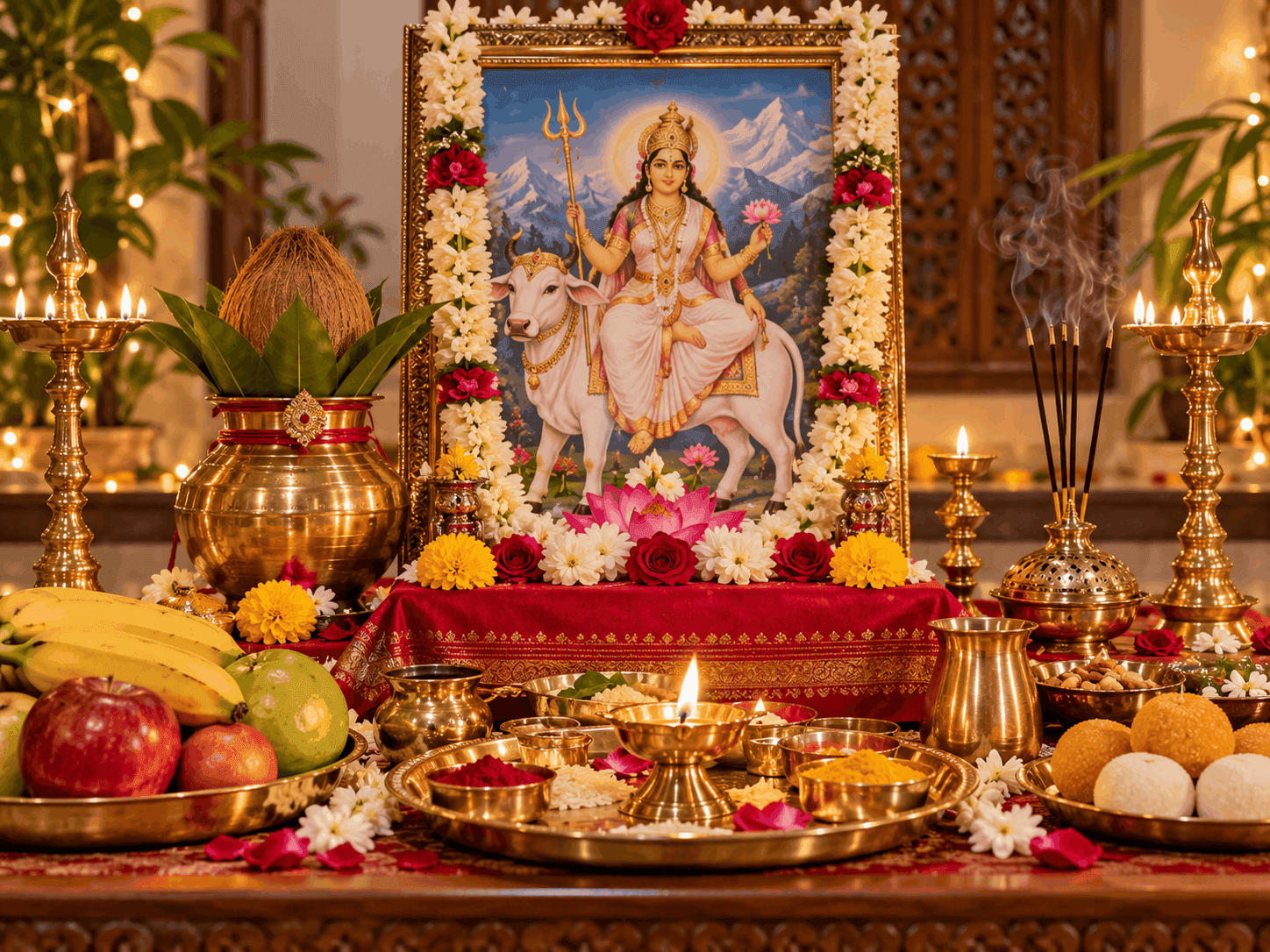
- Image or idol of Maa Shailputri or Goddess Durga
- Clean cloth for the altar
- Diya with oil or ghee
- Fresh flowers
- Kumkum, turmeric and akshata
- Clean water
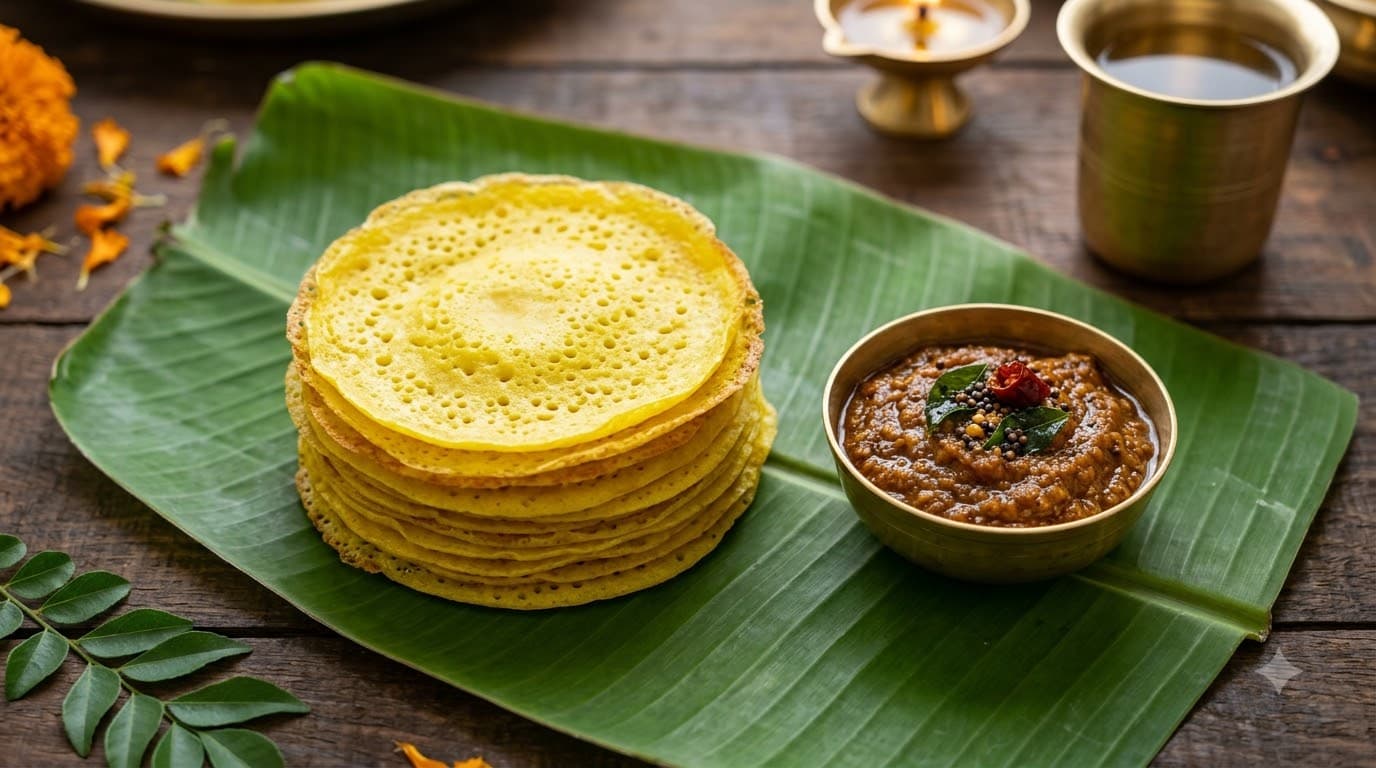
- Fruits and traditional sweets
- Incense, where customary
- Naivedya or bhog
Step-by-step Maa Shailputri Puja
Step 1: Prepare the worship space
Bathe, wear clean clothes and arrange a clean altar for the Goddess.
Step 2: Place the Goddess's image
Place the picture or idol of Maa Shailputri on a clean platform decorated with flowers.
Step 3: Light a diya
Light the lamp safely and begin the prayer with devotion.
Step 4: Offer flowers and naivedya
Offer fresh flowers, fruits and suitable food preparations according to your household tradition.
Step 5: Chant the Maa Shailputri mantra
Recite "Om Devi Shailaputryai Namah" with attention and reverence.
Step 6: Perform aarti
Complete the worship with aarti and prayers for peace, strength and family well-being.
Step 7: Distribute prasad
Share the offered prasad with family members.
Is Kalash Sthapana required?
Kalash sthapana, also known as GhataSthapana, is an important opening ritual in many Navratri traditions.
However, a simple personal prayer to Maa Shailputri does not necessarily require performing an elaborate Kalash Sthapana ceremony.
Families following a formal Navratri vrata should observe their customary practices and seek guidance from a knowledgeable Pandit when needed.
Maa Shailputri Mantra and Meaning
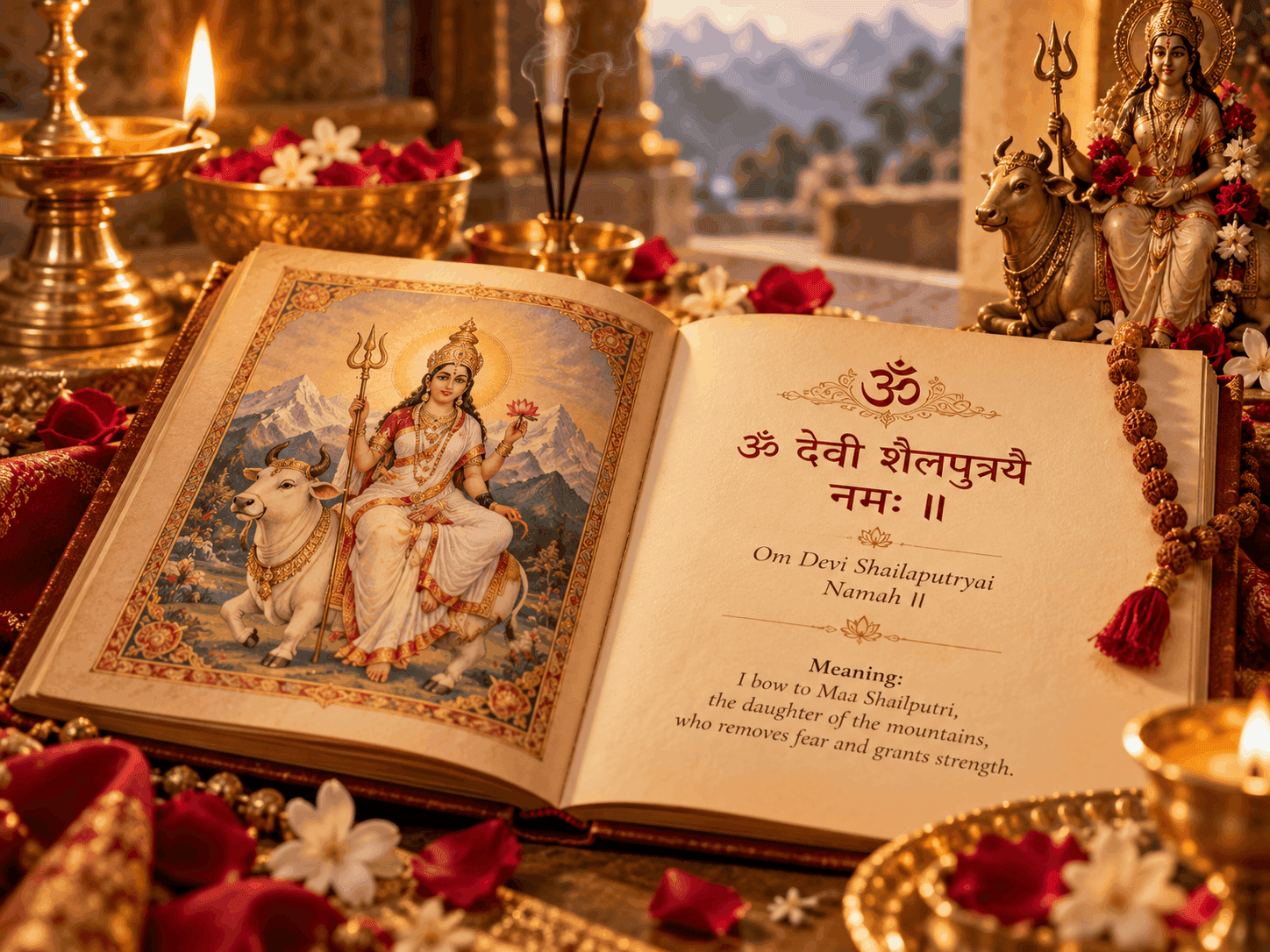
Chanting the Maa Shailputri mantra is a traditional devotional practice during the first day of Navratri.
Maa Shailputri Mool Mantra
ॐ देवी शैलपुत्र्यै नमः॥
Transliteration: Om Devi Shailaputryai Namah
Meaning: I bow to Goddess Shailputri.
Maa Shailputri Prarthana
वन्दे वाञ्छितलाभाय चन्द्रार्धकृतशेखराम्।
वृषारूढां शूलधरां शैलपुत्रीं यशस्विनीम्॥
This traditional prayer praises Maa Shailputri as the Goddess adorned with a crescent moon, riding a bull and holding a trident.
How to chant the mantra
- Sit comfortably in a clean, peaceful space.
- Focus your attention on the Goddess.
- Recite the mantra slowly and respectfully.
- Maintain a calm and devotional attitude.
- Complete the chanting with a personal prayer.
Some devotees chant the mantra 11, 21 or 108 times. These are customary practices rather than universal requirements.
Sincere devotion and understanding are more important than focusing only on repetition counts.
Maa Shailputri Bhog and Colour
What is offered to Maa Shailputri?
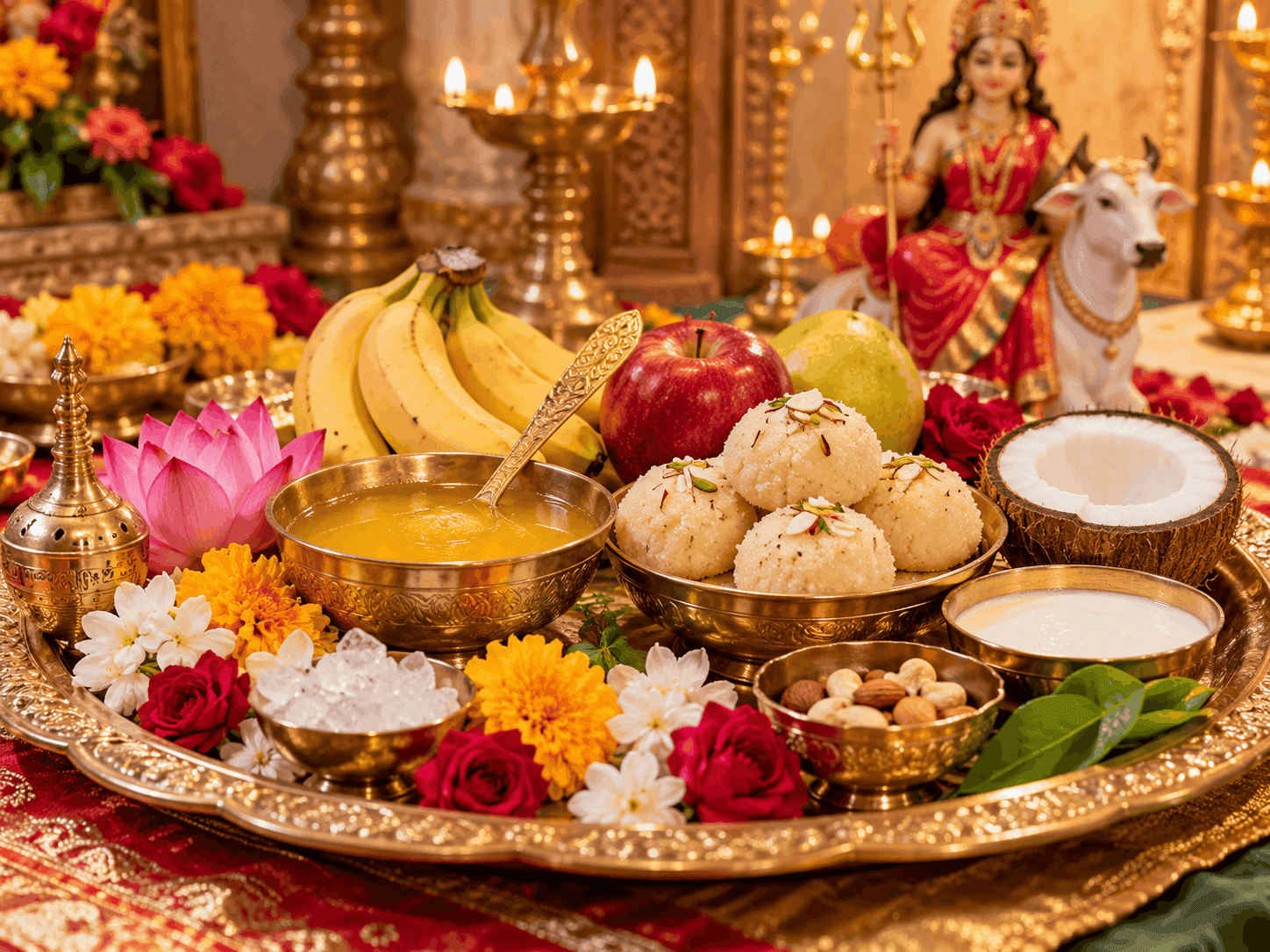
Pure desi ghee is commonly associated with Maa Shailputri worship.
Depending on household tradition, devotees may offer:
- Pure ghee
- Ghee-based sweets
- Fresh seasonal fruits
- Traditional sattvic food preparations
- Clean drinking water
Jasmine flowers are also traditionally associated with the Goddess.
The type of offering may vary according to regional traditions. Elaborate or expensive offerings are not necessary for a simple devotional prayer.
What is the colour of Maa Shailputri?
For Sharad Navratri 2026, the commonly followed festival colour calendar assigns orange to the first day, October 11.
However, Maa Shailputri is also frequently depicted wearing white, which symbolizes purity and peace.
The annual Navratri festival colour and the Goddess's traditional iconography are separate concepts.
Devotees can follow their family customs when choosing clothes and decorations for worship.
Significance of Maa Shailputri
Maa Shailputri represents strength, determination, devotion and stability.
As the first of the nine Navdurgas, her worship signifies the beginning of the spiritual journey of Navratri.
Strength and determination
The mountain symbolizes firmness and the ability to remain steady during life's challenges.
Patience and discipline
The bull reflects perseverance and the importance of carrying out one's responsibilities with dedication.
Purity and devotion
The lotus encourages devotees to cultivate compassion, sincerity and spiritual awareness.
A meaningful beginning
The first day of Navratri offers families an opportunity to reflect on their intentions, pray together and reconnect with traditional values.
Connecting younger generations with tradition
Maa Shailputri's story can help children and younger devotees understand the meaning behind Hindu worship.
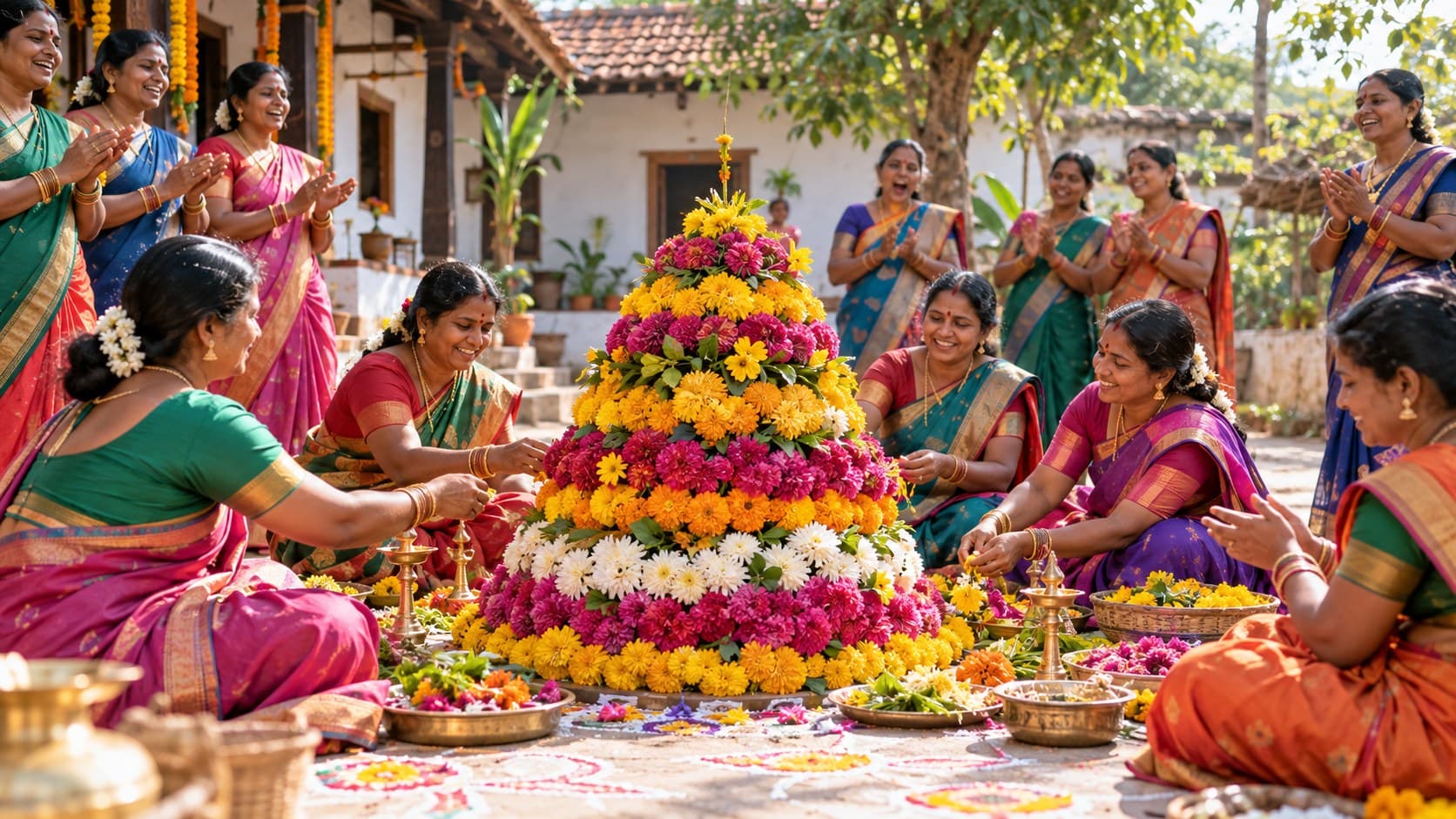
Families may celebrate together by learning the Goddess's story, chanting a simple mantra, arranging flowers or participating in puja preparations.
Such activities help preserve traditional knowledge while encouraging meaningful participation in spiritual and cultural practices.
Devotees seek the Goddess's blessings through worship. Spiritual benefits are matters of religious faith and should not be presented as guaranteed outcomes.
Frequently Asked Questions
Who is Maa Shailputri?
Maa Shailputri is the first form of Navdurga worshipped during Navratri. She is identified with Goddess Parvati, the daughter of the Himalayas.
When is Maa Shailputri Puja in 2026?
Maa Shailputri is worshipped on Sunday, October 11, 2026, the first day of Sharad Navratri in India.
What is the Maa Shailputri mantra?
A traditional mantra is "Om Devi Shailaputryai Namah" (ॐ देवी शैलपुत्र्यै नमः॥).
What is the bhog of Maa Shailputri?
Pure desi ghee is commonly associated with her worship. Families may also offer ghee-based sweets and fruits.
Which animal does Maa Shailputri ride?
Maa Shailputri rides a bull, traditionally associated with Nandi. She is also known as Vrisharudha.
Can Maa Shailputri Puja be performed at home?
Yes. Devotees can perform a simple home prayer using a clean altar, diya, flowers, offerings and mantra chanting.
Why is Maa Shailputri worshipped on Navratri Day 1?
She is the first of the nine forms of Durga and symbolizes stability, determination and the beginning of spiritual growth.
Is a Pandit necessary for Maa Shailputri Puja?
A simple household prayer does not necessarily require a Pandit. Families arranging formal Navratri rituals or Ghatasthapana may seek traditional guidance.