Uma Maheshwara Vratam: The Ashta Maha Vratam That Ends By Giving the Idol Away
By Divine center ·
Uma Maheshwara Vratam is the joint worship of Shiva and Parvati, performed on Karthika Pournami. Here's how it differs from Kedareshwara Vratam, and why the puja ends by gifting the idol away.
Uma Maheshwara Vratam
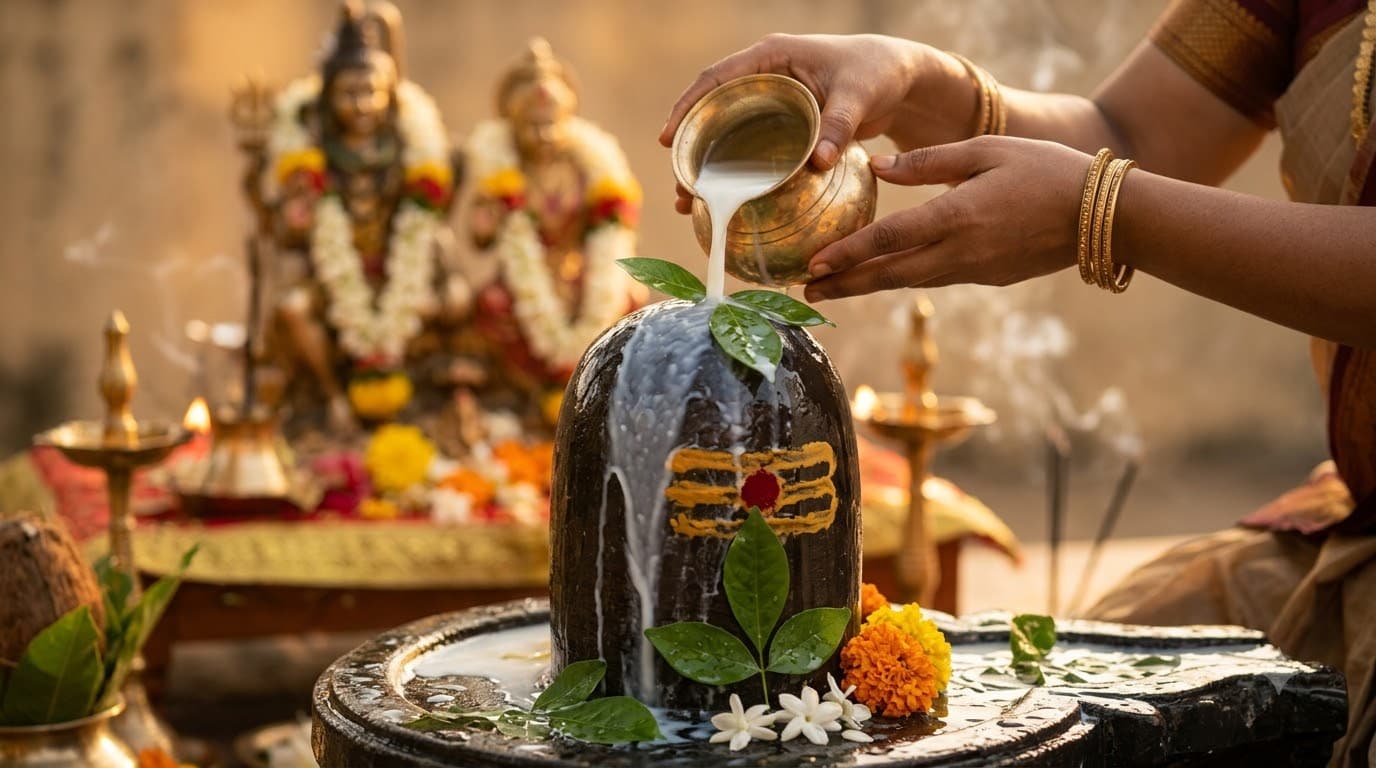
Most home pujas end the same way — a final aarti, prasadam passed around, the idol left right where it was for tomorrow. Uma Maheshwara Vratam does something different at the close: the freshly worshipped idol of Shiva and Parvati is wrapped and handed to someone else entirely — a priest, a relative, a devotee who'll take it home and continue the worship there. It's an unusual enough detail that people performing this vratam for the first time often ask if they've understood the instructions correctly. They have.
This guide covers what Uma Maheshwara Vratam actually involves, how it differs from Kedareshwara Vratam (the one it's most often confused with), the timing on Karthika Pournami, and the full ritual sequence including that closing idol-gifting step.
1. What Is Uma Maheshwara Vratam?
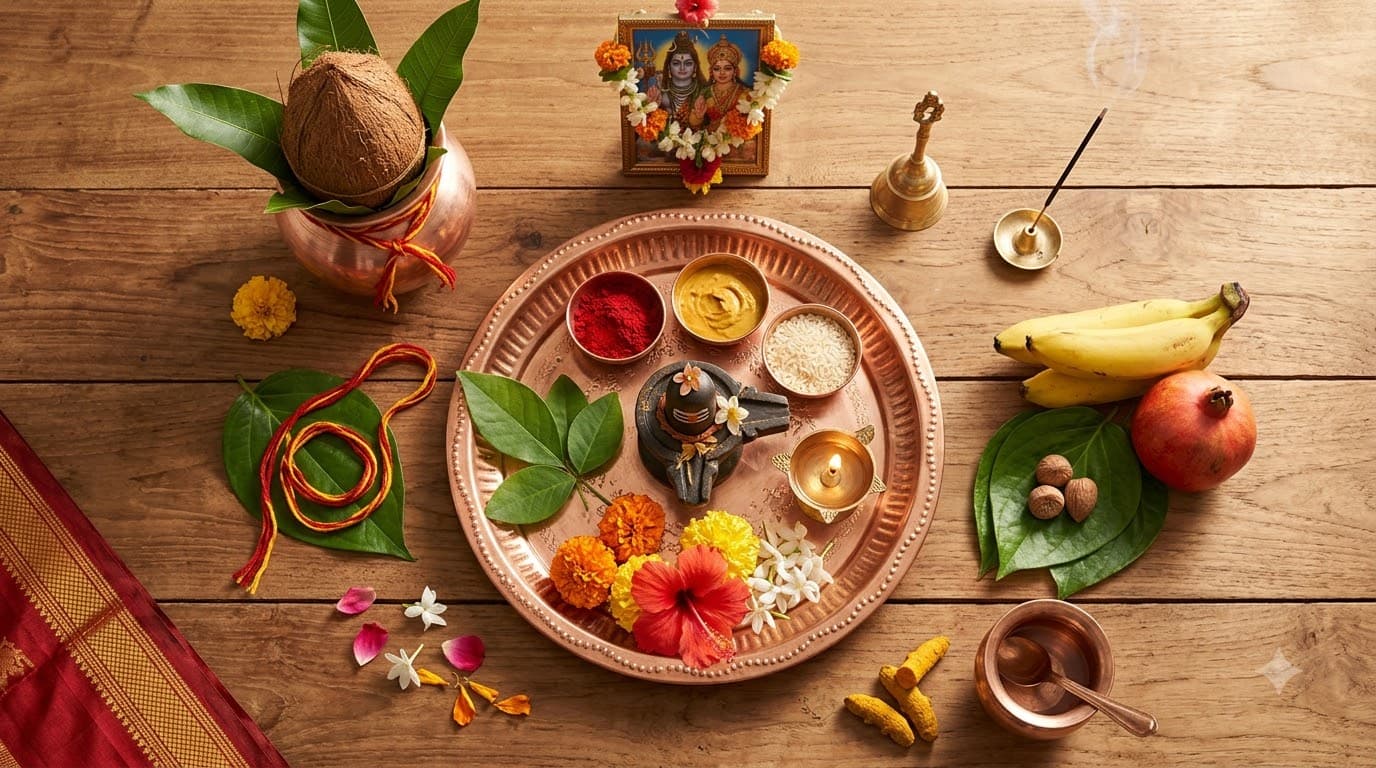
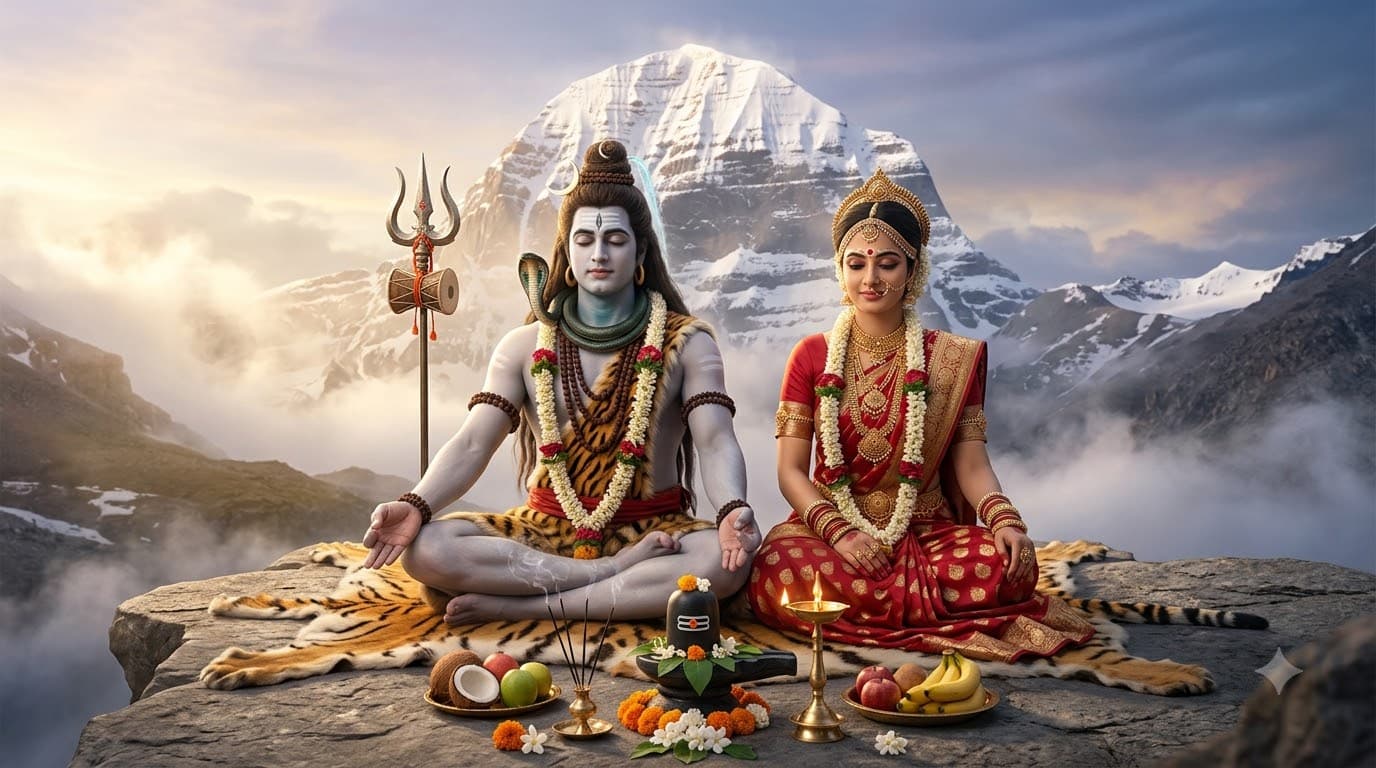
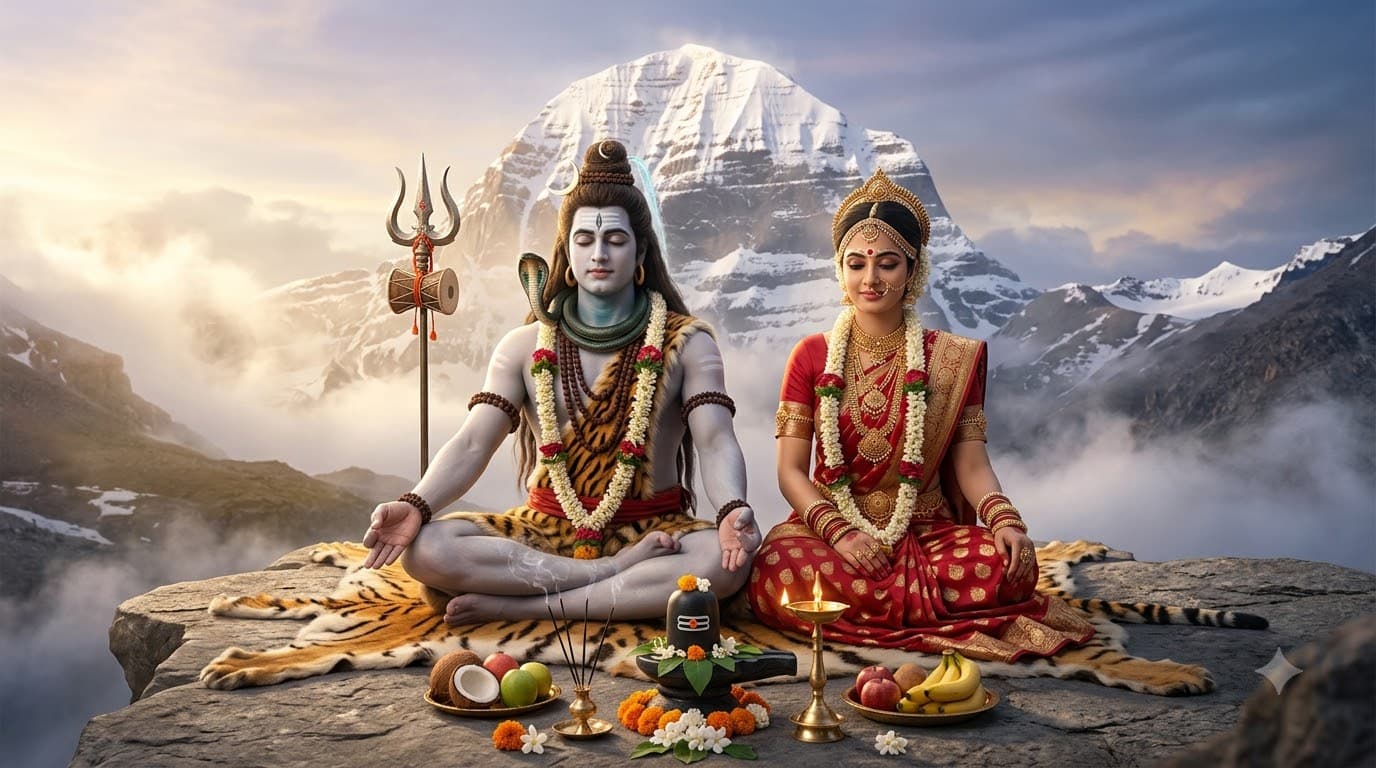
Uma Maheshwara Vratam is the joint worship of Goddess Parvati (Uma) and Lord Shiva (Maheshwara) as a single divine couple, rather than as two separate deities. It's named among the eight Ashta Maha Vratams in the Skanda Purana, and is traditionally performed on Karthika Pournami — the full moon night of Karthika Masam. Couples, those preparing for marriage, and families seeking marital harmony and general wellbeing are the ones who most commonly observe it.
At a Glance:
- Deities worshipped: Shiva and Parvati together, as Uma-Maheshwara
- Scriptural source: named as one of the eight Ashta Maha Vratams in the Skanda Purana
- Typical timing: Karthika Pournami, the full moon of Karthika Masam (mid-November to mid-December)
- Distinctive ritual step: the worshipped idol is gifted to a devotee or priest at the close of the vratam
- Who it's for: married couples, those preparing for marriage, and families seeking harmony and prosperity
Did You Know? Uma Maheshwara Vratam is sometimes confused with Kedareshwara Vratam, since both center on Shiva and are performed for marital harmony — but they're two distinct observances. Section 2 covers exactly how.
2. How Uma Maheshwara Vratam Differs from Kedareshwara Vratam
These two get mixed up often enough that it's worth being direct about the difference:
- Uma Maheshwara Vratam: worships Shiva and Parvati together as a couple, falls on Karthika Pournami, and closes with the idol being gifted onward to a devotee
- Kedareshwara Vratam: worships Shiva alone, has no fixed calendar date, and centers on a 21-knot sacred thread along with feeding 21 Brahmins
Myth vs. Fact: Both vratams are aimed at marital harmony and prosperity, which is likely why they're conflated — but the deity focus, the ritual structure, and the timing are all genuinely different. A family planning to observe one shouldn't assume it covers the other.
3. Spiritual Significance & the Ideal Behind the Vratam
Shiva and Parvati are worshipped jointly here as the model of a balanced, devoted union — Shiva representing consciousness, Parvati the energy (Shakti) that gives it form and direction. Performing this vratam together as a couple is meant to draw that same balance into a marriage: harmony, mutual respect, and the ability to hold together through difficulty.
Tradition holds that sincere observance brings material benefits first — health, stability, a settled household — with spiritual growth following through repeated, genuine practice. Several accounts cited in tradition describe devotees experiencing healing, restored prosperity, or resolution of a marriage difficulty after observing it faithfully, though these are devotional accounts rather than documented history.
4. When Is Uma Maheshwara Vratam Performed?
Uma Maheshwara Vratam is performed on Karthika Pournami, the full moon night of Karthika Masam — this generally falls somewhere between mid-November and mid-December on the Gregorian calendar, since Karthika is a lunar month that shifts slightly from year to year. Some families also perform it on other Pournami days through the year, though Karthika Pournami is by far the most widely observed date.
Panchangam Note: Because the exact Gregorian date changes annually and can shift by a day between panchangams, confirm the current year's Karthika Pournami date with a Hyderabad/Telangana-set panchangam or your family pandit before the vratam, rather than assuming a fixed calendar date.
5. Where Is Uma Maheshwara Vratam Observed?
The vratam is observed across South India, with households in Andhra Pradesh, Telangana, Karnataka, and Tamil Nadu all following broadly the same Karthika Pournami timing, though regional temples sometimes add their own local customs to the idol-gifting step.
In Hyderabad, many families perform the vratam at home with a pandit guiding the closing steps, while others choose to hold it at a Shiva temple specifically for Karthika Pournami, when many temples already hold special evening events for the full moon.
6. How to Perform Uma Maheshwara Vratam at Home
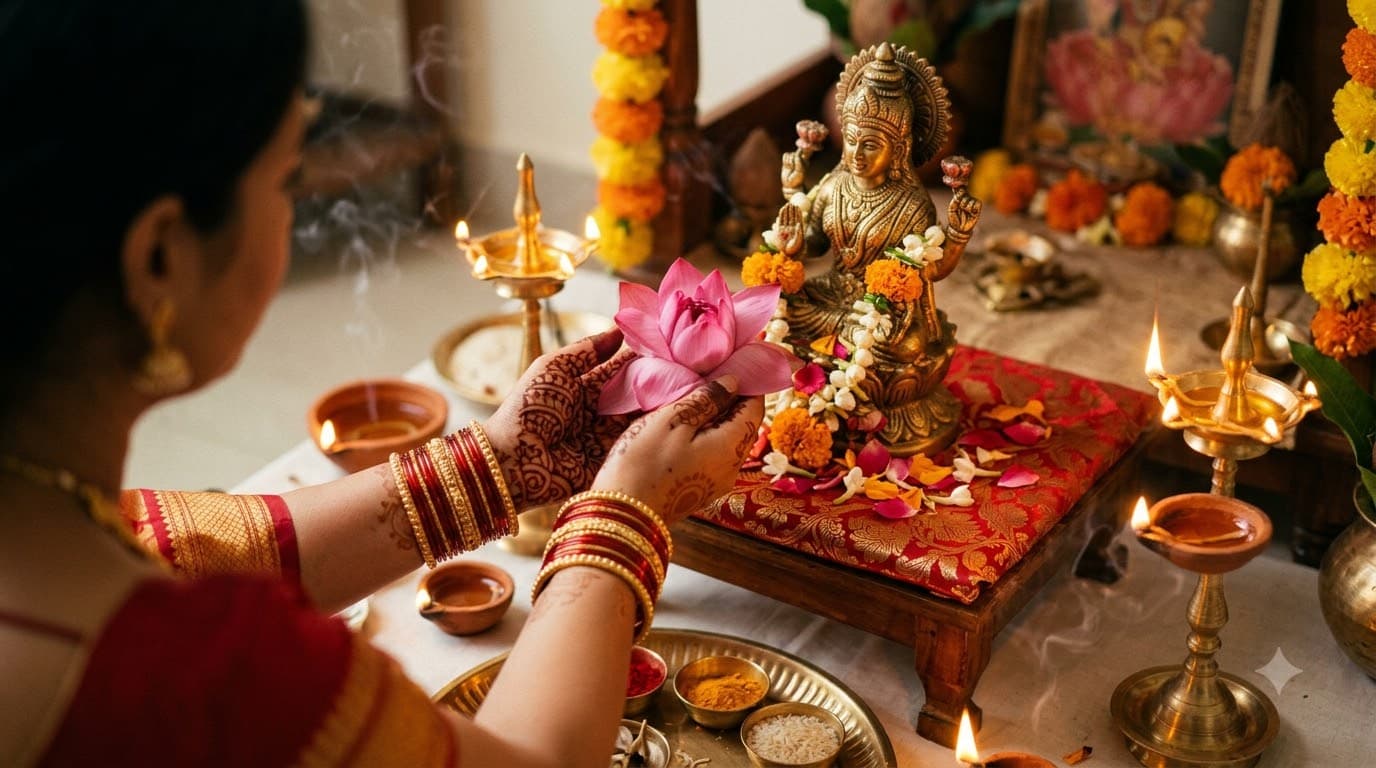
- Begin with Ganesh Puja and a formal Sankalp stating the couple's or family's intention.
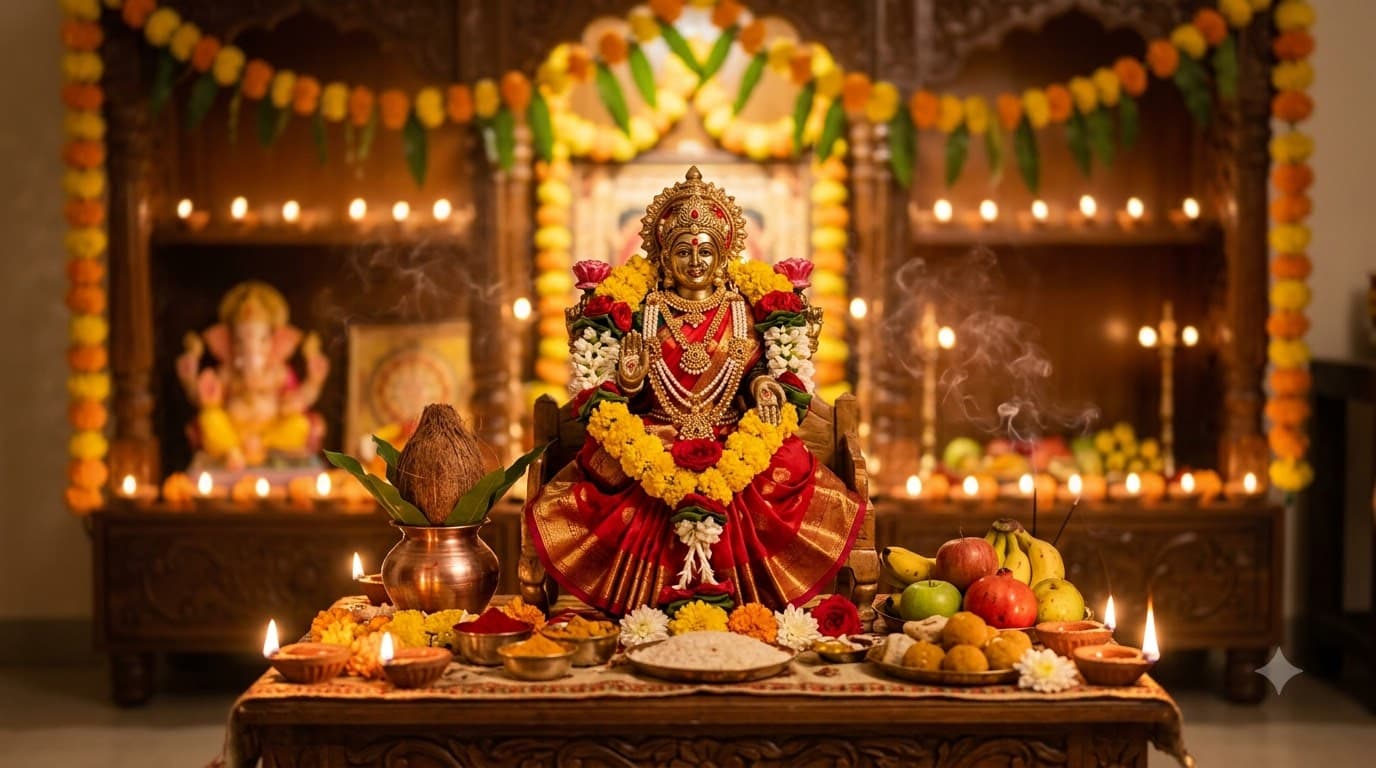
- Set up a Kalash and, where used, the Uma-Maheshwara idol on a decorated altar.
- Perform abhishekam to the idol (or a Shivalinga, where a separate idol isn't used) with water, milk, and panchamritam.
- Complete alankaram — decorating the idol — followed by formal archana.
- Recite or listen to the vratam katha (story).
- Close with aarti, then gift the worshipped idol to a devotee, relative, or priest as the final step.
Quick Tip: Decide in advance who the idol will be gifted to — this closing step is a fixed part of the vratam and shouldn't be left to figure out on the spot.
7. Major Rituals of Uma Maheshwara Vratam
- Sankalp: the couple or family's formal statement of intention at the start
- Abhishekam: ritual bathing of the Uma-Maheshwara idol with water, milk, and panchamritam
- Alankaram: decorating the idol before the main worship
- Katha recitation: the vratam's traditional story, told or read aloud
- Idol gifting: the worshipped idol is given to a devotee or priest, the vratam's most distinctive closing step
8. Fasting & Offerings
Many observing the vratam keep a fast through the day, breaking it only after the evening puja is complete — consistent with how Pournami fasts are generally observed. Panchamritam, seasonal fruits, and simple sweets are the most common offerings made during the puja itself.
Inclusivity note: for children, elderly family members, or anyone managing a health condition, a full day-long fast isn't necessary to observe the vratam meaningfully — participating in the puja itself, with regular meals, is entirely acceptable.
9. Do's and Don'ts
Do:
- Confirm the current year's Karthika Pournami date with a local panchangam before planning the vratam.
- Decide in advance who will receive the gifted idol at the close of the puja.
- Perform the vratam together as a couple where possible, since the joint Sankalp is central to its meaning.
Don't:
- Don't confuse this with Kedareshwara Vratam — they're different observances with different structures.
- Don't skip the idol-gifting step or treat it as optional — it's a defining part of this specific vratam.
- Don't assume a fixed Gregorian date year to year — Karthika Pournami shifts annually.
10. Interesting Facts
- Uma Maheshwara Vratam is one of only eight vratams named specifically as “Maha Vratams” (great vratams) in the Skanda Purana.
- The idol-gifting closing ritual makes this one of the few Hindu home pujas where the worshipped object is meant to leave the household rather than stay for future worship.
- Karthika Pournami, the date this vratam is tied to, is also significant for Karthika Deepam and other Shiva-related observances, making it one of the busier full moons of the year for Shiva devotees.
- The vratam is counted as one where material and spiritual benefits are both promised — material first, spiritual growth through repeated practice.
11. Book Uma Maheshwara Vratam with Divine Center
Want a pandit to guide your Uma Maheshwara Vratam this Karthika Pournami? Book Uma Maheshwara Vratam | Talk to Our Priest | Contact Divine Center
13. References & Further Reading
- Vrata — Wikipedia — background on the structure and purpose of Hindu vratas generally.
- Manikandeswaram Uma Maheswara Temple — Wikipedia — an example of a temple tradition built around this specific deity pairing.
- Karthika Deepam — Wikipedia — for context on Karthika Masam, the month this vratam's date falls within.
14. Final Thoughts
There's something quietly generous about a puja that ends by giving away the very thing you just spent the evening worshipping. Most rituals are about what a family keeps and holds onto — this one closes by letting go of it, on purpose, as part of the point. It's a small detail, but it's the one people tend to remember longest about Uma Maheshwara Vratam.
Shubham.
Frequently Asked Questions
Q1. What is Uma Maheshwara Vratam?
The joint worship of Shiva and Parvati as a divine couple, performed on Karthika Pournami, and named as one of the eight Ashta Maha Vratams in the Skanda Purana.
Q2. Is Uma Maheshwara Vratam the same as Kedareshwara Vratam?
No. Uma Maheshwara Vratam worships Shiva and Parvati together and falls on Karthika Pournami. Kedareshwara Vratam worships Shiva alone, centers on a 21-knot thread, and has no fixed calendar date.
Q3. When is Uma Maheshwara Vratam performed?
On Karthika Pournami, the full moon of Karthika Masam, which generally falls between mid-November and mid-December. The exact Gregorian date shifts each year, so it's worth confirming against a current panchangam.
Q4. What happens to the idol after the puja?
It's traditionally gifted to a devotee, relative, or priest as the vratam's closing step — a distinctive part of this observance not found in most other Shiva-Parvati pujas.
Q5. Who should perform this vratam?
Married couples for marital harmony, those preparing for marriage, and families seeking overall wellbeing most commonly observe it, though individual devotees can perform it as well.
Q6. Can it be performed without a dedicated Uma-Maheshwara idol?
Yes — a Rudraksha or a small Shivalinga can be used in its place for the abhishekam and worship, with Parvati invoked alongside Shiva through mantra and Sankalp.
Q7. Do I need a pandit for this vratam?
It can be performed at home by the family, but the sequence — particularly the abhishekam, katha recitation, and idol-gifting step — is easy to get wrong without guidance, which is why many families book a pandit.
Q8. Is this vratam mentioned in scripture?
Yes — it's named as one of the eight Ashta Maha Vratams in the Skanda Purana.