Raksha Bandhan 2026: India's Festival of the Sibling Bond
By Divinecenter ·
Somewhere in India right now, a sister is already thinking about which Rakhi to buy. That's how Raksha Bandhan works — it sneaks up on you, and then it's everything. This year it falls on Friday, August 28, 2026 — Sravana Purnima. Bhadra Kaal ends before sunrise, the muhurat opens clean, and there's nothing between you and the ceremony. Whether you're tying across the breakfast table or posting to a sibling six time zones away, here's everything you need.
What "Raksha Bandhan" Actually Means
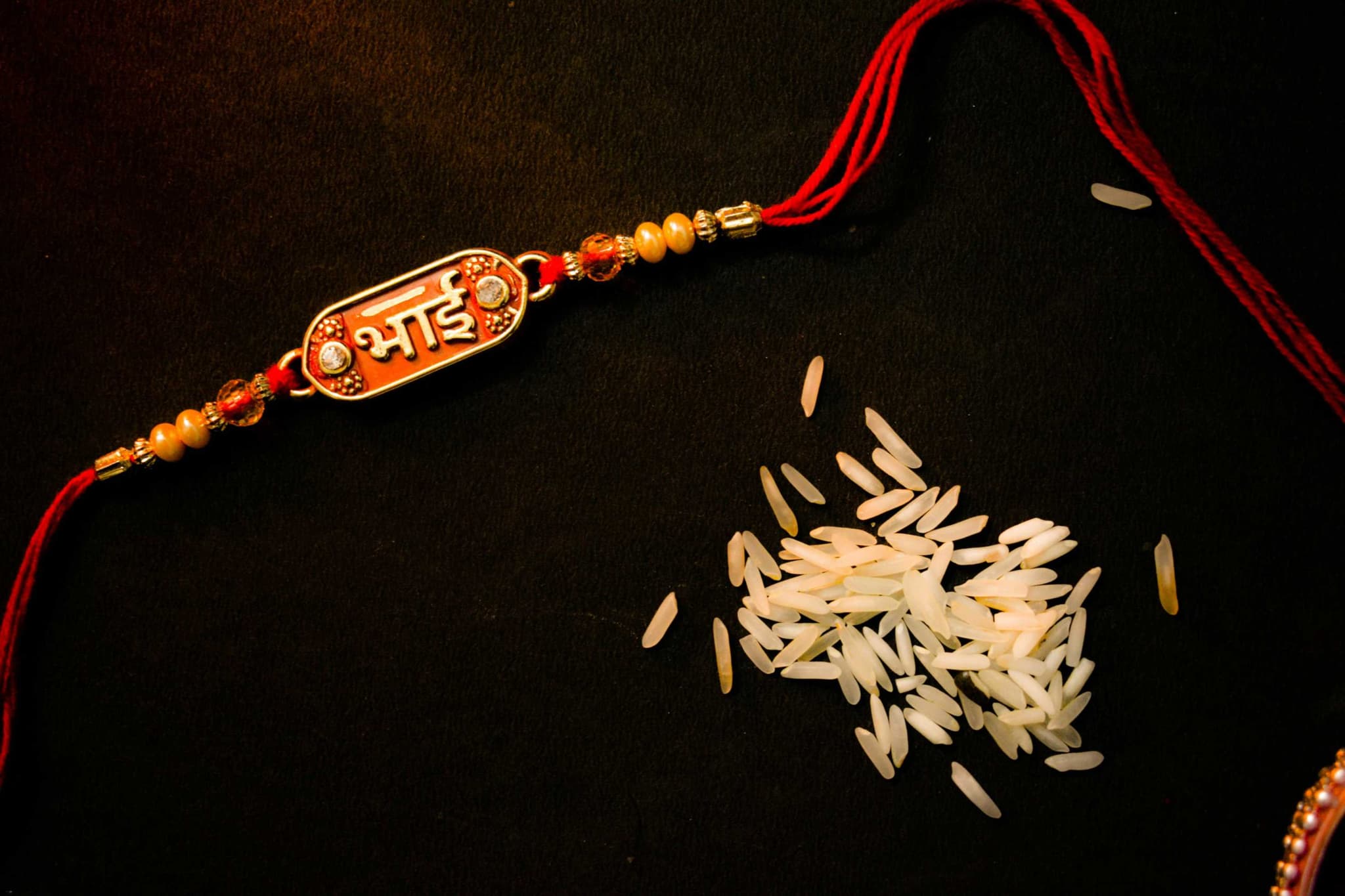
Break it down: raksha means protection. Bandhan means bond. So Raksha Bandhan is literally the bond of protection — a sister ties a thread on her brother's wrist, and he vows to protect her. Simple as that. Except it's never quite that simple, which is why this festival has lasted thousands of years.
The thread is called a Rakhi. It started as a cotton string and has become — depending on your sister's taste — anything from a delicate silk thread to a jewelled bracelet to a silk-wrapped design with your favourite character on it. The form keeps changing. What it means hasn't.
The Ancient Stories Behind the Festival
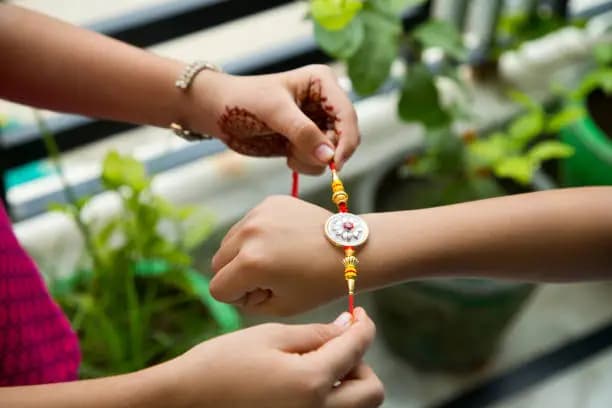
Every major Hindu festival has its stories, and Raksha Bandhan has several. The one that keeps getting repeated across traditions involves Goddess Lakshmi and King Bali.
The legend goes: Vishnu had taken his Vamana form and defeated the demon king Bali, but then stayed at Bali's doorstep as his doorkeeper — bound by duty. Lakshmi, anxious for her husband, disguised herself as a poor woman and tied a Rakhi on Bali's wrist. When he asked what she wanted in return, she asked for the release of the man at his door — who was Vishnu. Bali kept his word. The Rakhi had worked.
Another version involves Draupadi and Krishna. When Krishna accidentally cut his finger during Shishupala's defeat, Draupadi tore a strip of her saree and tied it around his wrist. Krishna, moved by the act, vowed to repay the debt — and kept that promise years later when she called for help during the dice game in the Kuru court.
Both stories point at the same thing: a thread, freely given, that creates an obligation. Not of fear or transaction, but of love and protection.
The 2026 Muhurat — Timing Your Rakhi Right
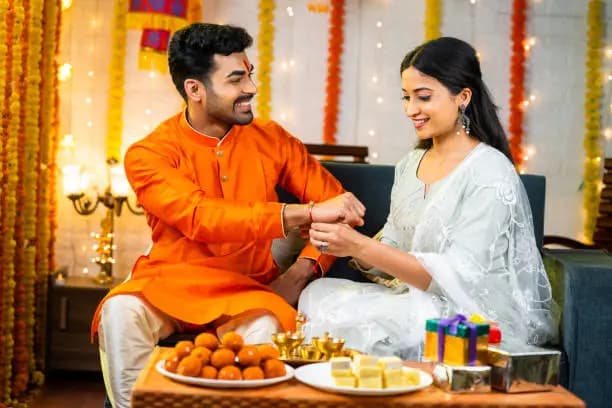
This is where things get practical. Raksha Bandhan is observed on Sravana Purnima — the full moon of the Sravana month — and the timing of the ceremony matters.
The one thing to avoid is Bhadra Kaal: an inauspicious period that can fall during Purnima and is considered unsuitable for tying Rakhi. In 2026, there's good news on this front — the Bhadra period ends before sunrise on August 28, which means the entire morning is clean and auspicious.
Date: Friday, August 28, 2026
Shubh Muhurat: 5:57 AM to 9:48 AM IST
Purnima Tithi Begins: 9:08 AM on August 27, 2026
Purnima Tithi Ends: 9:48 AM on August 28, 2026
Bhadra Kaal: Ends before sunrise — no conflict on August 28
Best Timing: Morning muhurat window (5:57–9:48 AM) or Aparahna (late afternoon)
If morning isn't possible, Aparahna (late afternoon) is also considered auspicious. What's important is to avoid Bhadra — which in 2026, you don't need to worry about at all.
The Ritual: What Actually Happens
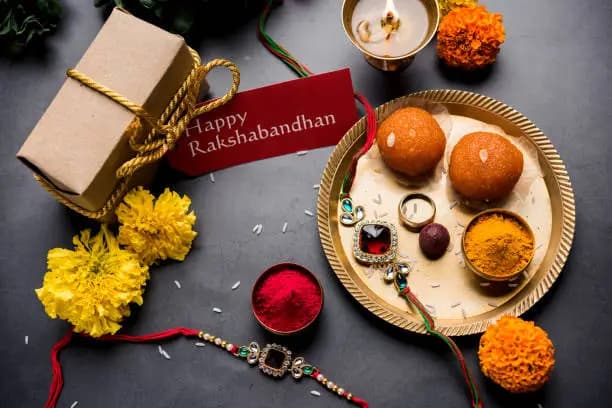
Setting up the puja thali
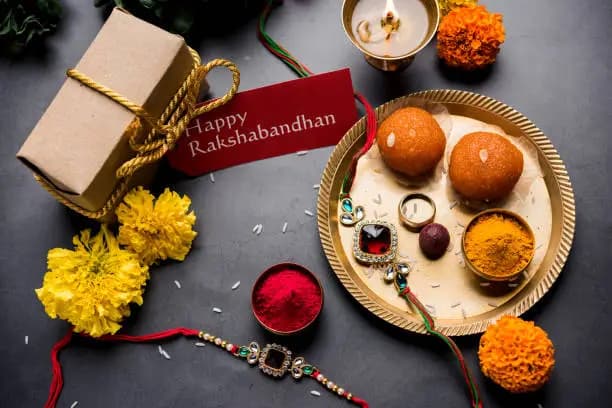
The sister prepares a plate with the Rakhi, akshat (unbroken rice mixed with kumkum), a lit diya, some sweets, and if the family follows it, a small piece of sandalwood or a coin. Some families include a tilak bowl.
The ceremony — step by step
- The brother sits facing east or north.
- The sister performs aarti — circling the diya before him, praying for his wellbeing and protection from the evil eye.
- She applies a tilak (kumkum and akshat) on his forehead.
- She ties the Rakhi on his right wrist.
- The Raksha mantra is recited: Yena baddho bali raja danavendra mahabalah, tena tvam abhibadhnami rakshe ma cala ma cala.
- Sweets are shared. The brother offers a gift and his vow of protection.
Done right, the whole thing takes about fifteen minutes. But fifteen minutes where everyone in the room knows exactly why they're there.
The Same Day: What Else Happens on Sravana Purnima
August 28, 2026 isn't just Raksha Bandhan. It's Sravana Purnima — and several other important observances fall on the same day:
- Veda Upakarma (Avani Avittam): The annual ritual for Brahmin communities where the sacred thread (yagnopavita) is renewed. Observed the same day in many communities.
- Gayatri Japam / Jandhyala Purnima: The recitation of the Gayatri mantra, typically the day after Upakarma, falls on or near this date.
- Hayagriva Jayanti: The birthday of Hayagriva — the horse-headed form of Vishnu associated with knowledge — observed by students and scholars.
For South Indian families particularly, August 28 is a layered day where multiple traditions come together.
How Different Regions Celebrate
The thread is the same everywhere, but the customs around it differ by family and region.
In North India, the Rakhi ceremony is typically the centrepiece of the day — families gather, the ritual happens, big meals follow. The day is practically a holiday regardless of what the calendar says.
In Maharashtra, the same full moon is also Narali Purnima — coconut festival day — when fishing communities offer coconuts to the sea as a thanks for safe passage. Two traditions, one moon.
In Rajasthan and UP, brothers sometimes fast until their sisters tie the Rakhi.
In South Indian families, Raksha Bandhan observance varies more by community — for many, Avani Avittam / Upakarma is the primary ritual of the day, with the Rakhi ceremony happening alongside it.
For NRIs and Long-Distance Siblings
The honest answer: the bond is what matters, not the location. Here's what families actually do:
- Send it early. Physical Rakhis posted internationally need 2–3 weeks minimum. If you're sending from India to the US, UK, Australia or the Gulf, send by August 10 at the latest.
- Video call during muhurat. Sister in India, brother abroad — or vice versa — tie the Rakhi on a wrist in front of the camera, within the muhurat window. It works. It's been working for years.
- Book a Raksha Bandhan puja. Some families mark the day with a proper Satyanarayana puja or Devi puja at home, even when the sibling isn't physically present. Divine Center can arrange this — a verified pandit, at-home ritual, on the day itself.
Distance doesn't dissolve the thread. It just asks you to stretch it a little.
Why This Festival Has Lasted
You could be cynical about Raksha Bandhan — it's a thread, a sweet, a ritual that takes fifteen minutes. But the reason it keeps going, across regions and religions and centuries, is that it addresses something people actually feel: the specific, irreplaceable weight of the sibling bond.
There's no other relationship quite like it. Your parents knew you before you knew yourself. Your children come after. But your siblings — they were there through all of it, and they don't need an explanation for any of it. The Rakhi says: I see you. I'm protecting you. Stay.
That's a lot of work for a small thread.
References & Further Reading
- HinduTone — Raksha Bandhan 2026: Date, Muhurat, Story & Rakhi Mantra
- JoyfulFestival.in — Raksha Bandhan 2026: Date, Shubh Muhurat, Tithi & Calendar
- Rudraksha Ratna — Raksha Bandhan 2026: Meaning, Date, Muhurat & History
- AstroZindagi — Raksha Bandhan 2026: Date, Shubh Muhurat, Puja Vidhi
- Drik Panchang — Raksha Bandhan 2026 Muhurat Timings
Final Thoughts
A sister, a thread, a vow. Raksha Bandhan has lasted this long because it asks almost nothing of you — just fifteen minutes, a puja thali, and the willingness to say out loud what most siblings spend a lifetime showing. This August 28, whenever you tie that Rakhi — morning, afternoon, over a screen or across a table — may it hold.
Frequently Asked Questions
Q1. When is Raksha Bandhan in 2026?
A: Raksha Bandhan 2026 falls on Friday, August 28 — the full moon day (Sravana Purnima) of the Sravana month.
Q2. What is the shubh muhurat for tying Rakhi in 2026?
A: The auspicious window for tying Rakhi is 5:57 AM to 9:48 AM on August 28, 2026. Bhadra Kaal ends before sunrise that day, so the entire morning muhurat is clean and unobstructed.
Q3. Can Rakhi be tied in the evening on Raksha Bandhan 2026?
A: Yes. If morning isn't possible, Aparahna (late afternoon) is also considered auspicious for the ceremony. Evening tying is perfectly acceptable when the morning window is missed.
Q4. What is Bhadra Kaal and should I avoid it?
A: Bhadra Kaal is an inauspicious period that can fall during Purnima. Hindu tradition holds that Rakhi should not be tied during this time. In 2026, Bhadra ends before sunrise on August 28 — so there is no Bhadra conflict during the morning muhurat.
Q5. What do you need for the Raksha Bandhan puja thali?
A: A standard puja thali includes the Rakhi, akshat (rice mixed with kumkum), a lit diya, and sweets to share. Some families also include a tilak bowl, a small coin, or a piece of sandalwood. No elaborate setup is required — this is a home ritual.
Q6. What is the Raksha Bandhan mantra?
A: The mantra recited while tying the Rakhi is: "Yena baddho bali raja danavendra mahabalah, tena tvam abhibadhnami rakshe ma cala ma cala." It invokes the protective bond once tied on King Bali by Goddess Lakshmi.
Q7. How can NRI families celebrate when siblings are in different countries?
A: Send the physical Rakhi 2–3 weeks in advance to ensure international delivery. On the day, tie the Rakhi over a video call during the muhurat window. Many NRI families also book an online Satyanarayana puja or Devi puja through Divine Center to mark the occasion formally.
Q8. What other festivals fall on the same day as Raksha Bandhan 2026?
A: August 28, 2026 is also Veda Upakarma (Avani Avittam) for Brahmin communities, Hayagriva Jayanti, and Gayatri Japam / Jandhyala Purnima — making it an unusually layered day, particularly for South Indian families.
Q9. Is Raksha Bandhan a public holiday?
A: It is not a national public holiday, though some states like Uttar Pradesh, Rajasthan, and Madhya Pradesh may observe it as a restricted or optional holiday.
Q10. Can I book a puja for Raksha Bandhan 2026?
A: Yes. Divine Center offers at-home and online puja services — Satyanarayana puja, Lakshmi puja, and other Sravana Purnima rituals — with verified pandits across Hyderabad and Telangana. NRI families can book online pujas from anywhere in the world.