Damodara Tulasi Kalyanam 2026 Guide
By Divine center ·
Damodara Tulasi Kalyanam 2026 falls on November 22, two days before Karthika Pournami. Discover the Vrinda-Jalandhara legend, exact date, ritual process, and how families celebrate this Tulasi wedding.
Damodara Tulasi Kalyanam 2026
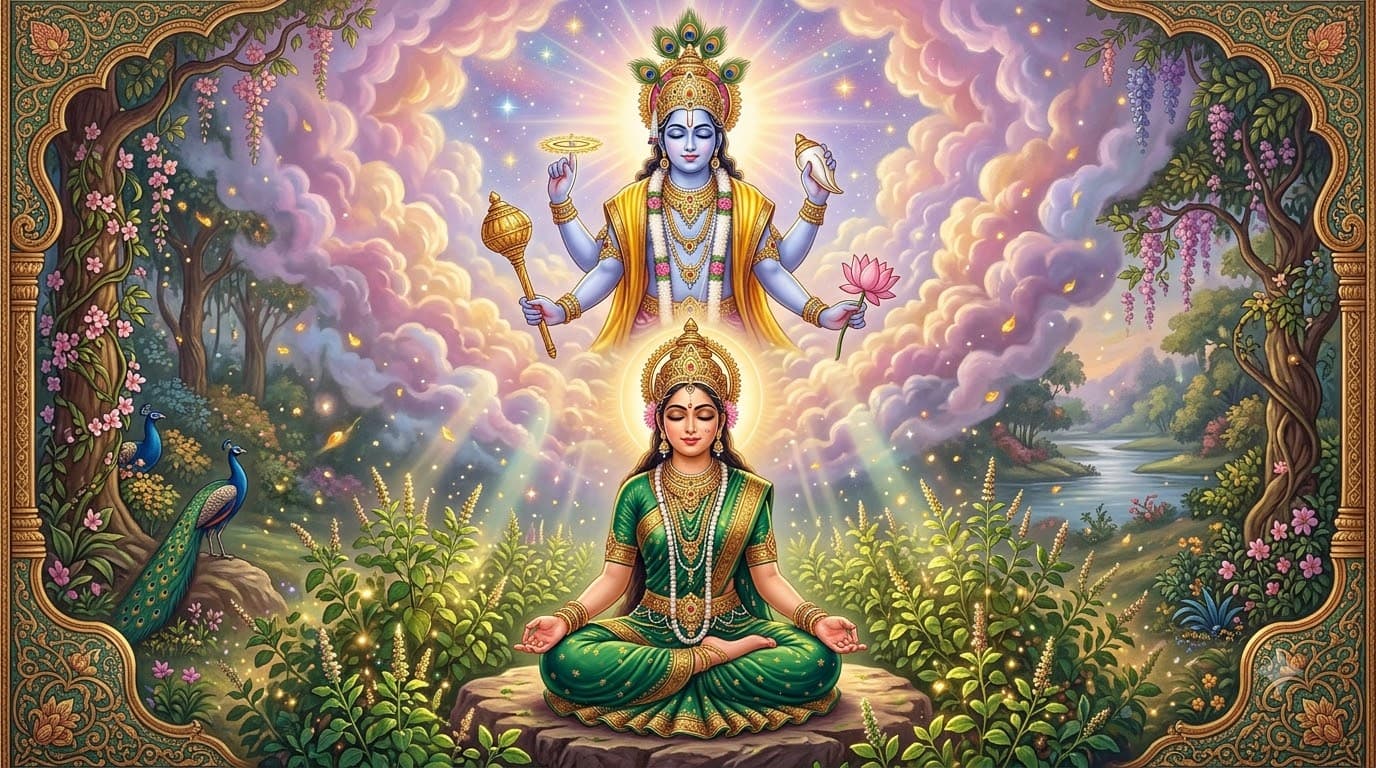
Damodara Tulasi Kalyanam — known in Telangana and Andhra Pradesh as Ksheerabdi Dwadasi — is the ceremonial wedding of Tulasi Devi to Lord Vishnu in his Damodara form, observed within Karthika Masam. In 2026, it falls on Sunday, November 22, two days before Karthika Pournami, and is treated by many Telugu families as the second most important day of the entire month.
1. What Is Damodara Tulasi Kalyanam?
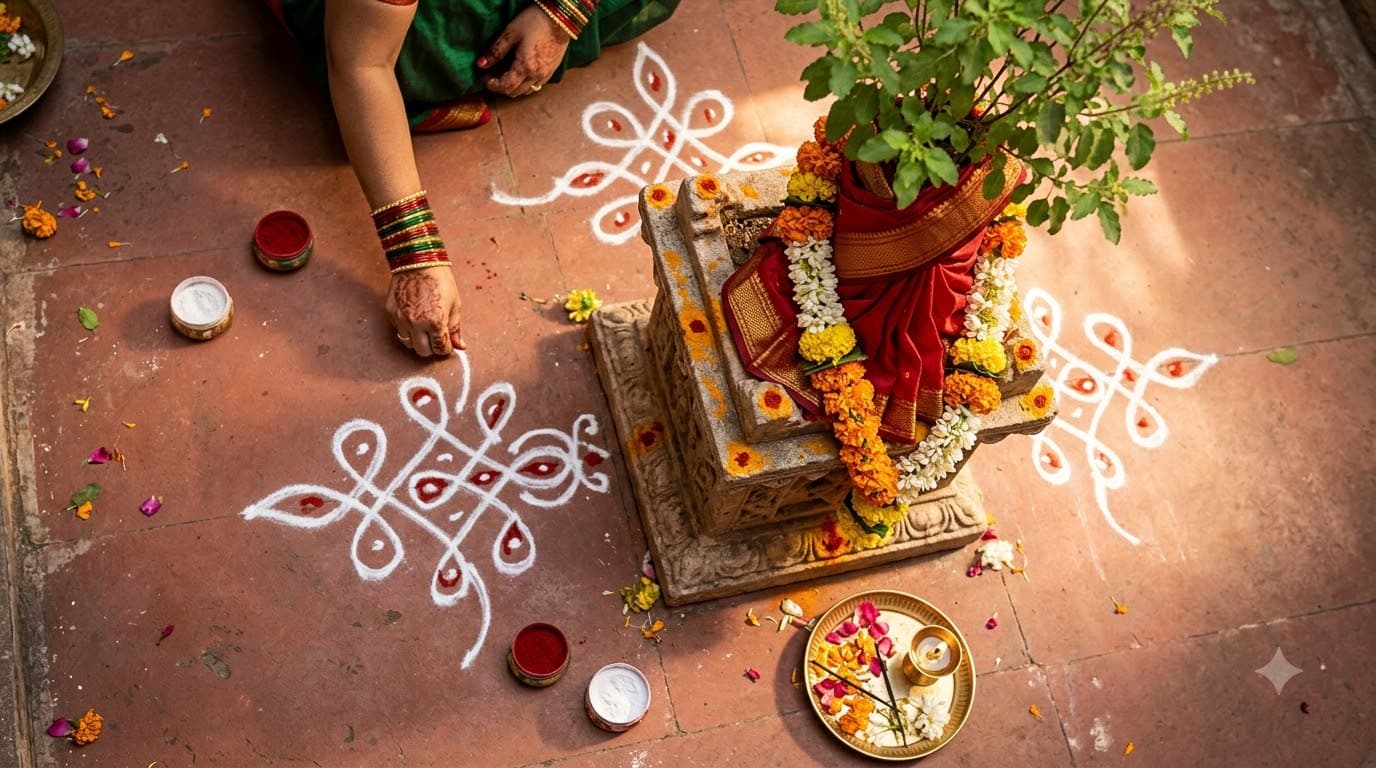
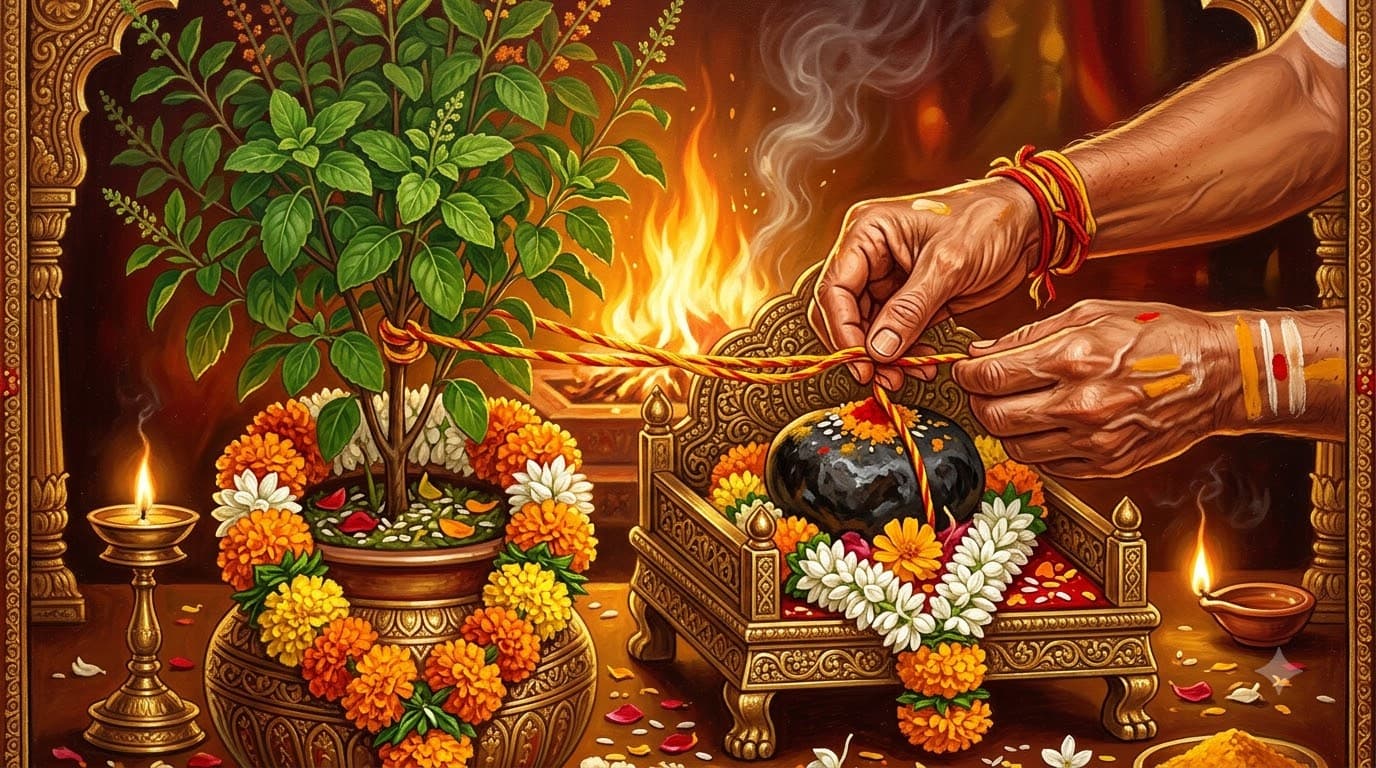
Damodara Tulasi Kalyanam is a ceremonial wedding ritual in which the Tulasi plant — worshipped as Tulasi Devi — is married to Lord Vishnu, represented as Damodara or as a Shaligram. It's performed at the tulasi kota with the full warmth and detail of a real wedding: a small mandap, turmeric, garlands, and wedding songs.
In 2026, Damodara Tulasi Kalyanam falls on Sunday, November 22, observed on Karthika Shukla Dwadashi (the twelfth day of the bright fortnight of Karthika Masam) in Telangana and Andhra Pradesh, where it's also called Ksheerabdi Dwadasi.
The observance goes by several other names across India: Chilku Dwadasi and Yogini Dwadashi in parts of the South, Tulasi Vivah or Tulasi Damodara Vivaha in Maharashtra and Gujarat, and Tulsi Habba in Karnataka — all referring to the same underlying ritual.
Did You Know?
The name Ksheerabdi Dwadasi literally means “the Dwadashi of the ocean of milk” — a reference to Lord Vishnu resting on the Kshira Sagar, and to this day's association with the Samudra Manthan, the churning of that cosmic ocean.
2. Why Is Damodara Tulasi Kalyanam Celebrated? The Legend of Vrinda and Jalandhara
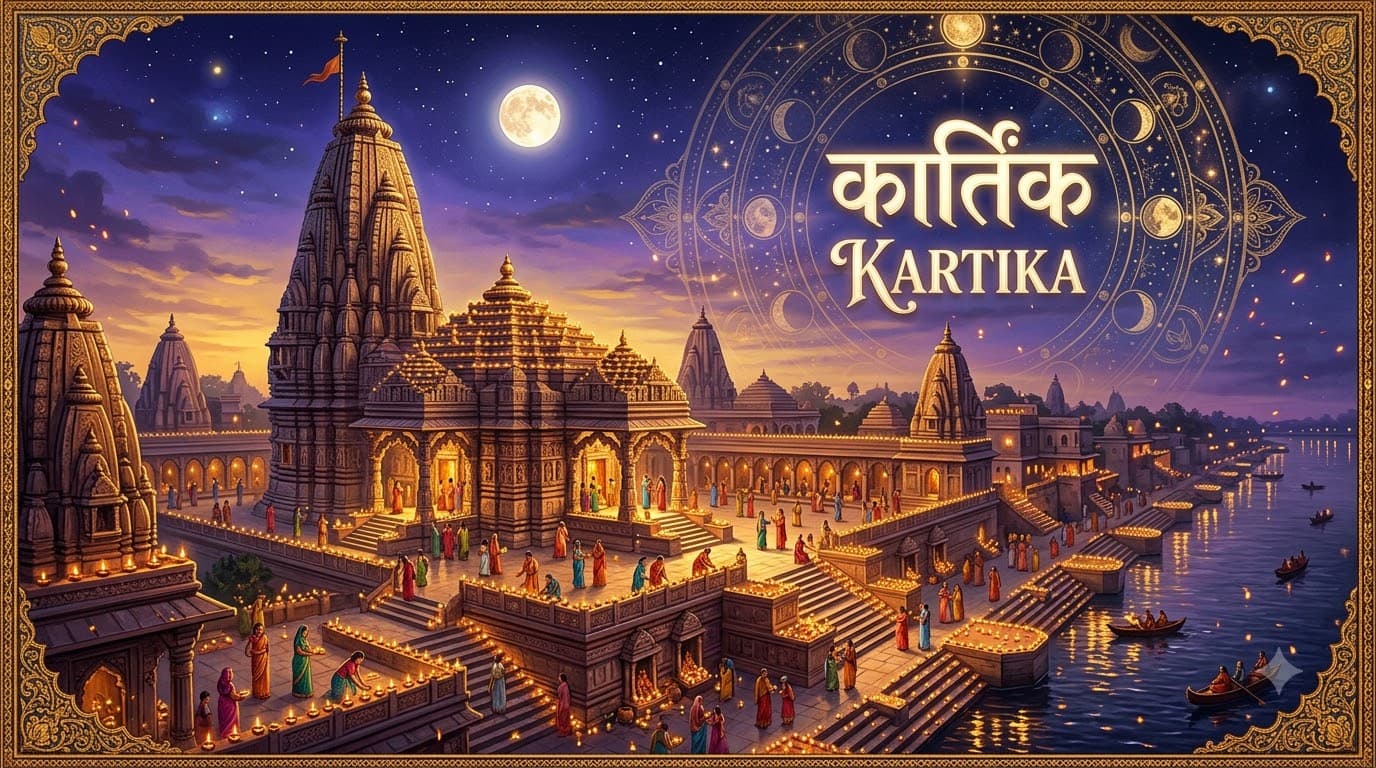
Tradition tells of Vrinda, a deeply devoted wife married to the demon king Jalandhara. Her unwavering chastity and devotion made her husband invincible, even against the gods. When Jalandhara's growing tyranny threatened the three worlds, Lord Vishnu is said to have taken on Jalandhara's form to break Vrinda's protective devotion, allowing the demon to finally be defeated.
Realising the deception, a heartbroken Vrinda is said to have cursed Vishnu, turning him to stone — the Shaligram. She then took the form of the Tulasi plant. To honour her devotion and fulfil his promise to marry her in this new form, Vishnu is said to wed Tulasi (as Shaligram/Damodara) each year on this day — the origin of the Tulasi Kalyanam ceremony.
Myth vs Fact
- Myth: Tulasi Kalyanam and Karthika Pournami are the same observance. Fact: they're two separate days within Karthika Masam — Tulasi Kalyanam falls on Dwadashi, two days before the Pournami full-moon night.
- Myth: Tulasi is simply a plant honoured for its medicinal value. Fact: in this tradition, Tulasi is worshipped as a goddess (Tulasi Devi, an incarnation of Vrinda), and the plant is her earthly form, not just a herb with health benefits.
- Myth: Every region observes this wedding on the exact same tithi. Fact: the day varies regionally — some traditions perform it on Prabodhini Ekadashi, others on Dwadashi, and some on Karthika Pournami itself.
This account comes from Puranic tradition and popular legend passed down through generations, not a verified historical event — we present it here as sacred story, the way most families do, not as documented history.
3. When Is Damodara Tulasi Kalyanam Celebrated in 2026? (Exact Date & Panchangam Details)
In Telangana and Andhra Pradesh, Damodara Tulasi Kalyanam (Ksheerabdi Dwadasi) falls on Sunday, November 22, 2026, observed on Karthika Shukla Dwadashi — two days before Karthika Pournami.
Regional date variation: Tulasi Vivah traditions elsewhere in India can fall anywhere between Prabodhini (Utthana) Ekadashi and Karthika Purnima, depending on regional custom — it isn't fixed to a single universal date across the country. If you're following a North Indian tradition, confirm whether your family observes it on Ekadashi or Dwadashi before planning the puja.
Panchangam Note: As with all tithi-based dates, exact start and end times shift slightly by location. Confirm the precise Dwadashi tithi timing with a Hyderabad-set panchangam or your family pandit before finalising the puja muhurat. For the surrounding month's full calendar, see our Karthika Masam 2026 guide.
4. Where Is Damodara Tulasi Kalyanam Celebrated?
The same underlying ritual is observed across India under different regional names:
- Telangana & Andhra Pradesh: Called Ksheerabdi Dwadasi or Chilku Dwadasi, observed at the home tulasi kota within Karthika Masam.
- Maharashtra & Gujarat: Called Tulasi Vivah or Tulasi Damodara Vivaha, marking the end of Chaturmas and the reopening of the wedding season.
- Karnataka: Called Tulsi Habba or Utvan Dwadashi, observed with community gatherings and festive offerings.
- North India: Often observed on Prabodhini (Utthana) Ekadashi, marking Lord Vishnu's awakening from his four months of cosmic sleep (Yoga Nidra).
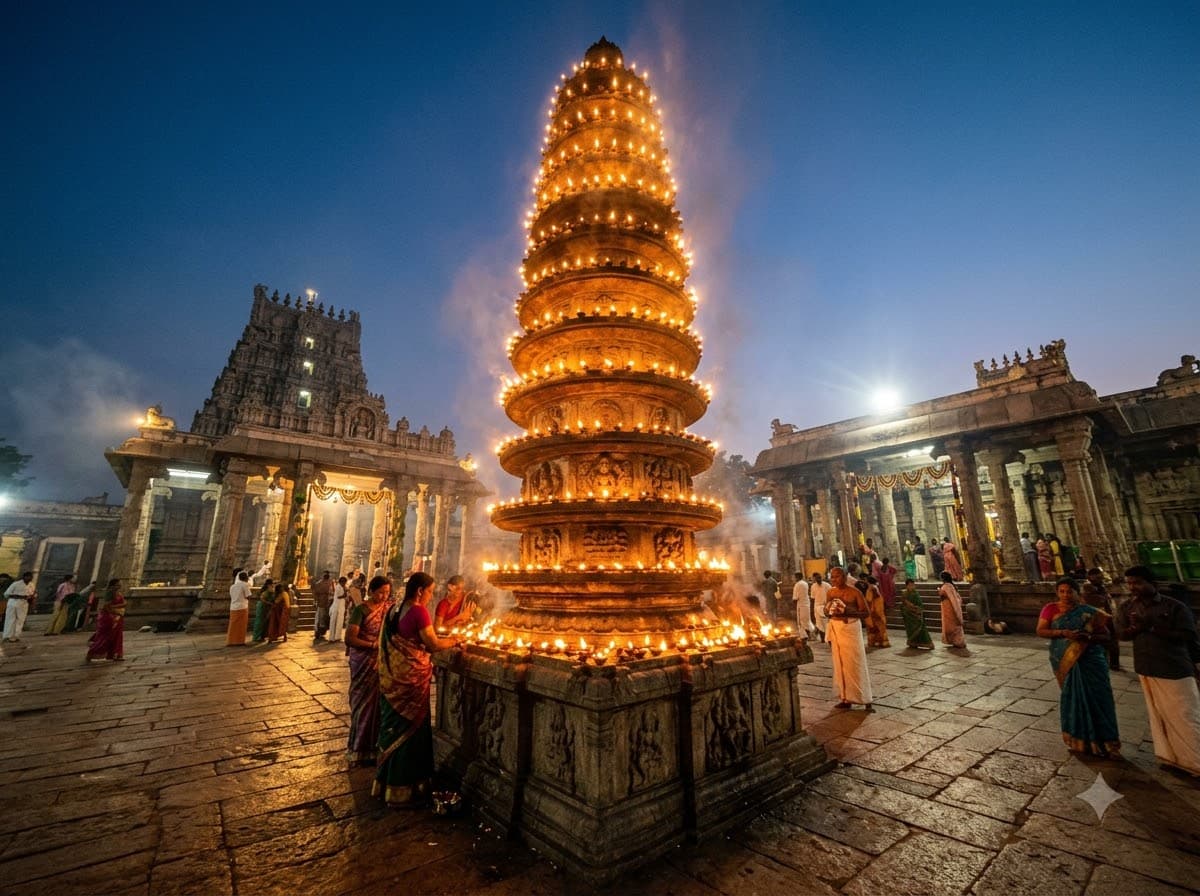
Around Hyderabad: most families observe this at home rather than at a temple, since the ritual centres on the household's own tulasi plant — though some temples do host a larger, community version of the same ceremony.
5. Spiritual Significance of Damodara Tulasi Kalyanam
Beyond the wedding ceremony itself, this day carries a few deeper threads worth understanding:
- Vishnu's awakening: in many traditions, this period marks the end of Chaturmas, the four months during which Vishnu is said to rest in cosmic sleep (Yoga Nidra) — he is believed to awaken around this time, in Vrindavan, with Lakshmi and Brahma by his side.
- The Ksheera Sagar connection: the name Ksheerabdi Dwadasi ties this day to the Samudra Manthan, the churning of the ocean of milk, linking the household ritual to one of the great cosmic events of Hindu tradition.
- Devotion honoured, not punished: Vrinda's story, for all its sorrow, ends in Vishnu keeping his promise to her — the wedding is a yearly renewal of that promise, and a reminder that steadfast devotion is ultimately recognised.
- The start of the wedding season: in many parts of India, auspicious marriages are traditionally not conducted during Chaturmas, and this day's ceremony marks the point when they can resume.
Damodara Tulasi Kalyanam sits two days before Karthika Pournami within the same month's arc of devotion. For the full month's calendar and daily rituals, see our Karthika Masam 2026 guide.
6. How to Celebrate Damodara Tulasi Kalyanam at Home
A home Tulasi Kalyanam doesn't need to be elaborate to be meaningful. Here's the typical sequence:
- Clean and decorate the tulasi kota — with rangoli at the base, and flowers and turmeric on the plant itself.
- Set up a small mandap — traditionally made from four sugarcane or bamboo stalks, with a canopy of leaves overhead.
- Place the groom — a Damodara/Krishna idol or a Shaligram — beside the tulasi plant, representing Vishnu.
- Dress the “bride” — a small red or yellow cloth, bangles, and a bindi are often placed at the base of the plant, echoing real wedding attire.
- Perform the wedding rituals — kanyadan-style rites, chanting of Vishnu Sahasranamam or Tulasi stotras, and traditional wedding songs.
- Light the evening deepam — Deeparadhana at the tulasi kota is considered especially meritorious on this day.
- Distribute prasad — close the ceremony with aarti and share sweets with family.
Quick Tip: If a full mandap setup isn't practical, even a simple decorated tulasi plant with a lit lamp and a short prayer is considered a meaningful observance of the day.
7. Major Damodara Tulasi Kalyanam Traditions
- Tulasi Kota Decoration: Rangoli, flowers, and turmeric applied to the tulasi plant and its platform.
- Mandap Setup: A small canopy, traditionally of sugarcane or bamboo, built over the tulasi plant.
- Damodara/Shaligram Placement: The groom, represented by a Krishna/Damodara idol or Shaligram, placed beside the plant.
- Wedding Rituals: Kanyadan-style rites and traditional wedding songs performed as if for a real marriage.
- Deeparadhana: Lamp-lighting at the tulasi kota, considered especially meritorious on this specific day.
8. Damodara Tulasi Kalyanam Rituals
- Tulasi kota purification and decoration — cleaning, rangoli, and floral decoration of the plant's platform.
- Mandap construction — a small ceremonial canopy set up specifically for the wedding.
- Invocation and sankalp — a formal declaration of intent before the ceremony begins.
- The wedding ceremony itself — uniting the tulasi plant (as bride) with the Damodara/Shaligram (as groom) through traditional rites.
- Chanting — Vishnu Sahasranamam, Tulasi stotras, and wedding songs sung by family members.
- Deeparadhana and aarti — lamp-lighting and closing prayers, followed by prasad distribution.
9. Do's and Don'ts for Damodara Tulasi Kalyanam
Do's
- Do treat the tulasi plant with the same care and respect you would show at an actual wedding — the sentiment matters more than the scale.
- Do confirm your family's specific tradition (Ekadashi, Dwadashi, or Purnima) if you follow a lineage outside Telangana.
- Do light the evening deepam even if a full ceremony isn't possible — it's considered meaningful on its own.
- Do involve children in the ritual — it's traditionally a family, multi-generational occasion.
Don'ts
- Don't confuse this day with Karthika Pournami — they're distinct, though close together on the calendar.
- Don't assume every family observes it on the same date — regional and lineage variation is common and valid.
- Don't feel a simple, small observance is any less meaningful than an elaborate one — tradition values sincerity over scale.
10. Interesting Facts About Damodara Tulasi Kalyanam
- The name Ksheerabdi Dwadasi literally translates to “the twelfth day of the ocean of milk.”
- This day is traditionally believed to mark the point when auspicious weddings can resume after the four-month Chaturmas period.
- The same festival is known by at least six different regional names across India — Ksheerabdi Dwadasi, Chilku Dwadasi, Yogini Dwadashi, Tulasi Vivah, Tulasi Damodara Vivaha, and Tulsi Habba.
- No Vishnu puja is traditionally considered complete without tulasi leaves — a direct link back to Vrinda's story and her transformation into the plant.
- Tending or protecting a lamp lit by someone else at the tulasi kota on this day is considered to carry its own merit, distinct from lighting one's own.
11. Book Your Damodara Tulasi Kalyanam with Divine Center
Planning a Damodara Tulasi Kalyanam at home this Karthika Masam? Talk to Our Priest | Book Tulasi Kalyanam | Contact Divine Center
13. References & Further Reading
- Wikipedia — Tulasi Vivaha — a detailed account of the Vrinda-Jalandhara legend and its regional variations across India.
- HinduPad — Ksheerabdhi Dwadashi (Tulsi Damodara Dwadasi) — background on the day's alternate regional names and its connection to Vishnu's awakening from Yoga Nidra.
- Wikipedia — Tulasi in Hinduism — wider context on Tulasi's place in Vaishnava worship and the tradition of planting tulasi in home courtyards.
14. Final Thoughts
Damodara Tulasi Kalyanam is a small, tender ceremony at heart — a household's own tulasi plant, dressed and honoured as a bride, married once again to the god she loved with such devotion. However elaborate or simple your observance this year, may it bring your home the same steadfastness Vrinda showed, and the same grace that answered it. Shubhamastu.
At Divine Center, we help you carry this tradition forward with authenticity — through guided pujas and personalized Tulasi Kalyanam ceremonies performed by experienced, Telugu-speaking pandits.
Frequently Asked Questions
Q1. What is Damodara Tulasi Kalyanam?
Damodara Tulasi Kalyanam is the ceremonial wedding of Tulasi Devi to Lord Vishnu in his Damodara form, performed at the household tulasi kota. In Telangana and Andhra Pradesh it's also called Ksheerabdi Dwadasi.
Q2. When is Damodara Tulasi Kalyanam in 2026?
In Telangana and Andhra Pradesh, it falls on Sunday, November 22, 2026, observed on Karthika Shukla Dwadashi — two days before Karthika Pournami. Other regions may observe it on a different tithi within the same window.
Q3. Is Damodara Tulasi Kalyanam the same as Karthika Pournami?
No, they're separate observances. Tulasi Kalyanam falls on Dwadashi, two days before Karthika Pournami, the full-moon night that closes Karthika Masam.
Q4. Why is Tulasi married to Lord Vishnu?
According to tradition, the goddess Vrinda, after a series of events involving her husband Jalandhara and Lord Vishnu, transformed into the Tulasi plant. Vishnu had promised to marry her in this new form, and Tulasi Kalyanam commemorates that promise being fulfilled each year.
Q5. What is Ksheerabdi Dwadasi?
Ksheerabdi Dwadasi is the Telangana and Andhra Pradesh name for Damodara Tulasi Kalyanam. The name refers to the Ksheera Sagar (ocean of milk) on which Lord Vishnu is said to rest.
Q6. Do I need a mandap or can I do a simple version at home?
A simple version is entirely valid — a decorated tulasi plant, a lit lamp, and a short prayer are considered meaningful. A full mandap with wedding rituals is traditional but not mandatory.
Q7. What is the connection between this day and Vishnu's cosmic sleep?
Many traditions hold that Lord Vishnu rests in Yoga Nidra (cosmic sleep) through the four months of Chaturmas, awakening around this time. Damodara Tulasi Kalyanam falls within this period of his awakening.
Q8. Do I need a pandit for Damodara Tulasi Kalyanam?
A pandit isn't required for a simple home observance, which most families perform themselves. For the full wedding ceremony with proper mantras and sankalpam, many households prefer a pandit to guide the ritual sequence.