Kedara Gowri Vratam 2026 Guide
By Divine center ·
Kedara Gowri Vratam 2026 runs October 19 to November 8. The story of Parvati's penance, the 21-knot thread, exact dates, and how to observe this Shiva-Parvati vratam at home.
Kedara Gowri Vratam 2026
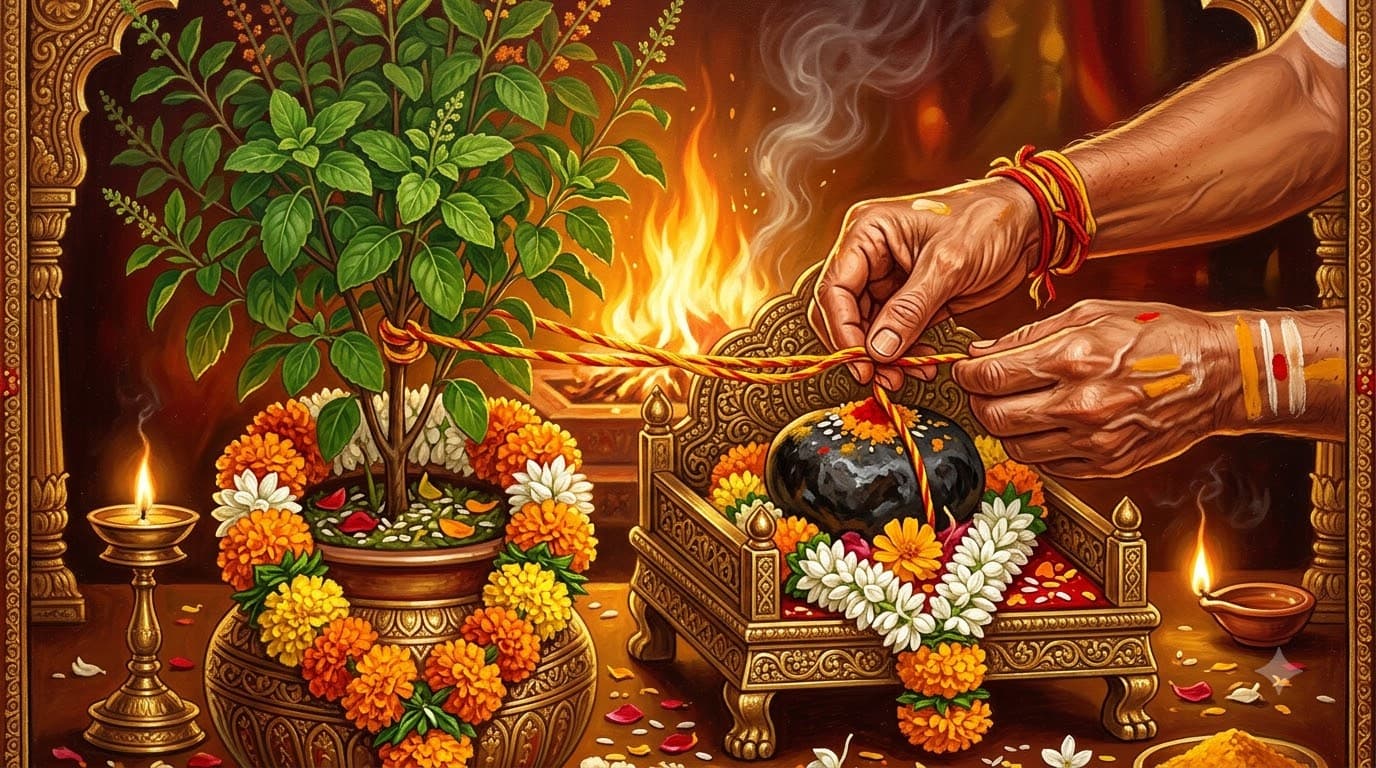
Twenty-one days before the diyas of Deepavali are lit, a quieter lamp is often already burning in Telugu homes. A woman ties the first knot of a plain cotton thread at her puja mandiram, closes her eyes, and begins a vratam she will keep one knot a day, until the night the whole house is bright with Deepavali lights. That vratam is Kedara Gowri Vratam — and its story, like most that endure, begins with a goddess who refused to give up.
1. What Is Kedara Gowri Vratam?
Kedara Gowri Vratam, also called Kedareswara Vratam, is a Shaivite vratam dedicated jointly to Lord Shiva, worshipped here as Kedareswara, and Goddess Parvati, worshipped as Gowri. In its full traditional form, it runs for twenty-one days, beginning on Shukla Ashtami and concluding on Deepavali Amavasya — Sunday, November 8, 2026 this year, with the 21-day observance beginning around Monday, October 19, 2026.
In short: what it is, is a promise kept one knot at a time; why it's kept goes back to a goddess's own penance; and how it's kept is a daily knot, a single evening meal, and a concluding puja that turns that promise into a lived practice. We'll walk through all three, starting with the story.
Did You Know?
Many households observe only the single-day version of this vratam on Deepavali Amavasya itself, performing the complete puja in one sitting rather than across all twenty-one days — this condensed form is considered just as meaningful as the full observance.
2. Why Is Kedara Gowri Vratam Celebrated? The Story of Parvati's Penance
The story, as it is told in most Telugu households, begins with longing. Parvati desired nothing less than complete union with Shiva — not simply as his consort, but as one being with him. So she withdrew into penance: a fast sustained through the length of the vratam, a single knotted thread tied fresh each day, and a devotion that did not waver even as the days stretched into weeks.
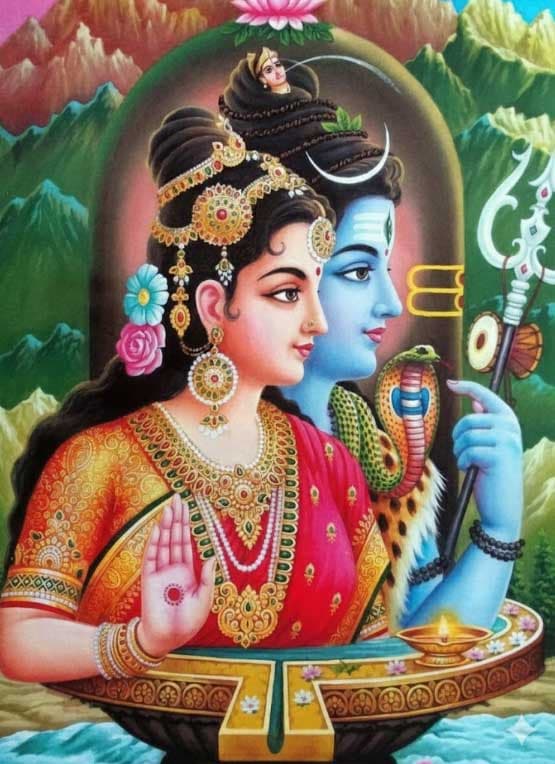
Shiva, tradition says, watched this austerity unfold and was moved by it — not just by its length, but by its constancy. On the twenty-first day, at the vratam's completion, he granted Parvati what no ordinary boon could: a place as the left half of his own form. This is how Shaivite tradition explains the origin of Ardhanarishwara, the half-Shiva, half-Parvati form still worshipped across South India today.
That is the why. Every year, the vratam is kept as an echo of this same story — not to repeat a miracle, but to practice the same patient, undramatic constancy that earned one.
Myth vs Fact
- Myth: Kedara Gowri Vratam is only for women. Fact: while it is traditionally kept most often by married women, men and unmarried devotees observe it too — the vratam carries no gender restriction.
- Myth: The vratam must run the full 21 days or it does not count. Fact: many households observe a condensed single-day version on the concluding Amavasya itself, with the full puja performed in one sitting — this is considered complete in its own right.
- Myth: The 21 knots are just a counting device with no real meaning. Fact: tradition treats the number 21 as symbolic throughout — 21 days, 21 knots, and 21 kinds of offerings — though this is held as devotion and symbolism, not something with a scientific explanation.
As with any Puranic story, this account has come down through generations of retelling, not as a documented historical event — the elders tell it as sacred story, and that is how we share it here too.
3. When Is Kedara Gowri Vratam Celebrated in 2026? (Exact Date & Panchangam Details)
According to the Telugu (Amanta) panchangam followed in Telangana and Andhra Pradesh, the full 21-day observance of Kedara Gowri Vratam begins around Monday, October 19, 2026 (Shukla Ashtami of Ashwayuja Masam) and concludes on Sunday, November 8, 2026 — Deepavali Amavasya — with the main puja and thread-tying performed on that final evening.
For those observing only the single-day version — increasingly common in busy households — the puja is performed entirely on Deepavali Amavasya itself, alongside or just before that evening's Lakshmi Puja.
Panchangam Note: Exact Ashtami start timings can shift by a day depending on the panchangam and city referenced, since tithi timings are reckoned from local sunrise. Confirm the precise starting day with a Hyderabad-set panchangam or your family pandit before beginning the 21-day observance, and note that tithi-based dates can shift by a day for readers outside India as well.
4. Where Is Kedara Gowri Vratam Celebrated?
Kedara Gowri Vratam is observed widely across South India — Telangana, Andhra Pradesh, Tamil Nadu, and Karnataka — and among South Indian families elsewhere, though it is by no means confined to any one region or lineage.
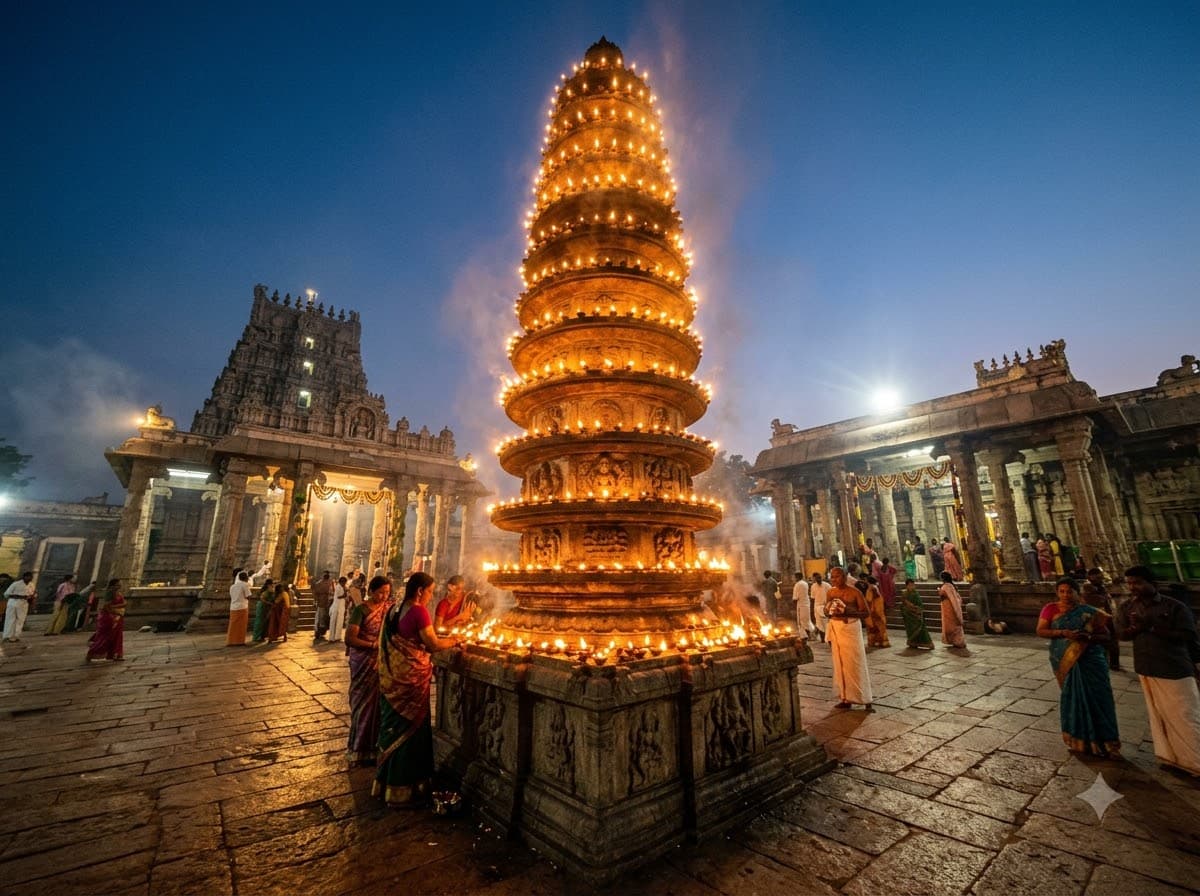
Around Hyderabad: most families keep this vratam at their own puja mandiram at home rather than at a temple, since the ritual centres on the household's own Kedareswara-Gowri worship and the personal thread-tying that follows. Some Shiva temples do host a communal version of the concluding day's puja for devotees who prefer a temple setting.
5. Spiritual Significance of Kedara Gowri Vratam
Beyond the story and the calendar, a few threads run through why this vratam continues to matter to those who keep it:
- Union, not just devotion: unlike vratams that simply seek a deity's favour, this one is specifically about the union of Shiva and Parvati — making it a natural vratam for marital harmony and partnership.
- Constancy as the real offering: the daily knot, tied without fail for 21 days, is arguably the vratam's real teaching — that devotion sustained quietly, day after day, outweighs a single grand gesture.
- A bridge into Deepavali: because the vratam concludes on Amavasya itself, it sits naturally alongside Lakshmi Puja — many households treat the two as one continuous evening of devotion rather than separate events.
- Ardhanarishwara as an ideal: the half-Shiva, half-Parvati form the story leads to is often read as a symbol of balance — discipline and grace, held as one.
6. How to Celebrate Kedara Gowri Vratam at Home
Here is how the vratam is typically kept, whether across the full 21 days or in the condensed single-day form:
- Begin with Sankalpam — a formal declaration of intent, naming the devotee, family, and purpose of the vratam.
- Set up the Kalasham — representing the divine presence of Kedareswara and Gowri for the puja.
- Perform Kedareswara-Gowri Abhishekam — ritual bathing of the Shiva lingam and Gowri idol with water, milk, and panchamritam.
- Offer the 21 items — traditional naivedyam offerings including fruits, tamalapaku (betel leaves), and bellam (jaggery).
- Tie the day's knot — for the full 21-day observance, one knot is added to the sacred thread each day; for the single-day version, all 21 knots are tied and worshipped together.
- Chant the Shiva-Gowri namavali — Om Namah Shivaya and Gowri Ashtottara Shatanamavali are commonly recited.
- Wear the sacred thread — tied around the wrist after the puja concludes, worn until the following year's vratam.
- Close with Harati and Prasadam — sharing the offered food with family marks the end of each day's observance.
Quick Tip: If the full 21-day commitment feels like too much this year, the single-day version performed on Deepavali Amavasya is considered complete and meaningful in its own right — many families move between the two forms depending on the year.
7. Major Kedara Gowri Vratam Traditions
- 21-Day Observance: the full traditional vratam, from Shukla Ashtami to Deepavali Amavasya, with one knot tied daily.
- Single-Day Observance: a condensed version of the full puja performed entirely on the concluding Amavasya.
- Kedara Gowri Nombu Thread: the 21-knot sacred thread, tied on the wrist after the puja and worn until the following year.
- Kedareswara-Gowri Abhishekam: ritual bathing of the Shiva-Parvati idols with water, milk, honey, and panchamritam.
- Nakta Bhojanam: a single daily meal observed as fasting discipline through the 21-day form.
8. Kedara Gowri Vratam Rituals
- Sankalpam — the formal opening declaration naming the vratam's purpose.
- Kedareswara-Gowri Abhishekam — the ritual bathing of the Shiva-Parvati idols.
- Archana with 21 Offerings — formal worship with the traditional naivedyam items.
- Dora Granthi (thread-knotting) — the ceremonial tying of the knotted thread, the vratam's signature ritual.
- Namavali Chanting — recitation of Shiva and Gowri namavalis through the puja.
- Harati and Prasadam Distribution — closing the ceremony and sharing the offered food.
9. Do's and Don'ts During Kedara Gowri Vratam
Do's
- Do decide upfront whether you're keeping the full 21-day form or the single-day version — both are valid, but starting the 21-day form and stopping partway is best avoided.
- Do confirm the exact Ashtami start date and Amavasya conclusion with a local panchangam before beginning.
- Do keep the daily meal simple if you're observing Nakta Bhojanam through the 21 days.
- Do treat the sacred thread with care once tied — it's traditionally worn until the following year's vratam.
Don'ts
- Don't treat the vratam as only for women — men and unmarried devotees observe it too.
- Don't treat the number 21 as needing a scientific explanation — its significance is traditional and symbolic.
- Don't rush the single-day version's puja steps just because it's condensed — the sequence still matters.
- Don't skip confirming your local Amavasya date — it determines both when the vratam ends and when Deepavali itself falls that year.
10. Interesting Facts About Kedara Gowri Vratam
- The vratam's concluding day always falls on Deepavali Amavasya, making it one of the few observances tied directly to the Deepavali calendar rather than its own separate date.
- The Ardhanarishwara form that concludes this story is one of the most recognisable composite deity images in Hindu art — half-Shiva, half-Parvati, split down a single vertical line.
- In some families, the previous year's thread is only removed once the new one is tied — so the vratam is, in a quiet sense, continuous year to year.
- The vratam is sometimes performed as a couple's shared observance, with both partners tying a thread, rather than only the wife.
11. Book Your Kedara Gowri Vratam with Divine Center
Planning to observe Kedara Gowri Vratam this year, in full or in its single-day form? Talk to Our Priest | Book Kedara Gowri Vratam | Contact Divine Center
13. References & Further Reading
- Wikipedia — Ardhanarishvara — background on the composite Shiva-Parvati form this vratam's story leads to.
- Wikipedia — Vrata — general context on the tradition of vratas (vows) within Hindu practice, of which Kedara Gowri Vratam is one example.
14. Final Thoughts
Kedara Gowri Vratam isn't really a story about a miracle — it's a story about staying the course. Twenty-one small knots, tied without fanfare, until a promise made in patience is met in kind. However you choose to observe it this year, whether the full three weeks or a single evening's devotion on Deepavali night, may your own quiet constancy be met with the same grace.
At Divine Center, we help you carry this vratam forward with authenticity — through guided pujas and personalized Kedara Gowri Vratam ceremonies performed by experienced pandits.
Shubhamastu.
Frequently Asked Questions
Q1. What is Kedara Gowri Vratam?
Kedara Gowri Vratam is a Shaivite vratam dedicated to Lord Shiva (as Kedareswara) and Goddess Parvati (as Gowri), rooted in the story of Parvati's own penance to be united with Shiva. It's kept for marital harmony, family wellbeing, and spiritual discipline.
Q2. When is Kedara Gowri Vratam in 2026?
The full 21-day observance begins around Monday, October 19, 2026, and concludes on Sunday, November 8, 2026 — Deepavali Amavasya. Many households observe only the single-day version on that concluding day.
Q3. Why is a 21-knot thread used in this vratam?
The number 21 runs through the entire observance — 21 days, 21 knots on the sacred thread, and 21 kinds of offerings. This is held as traditional and symbolic, not something with a separate scientific explanation.
Q4. Can men observe Kedara Gowri Vratam?
Yes. While it's most commonly kept by married women, the vratam carries no gender restriction, and men and unmarried devotees observe it as well.
Q5. Is the single-day version as valid as the full 21-day vratam?
Yes — the condensed single-day version, performed on Deepavali Amavasya with the complete puja sequence, is considered a full and meaningful observance, not a lesser alternative.
Q6. What happens to the sacred thread after it's tied?
It's traditionally worn on the wrist until the following year's vratam, when a new thread is tied — in some families, the old one is only removed once the new one replaces it.
Q7. How is Kedara Gowri Vratam connected to Deepavali?
The vratam's concluding day always falls on Deepavali Amavasya, so the main puja and thread-tying are often performed alongside or just before that evening's Lakshmi Puja.
Q8. Do I need a pandit for Kedara Gowri Vratam?
A pandit isn't required for the daily knot-tying through the 21 days, which most devotees do themselves. For the full Abhishekam and concluding puja, many households prefer a pandit to guide the correct sequence.