Mahalakshmi Vratam: The 16-Day Vratam People Confuse with Varalakshmi
By Divine center ·
Mahalakshmi Vratam is a 16-day observance of Goddess Mahalakshmi, distinct from Varalakshmi Vratam and Diwali's Lakshmi Puja. Here's what it involves, the sixteen-knot thread, and why its dates shift every year.
Mahalakshmi Vratam
There's a particular kind of thread you sometimes spot on an older relative's wrist in late September — yellow, with a small row of knots along it, each one tied on a different morning. Ask about it and you usually get the same answer: “Mahalakshmi Vratam, it's the sixteen-day one.” Not Varalakshmi, not the Diwali puja — a separate, longer observance that a lot of people outside the households doing it have never actually heard of.
This guide covers what Mahalakshmi Vratam actually is, how it differs from Varalakshmi Vratam and Diwali's Lakshmi Puja (the two it gets confused with most), the sixteen-day structure, and an honest note on why its exact Gregorian dates shift every year and need checking against a local panchangam rather than taken from any single source.
1. What Is Mahalakshmi Vratam?
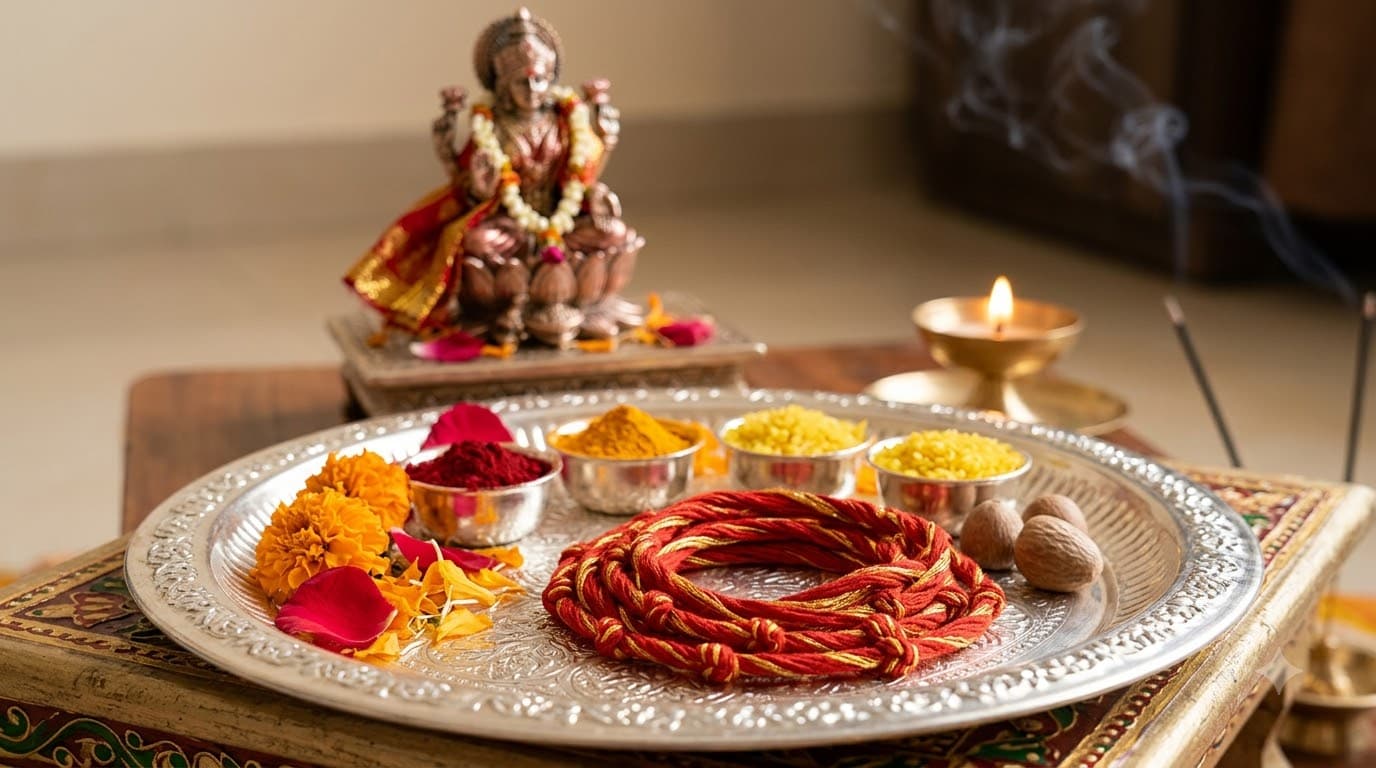
Mahalakshmi Vratam is a sixteen-day observance of Goddess Mahalakshmi, beginning on Bhadrapada Shukla Ashtami and running through to Ashwin Shukla Ashtami. Across the sixteen days, one of Mahalakshmi's sixteen forms — from Adi Lakshmi through to Sarvashri Lakshmi — is honored in sequence, and a yellow sacred thread called the Pavitra Granthi is worn, with a new knot tied each morning as the vratam progresses.
At a Glance:
- What it is: a 16-day vratam honoring the sixteen forms of Goddess Mahalakshmi
- Duration: Bhadrapada Shukla Ashtami to Ashwin Shukla Ashtami (16 consecutive days)
- Key ritual object: the Pavitra Granthi — a 16-knot yellow thread, one knot tied per day
- Typical window: September to October (exact start date shifts every year — see Section 3)
- Not the same as: Varalakshmi Vratam or Diwali's Lakshmi Puja
Did You Know? Mahalakshmi Vratam, Varalakshmi Vratam, and Diwali's Lakshmi Puja are three separate observances of Goddess Lakshmi, each with its own calendar and ritual structure — they're often mixed up simply because they all fall within a few months of each other.
2. How Mahalakshmi Vratam Differs from Varalakshmi Vratam and Diwali's Lakshmi Puja
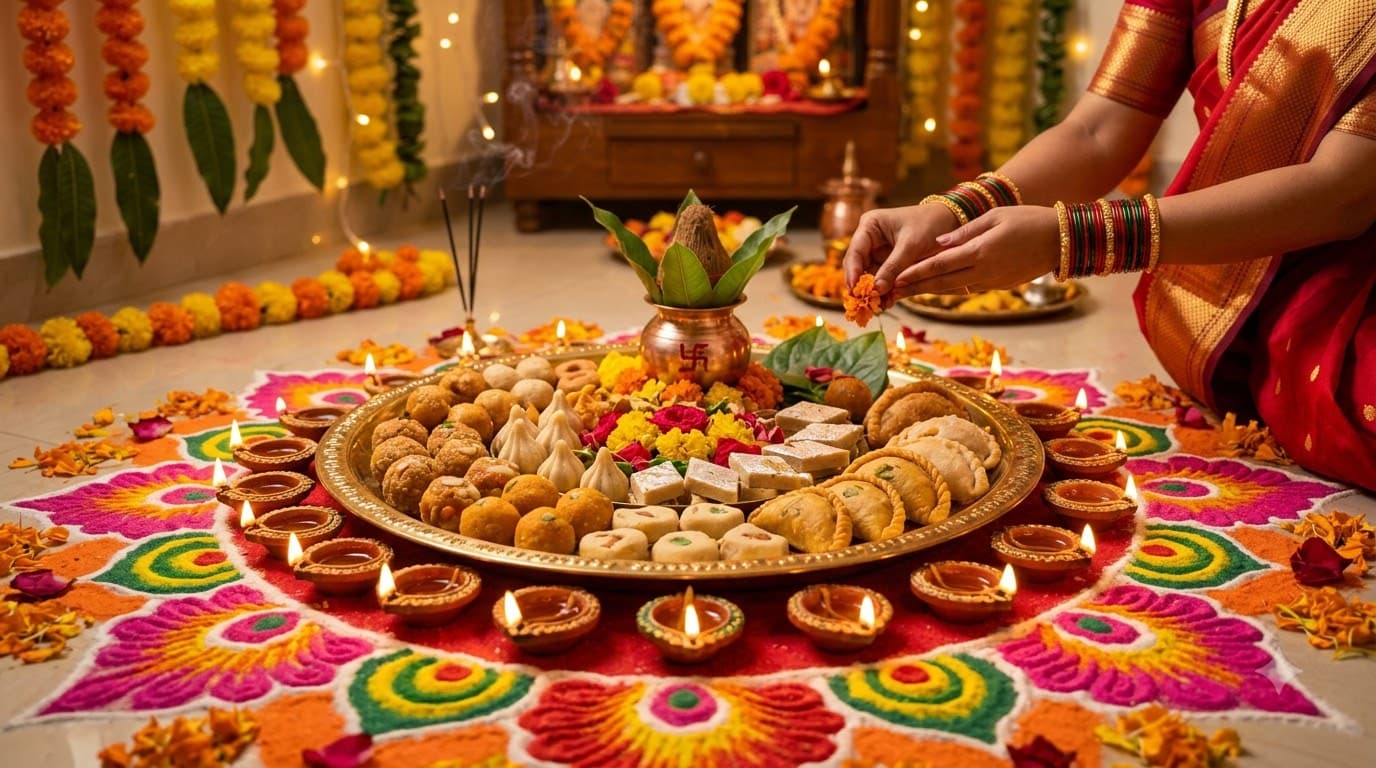
This is the single most common point of confusion around this vratam, so it's worth being direct about it:
- Mahalakshmi Vratam: a 16-day observance, Bhadrapada Shukla Ashtami to Ashwin Shukla Ashtami, worshipping sixteen forms of Lakshmi across sixteen days
- Varalakshmi Vratam: a single-day puja, performed on a Friday in Sravana Masam, worshipping Lakshmi as “Varalakshmi” (the boon-granting form)
- Diwali Lakshmi Puja: a single-evening ritual performed on Amavasya night during Deepavali, worshipping Lakshmi alongside Ganesh and Kuber
Myth vs. Fact: It's sometimes assumed these three are regional variations of the same puja performed at different times of year. They're not — each has its own distinct legend, duration, and ritual sequence, and a family observing one isn't automatically observing the others.
3. When Is Mahalakshmi Vratam Observed?
Mahalakshmi Vratam follows the Telugu (Amanta) panchangam observed in Telangana and Andhra Pradesh, running from Bhadrapada Shukla Ashtami to Ashwin Shukla Ashtami every year — this generally falls somewhere in the September to October window on the Gregorian calendar, since Bhadrapada and Ashwin are lunar months that shift slightly from year to year.
Panchangam Note: Because this is a tithi-based observance reckoned from local sunrise, the exact Gregorian start date changes every year and can also shift by a day between different panchangams. Rather than quoting a specific year's date here — which would need updating annually and risks going stale — we'd always recommend confirming the current year's exact start date with a Hyderabad/Telangana-set panchangam or your family pandit before beginning.
Once the correct start date for the current year is confirmed, the sixteen days that follow run continuously through to the Udyapan (closing ceremony) on the final day.
4. Where Is Mahalakshmi Vratam Observed?
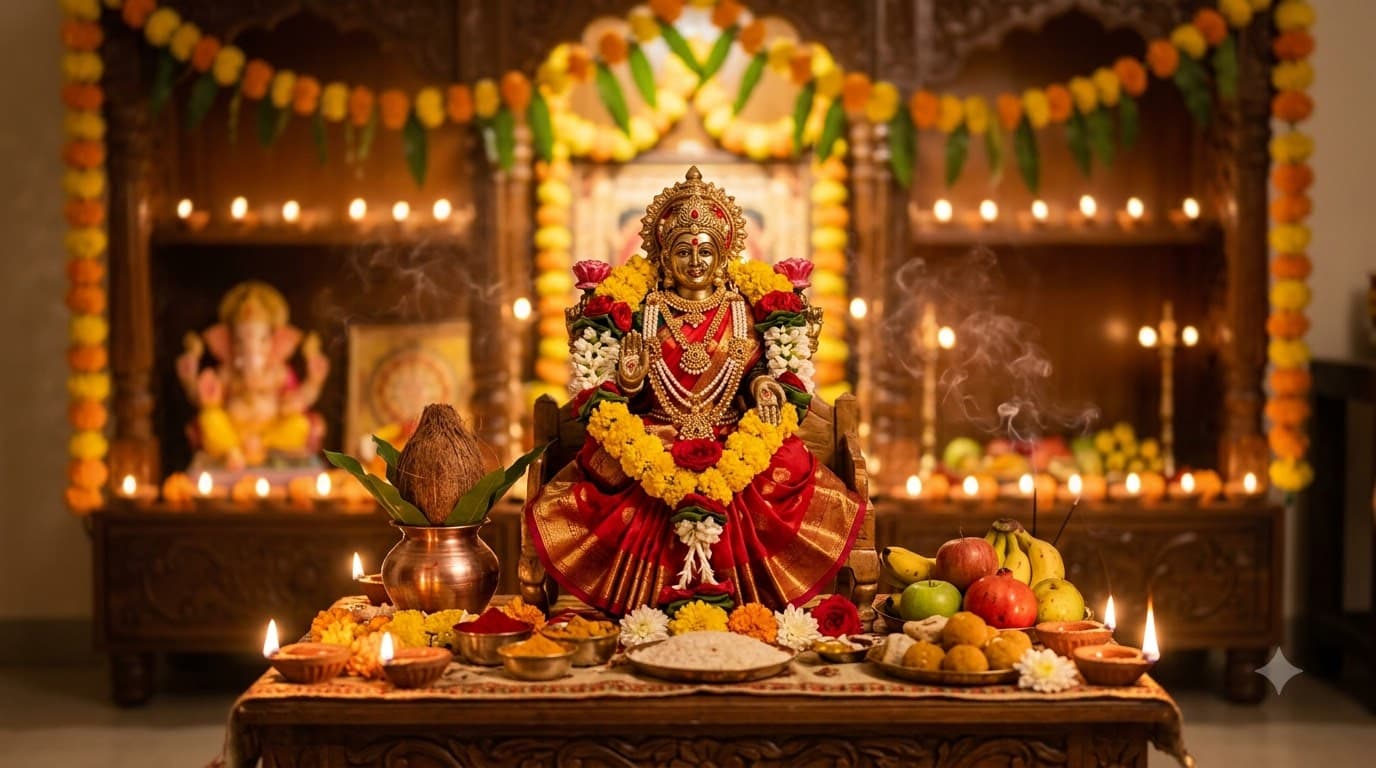
Mahalakshmi Vratam is observed across several regions, with some variation in emphasis. In Andhra Pradesh and Telangana, the focus tends to fall on the Kalash Sthapana and a turmeric or clay Mahalakshmi murti set up for the duration. In Karnataka, the vratam is often marked with traditional Lakshmi songs sung through the sixteen days. It's less commonly observed in Maharashtra, where it's more closely tied to Kolhapur's Mahalakshmi temple tradition specifically.
In Hyderabad, households observing the vratam typically set up a small dedicated space at home for the sixteen days rather than treating it as a single-visit temple ritual — the daily continuity is part of what the observance is built around.
5. Spiritual Significance
Mahalakshmi is worshipped here across sixteen distinct forms rather than one, and tradition reads that as a reminder that prosperity itself isn't a single thing — wealth, health, courage, knowledge, and contentment are all treated as forms of the same blessing, not separate concerns.
The sixteen-day span and the daily knot-tying are also, in a practical sense, a discipline exercise — sustained attention paid every single day rather than a one-time request. That sustained commitment is part of what tradition holds makes the vratam effective, distinct from a single-sitting puja.
6. How to Observe Mahalakshmi Vratam at Home
- Set up a small dedicated altar space for Goddess Mahalakshmi before Day 1 begins.
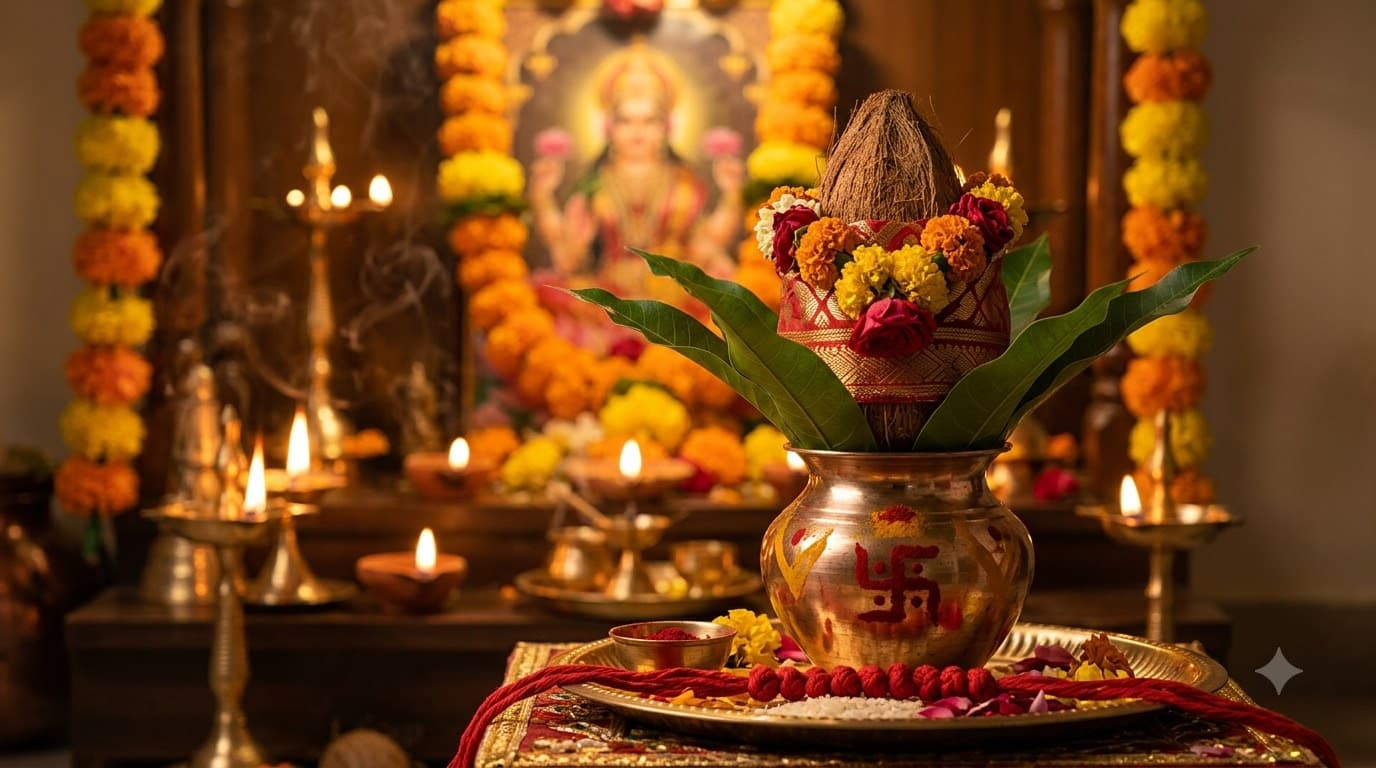
- On Day 1, perform the Ahvana (formal invocation) and Kalash Sthapana, and tie the first knot of the Pavitra Granthi on the right wrist.
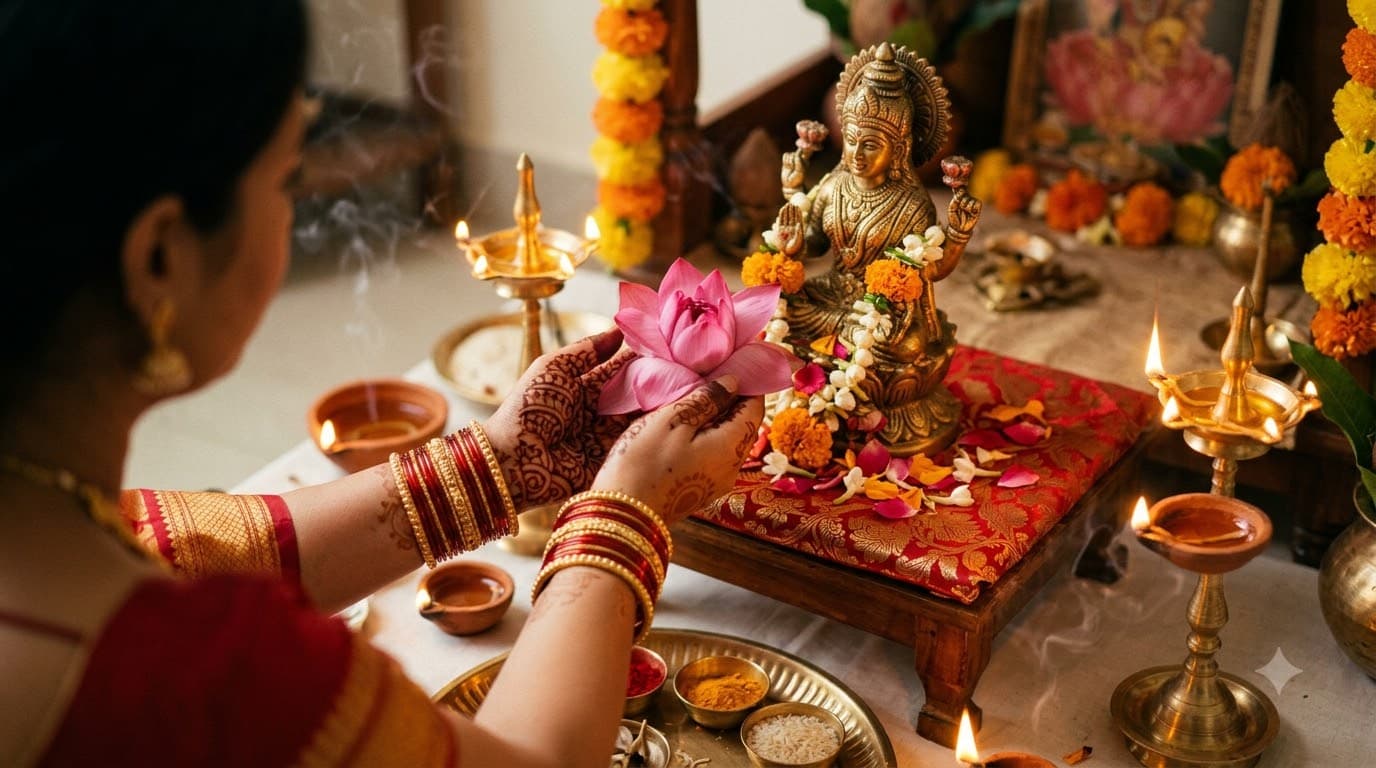
- Through Days 2-15, offer simple morning and evening worship — a lit lamp, flowers, and a short prayer — tying a new knot each morning.
- On Day 8, many households perform a slightly more elaborate midpoint puja with fuller offerings.
- On Day 16, perform the Udyapan — a final archana and katha recitation that formally closes the vratam.
- After Udyapan, remove the thread and keep it with the family's valuables rather than discarding it.
Quick Tip: Families short on time sometimes perform a condensed one-day version covering the opening, a representative worship of all sixteen forms, and the closing Udyapan in a single sitting — not the traditional full observance, but an accepted adaptation where the full sixteen days aren't practical.
7. Major Rituals of Mahalakshmi Vratam
- Ahvana: the Day 1 formal invocation of Goddess Mahalakshmi
- Pavitra Granthi: the 16-knot yellow thread, one knot tied each morning
- Daily worship: simple morning and evening puja through Days 2-15
- Day 8 midpoint puja: a more elaborate worship in many households, roughly halfway through
- Udyapan: the Day 16 closing ceremony, including katha recitation and final archana
8. Fasting & Food Customs
Many observing the vratam keep some form of dietary restraint through the sixteen days — commonly a single meal a day, or avoiding certain foods — though the exact level of fasting varies significantly by family and is not fixed by the vratam itself the way some single-day fasts are.
Inclusivity note: for children, elderly family members, or anyone managing a health condition, a full fast isn't necessary to observe the vratam meaningfully — regular meals alongside the daily worship and knot-tying are entirely acceptable, and several traditions treat the daily devotion itself, not the fasting, as the core of the observance.
9. Do's and Don'ts
Do:
- Confirm the current year's exact start date with a local panchangam before beginning, since it shifts annually.
- Tie the knot on the Pavitra Granthi at roughly the same time each morning for consistency.
- Treat Day 1 and Day 16 as the two days that matter most if you can't commit to all sixteen.
- Keep the thread after Udyapan rather than discarding it.
Don't:
- Don't confuse this with Varalakshmi Vratam — they're different observances with different calendars.
- Don't assume a missed day breaks the vratam entirely — resuming the following day is generally considered acceptable within most family traditions.
- Don't feel obligated to a full fast if health or age makes that impractical — the daily worship is the core of the practice.
10. Interesting Facts
- Mahalakshmi's sixteen forms honored across the vratam range from Adi Lakshmi to Sarvashri Lakshmi, each representing a different aspect of prosperity.
- The vratam is one of the few Hindu observances where a physical object — the knotted thread — visibly tracks progress day by day.
- In Karnataka, the same period is often marked with Gowri Habba just before it, and the two observances sometimes run into each other in household planning.
- Kolhapur's Mahalakshmi Temple in Maharashtra is one of the most prominent centers associated with this specific goddess tradition, distinct from the South Indian household observance of the vratam.
11. Book Mahalakshmi Vratam with Divine Center
Want a pandit to guide the opening and closing days of your Mahalakshmi Vratam? Talk to Our Priest | Contact Divine Center
13. References & Further Reading
- Lakshmi Puja — Wikipedia — background on Lakshmi worship traditions across different observances.
- Varalakshmi Vratam — Wikipedia — for comparison against the single-day Sravana Masam observance this vratam is often confused with.
- Dashama Vrata — Wikipedia — background on multi-day vratam structures in Hindu tradition.
14. Final Thoughts
Sixteen days is a real stretch to hold a commitment for, which is probably why the thread exists at all — something to actually look at every morning, one more knot than the day before, a small physical record that you showed up again. Whether a family does the full sixteen days or the condensed version, that's really the heart of it: consistency treated as its own kind of offering.
Shubham.
Frequently Asked Questions
Q1. What is Mahalakshmi Vratam?
A 16-day observance of Goddess Mahalakshmi, running from Bhadrapada Shukla Ashtami to Ashwin Shukla Ashtami, honoring her sixteen forms across the sixteen days and marked by a knotted thread tied one knot per day.
Q2. Is Mahalakshmi Vratam the same as Varalakshmi Vratam?
No. Varalakshmi Vratam is a single-day puja on a Friday in Sravana Masam. Mahalakshmi Vratam is a separate 16-day observance with its own calendar and structure.
Q3. When does Mahalakshmi Vratam fall each year?
It runs from Bhadrapada Shukla Ashtami to Ashwin Shukla Ashtami, which generally falls in the September-October window, but the exact Gregorian dates shift every year since these are lunar months. Always confirm the current year's start date with a local Hyderabad/Telangana-set panchangam.
Q4. Do I need to fast for all 16 days?
No — the level of fasting varies by family, and several traditions treat the daily worship and knot-tying as the core of the observance rather than the fasting itself. Children, elderly family members, and anyone with health considerations can observe without a full fast.
Q5. What happens if I miss a day during the 16-day observance?
Most family traditions consider it acceptable to resume the following day rather than treating a missed day as breaking the vratam entirely, though practices vary — check with your family's own tradition or a pandit if unsure.
Q6. What is the Pavitra Granthi thread used for?
It's a yellow cotton thread with sixteen knots, worn on the right wrist through the vratam. A new knot is tied each morning, tracking the sixteen days visibly. After the closing Udyapan, it's kept with the family's valuables rather than discarded.
Q7. Is this the same puja performed on Diwali?
No. Diwali's Lakshmi Puja is a single-evening ritual on Amavasya night, worshipping Lakshmi alongside Ganesh and Kuber. Mahalakshmi Vratam is a separate, earlier, 16-day observance.
Q8. Can Mahalakshmi Vratam be performed without all 16 days?
Yes — a condensed one-day version covering the opening invocation, a representative worship of the sixteen forms, and the closing Udyapan is an accepted adaptation for families who can't commit to the full sixteen days.