Dussehra 2026: Dasara & Vijayadashami Dates, Rituals & Significance in Telangana
By Divine center ·
Dussehra, Dasara, Vijayadashami — whatever your family calls it, here are the exact 2026 dates for Telangana, the rituals that matter on the day, and how the festival overlaps with Bathukamma.
Dussehra 2026
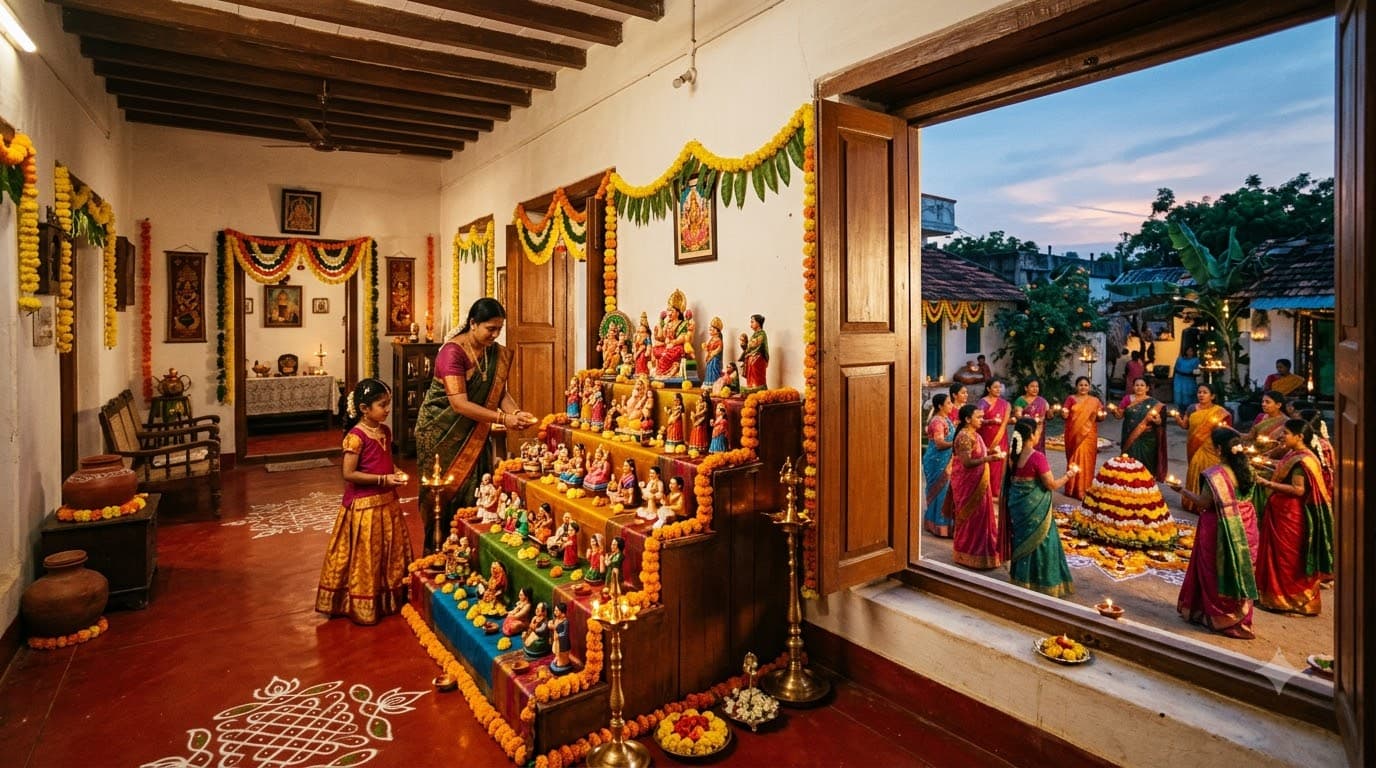
The lanes around Golconda start filling up a good ten days before the actual date. Bommala Koluvu steps appear in living rooms, stacked with dolls collected over generations. Somewhere close by, a circle of women is already singing around a Bathukamma at dusk. By the time the tenth day arrives, the city smells like marigold and fried sweets, and every scooter, laptop and kitchen knife in the house has had a little kumkum pressed onto it. That's Dasara in Telangana — not one single ritual, but ten days building toward one very specific afternoon.
This guide covers the 2026 dates for every stage of the festival, why it's called by so many different names depending on who you ask, and how it's actually observed in and around Hyderabad.
1. What Is Dussehra?
Dussehra is the tenth-day festival that closes the nine nights of Sharad Navratri, and it's known by more names than almost any other Hindu festival on the calendar. Depending on the region, the spelling, and the story being told, you'll see it written as Dussehra, Dasara, Dasera, Dussera, or Dashera, and referred to by its formal Sanskrit name, Vijayadashami (sometimes split as Vijaya Dashami) — literally, “the victorious tenth.” All of these point to the same day; the differences are just how the word has travelled across languages and regions.
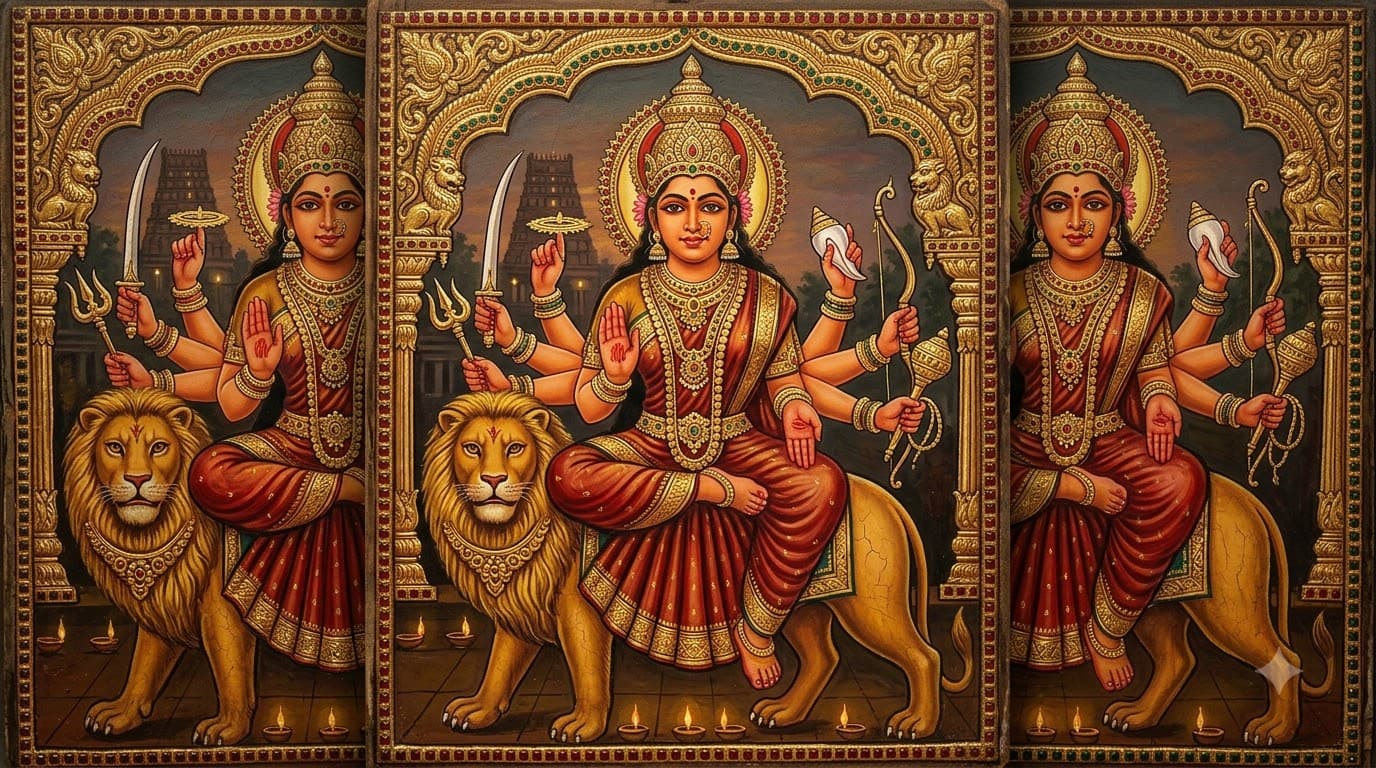
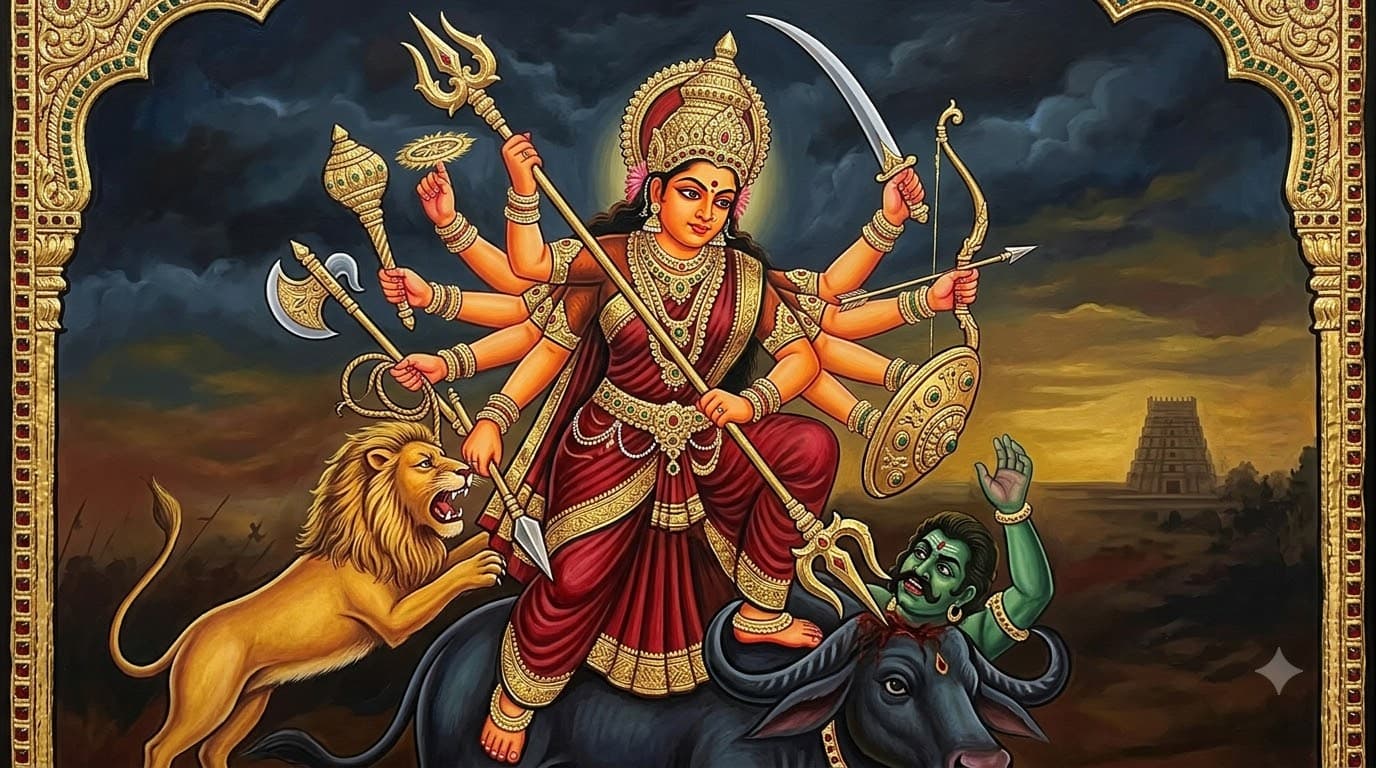
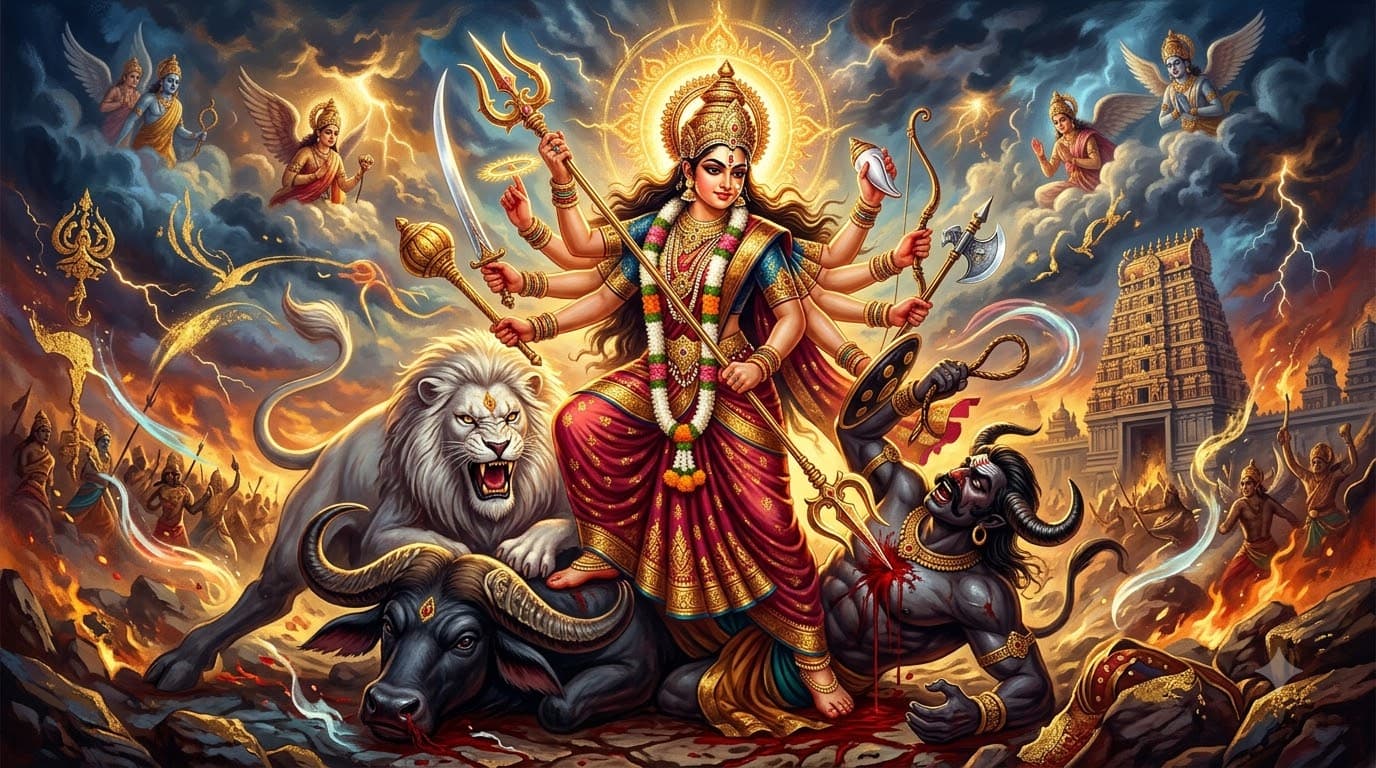
In Telangana and Andhra Pradesh, the day is usually called Dasara or Vijayadashami, and it marks the moment Durga's nine-night battle against the demon Mahishasura ends in victory. In the north, the same date is remembered for Lord Rama's victory over Ravana, often marked with towering effigy burnings. Both stories share the same core idea — a long, hard-fought triumph of good over evil — which is really what the word Vijayadashami is naming.
At a Glance:
- Also known as: Dussehra, Dasara, Dasera, Dussera, Vijayadashami, Vijaya Dashami
- 2026 date: Tuesday, October 20, 2026 (Hyderabad/Telangana)
- Marks the end of: Sharad Navratri (nine nights beginning October 11, 2026)
- Southern tradition: Durga's victory over Mahishasura
- Northern tradition: Rama's victory over Ravana
- Calendar system: Ashwin Shukla Dashami, per the Telugu (Amanta) panchangam followed in Telangana and Andhra Pradesh
Did You Know? In Telangana, Dasara doesn't arrive alone — it shares its ten days almost exactly with Bathukamma, the state's own floral festival, which closes on Durgashtami, the day before Dasara's final Vijayadashami.
2. Why Is Dussehra Considered Sacred?
Ask a family in Hyderabad why Dasara matters and you'll usually get the Durga story first — nine nights of an unwinnable war between the goddess and the shape-shifting demon Mahishasura, ending on the tenth day with his defeat. Ask a family that grew up on Ramlila performances, and the answer is Rama's army crossing into Lanka to bring Sita home, with Ravana's downfall marking the same date. Neither version cancels the other out — most households simply hold both, treating Vijayadashami as the day evil loses, whichever story is telling it.
A common mix-up:
- Myth: Dasara and Bathukamma are the same festival with two names. Fact: they run alongside each other in Telangana but come from separate traditions — Dasara is pan-Indian and tied to Durga/Rama, while Bathukamma is a Telangana-specific floral ritual honoring Goddess Gauri.
- Myth: Ravana Dahan (burning the effigy) happens everywhere on this day. Fact: it's mainly a North Indian tradition; in Telangana and much of the south, the day is marked with Ayudha Puja, Saraswati Puja, and visiting elders rather than an effigy burning.
- Myth: Vijayadashami is only about the Ramayana. Fact: in Telugu households it is at least as strongly tied to the Devi Mahatmyam's account of Durga and Mahishasura, since it falls right at the close of Navratri.
Whichever story a family leans on, the emotional core is the same: a period of struggle finally resolving into victory, which is why the day is treated as one of the most auspicious on the entire Hindu calendar for starting something new.
3. Complete Date & Ritual Calendar
These dates follow the Telugu (Amanta) panchangam observed in Telangana and Andhra Pradesh, cross-checked against a Hyderabad-set calendar rather than a generic or North-India-default one.
- Ghatasthapana (Navratri begins): Sunday, October 11, 2026 — Ashwin Shukla Pratipada
- Durga Ashtami: observed by many Telangana households on Sunday, October 18, 2026, the day Saddula Bathukamma also falls; some panchangams place Ashtami on October 19 instead
- Maha Navami: Monday, October 19, 2026
- Vijayadashami / Dasara / Dussehra: Tuesday, October 20, 2026
- Vijaya Muhurat: 1:57 PM to 2:44 PM on October 20 — the traditional window for starting new ventures, signing documents, or performing Ayudha Puja
- Dashami Tithi: begins 12:50 PM on October 20 and runs until 2:11 PM on October 21
Panchangam Note: You may see Durga Ashtami listed as October 18 on some Telangana-focused sources and October 19 on pan-India ones — this is exactly the kind of one-day regional shift the style of calendar (Amanta vs Purnimanta) and local sunrise timing can create. Neither is “wrong”; they're reading the same tithi against slightly different regional conventions.
A caution worth keeping in mind: tithi-based dates are reckoned from local sunrise and can shift by a day between panchangams, or for readers outside India. If you're planning a specific puja or muhurat, it's worth confirming the exact time with a local panchangam or your pandit rather than relying on a single online source.
4. Where Is Dussehra Observed?
Dasara looks noticeably different depending on where you're standing. Mysore turns the whole city into a ten-day spectacle around its royal palace and the Chamundeshwari procession. Kolkata's version is really Durga Puja, with pandals and immersion processions running for days before the tenth. In the north, Ramlila performances build toward Ravana Dahan on the evening of Vijayadashami, with giant effigies burned in open grounds.
In and around Hyderabad, the festival is quieter but no less woven into daily life. Ujjaini Mahankali Temple in Secunderabad and the Bhagyalakshmi and Sri Sri Sri Rajarajeshwari temples see steady crowds through the ten days. Government offices, IT companies, and workshops across the city perform Ayudha Puja on the ninth or tenth day, lining up computers, vehicles, and tools for a blessing before the Vijaya Muhurat. And for the length of Navratri, the sound most associated with the season in Telangana isn't a Ramlila dialogue — it's Bathukamma songs carrying across colonies at sunset.
5. Spiritual Significance
Underneath the region-specific stories, Vijayadashami is built around a fairly simple idea: that struggle against a real, difficult force — whether it's framed as a demon, a tyrant king, or one's own limitations — eventually gives way if it's met with persistence. That's part of why the day is treated as so auspicious for beginnings. Starting a new business, buying tools of one's trade, beginning a child's education, or simply resolving to work on something difficult are all traditionally timed to this window.
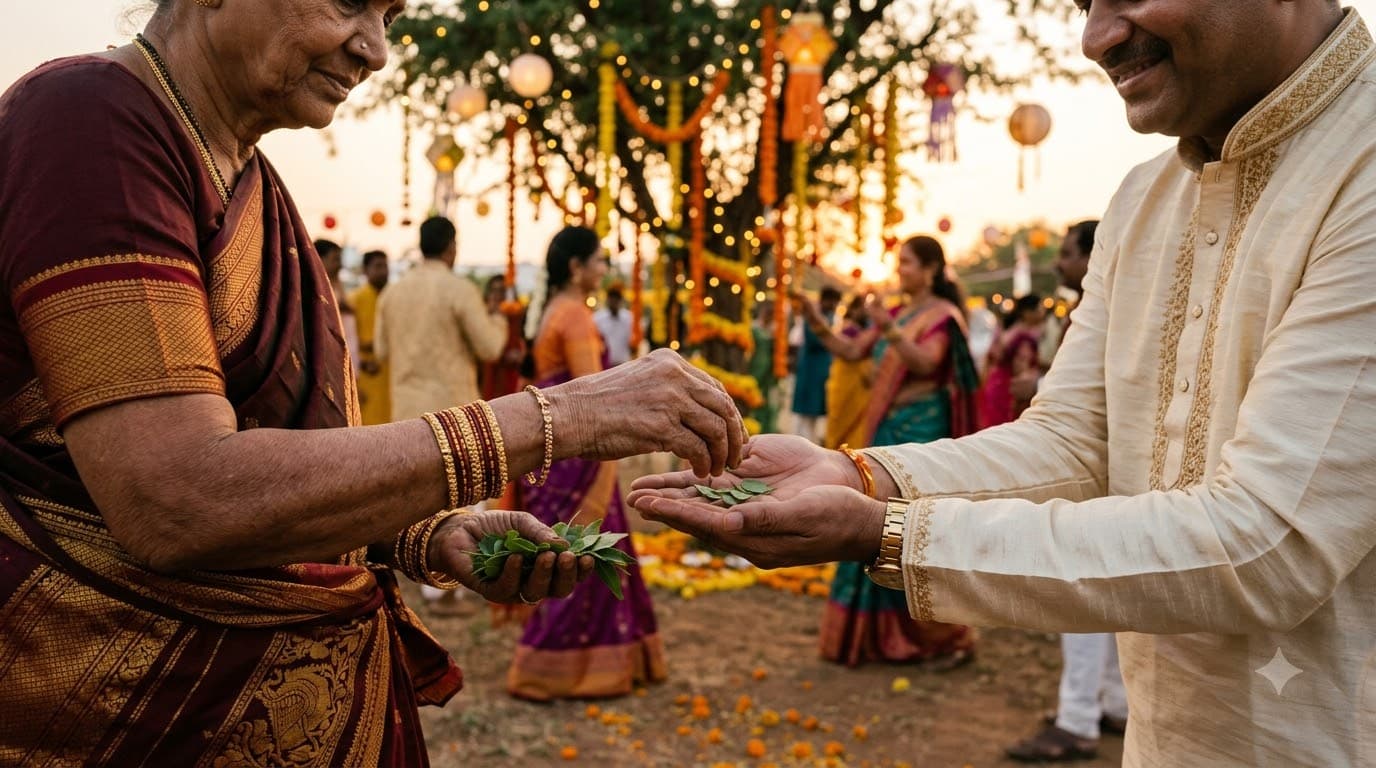
The Jammi tree (Shami tree, known locally as Jammi Chettu) carries its own layer of meaning here: in the Mahabharata, the Pandavas are said to have hidden their weapons in a Shami tree during their year of exile and retrieved them on this very day before going to war. Exchanging Jammi leaves as “gold” on Vijayadashami — still practiced in many Telugu households — is a direct echo of that story, a way of wishing someone well as they take up whatever “weapon” their own year ahead requires.
6. How to Observe Dasara at Home
Most Telugu households don't need an elaborate setup for Vijayadashami itself — the heavier ritual work happens earlier in Navratri. On the day, the focus shifts to a few specific, practical acts of blessing:
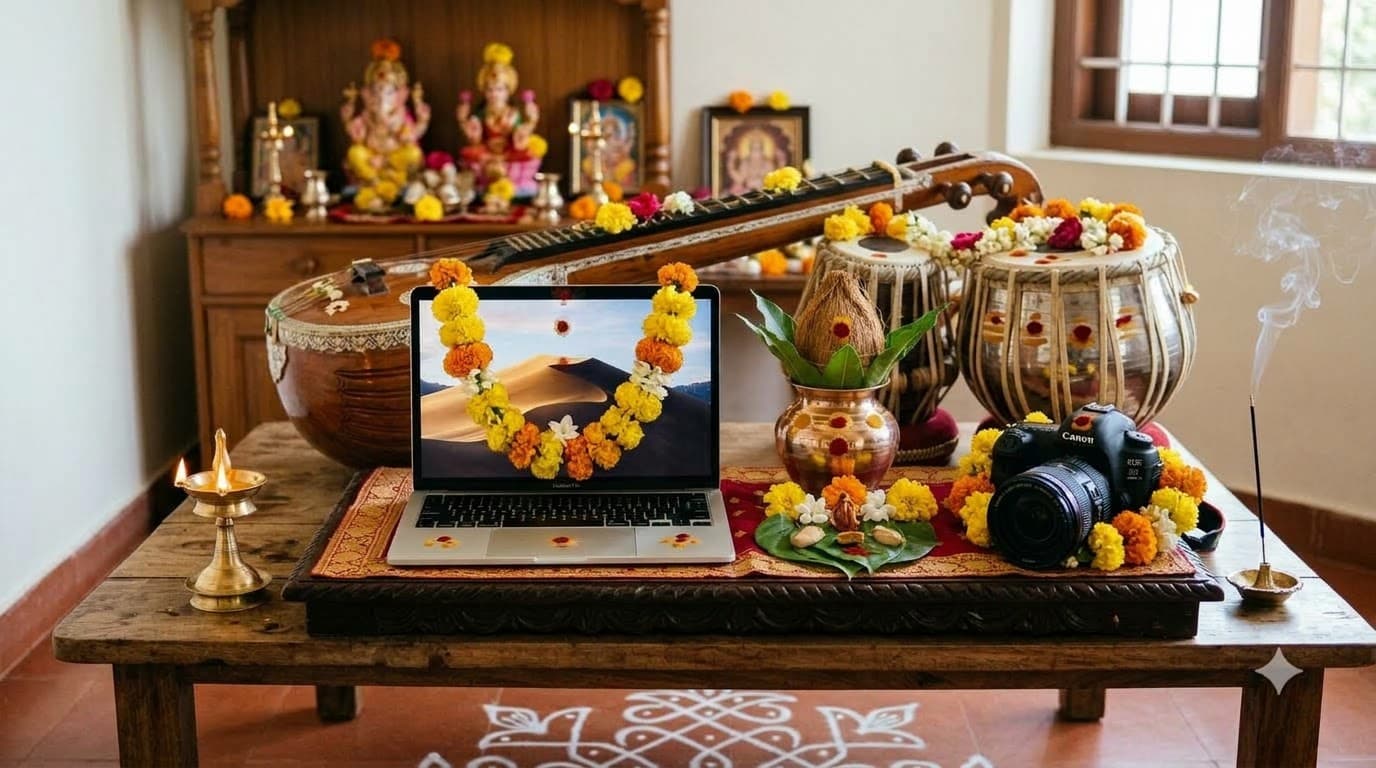
- Ayudha Puja: clean and arrange the tools of your trade — vehicles, laptops, kitchen knives, musical instruments, machinery — and offer kumkum, turmeric, and flowers to each before use resumes.
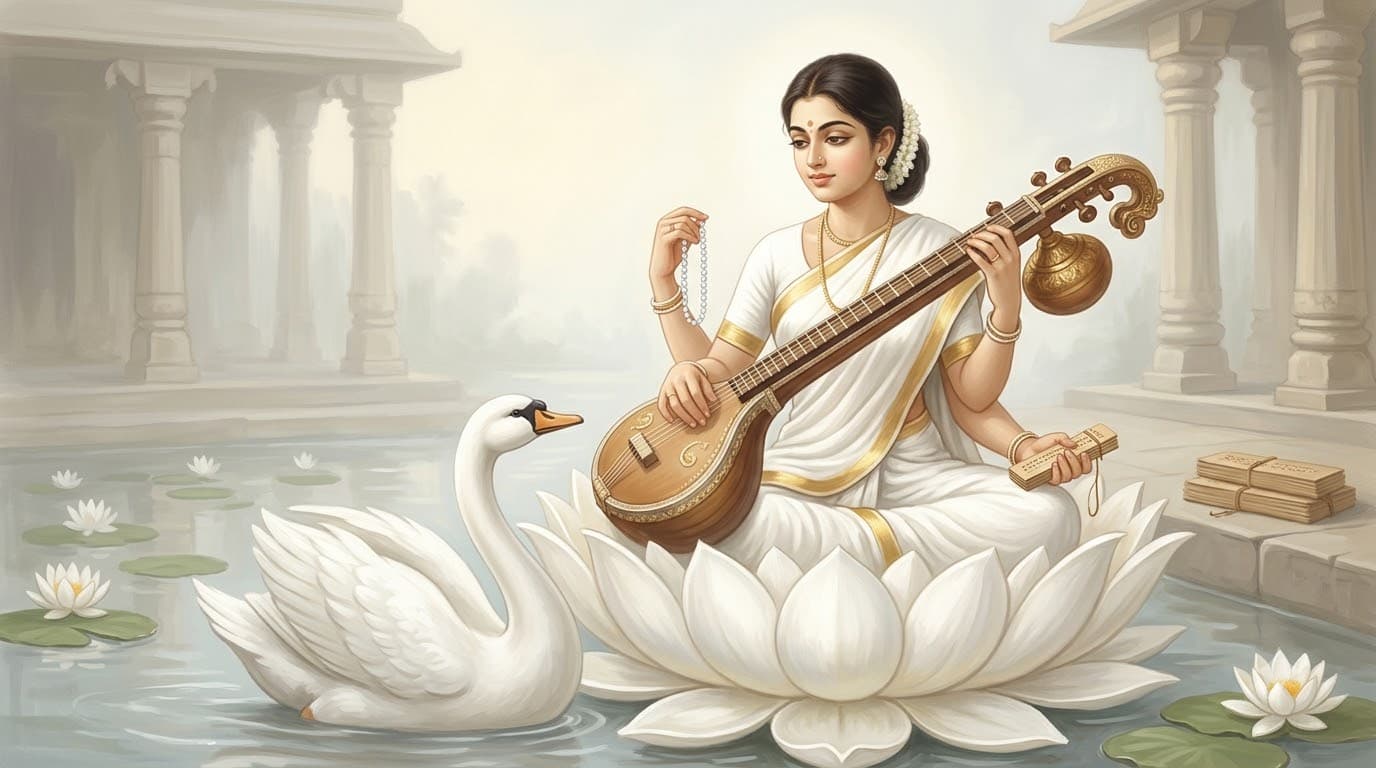
- Saraswati Puja: books, musical instruments, and study materials are placed before the goddess on Maha Navami and left untouched until Vijayadashami, when children traditionally begin writing again (Vidyarambham) as a mark of resumed learning.
- Jammi Puja: a small branch or a few leaves of the Shami/Jammi tree are exchanged among family and neighbors as a gesture of goodwill.
- Bommala Koluvu visits: many homes keep their doll displays up through Vijayadashami and invite neighbors over for a final round of visits before packing the dolls away for the year.
Quick Tip: If you're arranging a puja for the day, the Vijaya Muhurat (1:57 PM–2:44 PM on October 20) is the window most families and pandits treat as the most favorable — worth building your day's plans around it rather than around convenience alone.
7. Major Dasara Rituals
- Ayudha Puja: Blessing of tools, vehicles, and instruments of one's livelihood, usually on Maha Navami or Vijayadashami morning.
- Saraswati Puja & Vidyarambham: Books and instruments worshipped on Navami; children's first writing lesson performed on Dashami.
- Vijaya Yatra / Seemollanghan: Symbolically “crossing the border,” traditionally by stepping past the boundary of one's town or village on Vijayadashami — a practice with roots in the Rajput and Maratha custom of launching military campaigns on this day.
- Jammi Puja: Worship of the Shami tree and exchange of its leaves as a gesture of prosperity.
- Bommala Koluvu: Nine-tier doll displays kept through Navratri and shown to visiting family and neighbors, common across Andhra and Telangana homes.
- Ravana Dahan: Burning of Ravana's effigy on the evening of Vijayadashami — the dominant public ritual in North India, less central in Telangana's own observance.
8. Do's and Don'ts for Dasara
Do:
- Clean and set aside the tools, vehicles, or instruments you plan to bless before Ayudha Puja.
- Check the Vijaya Muhurat timing if you're planning to start something new — a purchase, a journey, a business registration.
- Visit elders and exchange Jammi leaves or sweets as a gesture of goodwill.
- Confirm your local Ashtami/Navami dates with a Telangana-set panchangam if you're unsure which day applies to your family's tradition.
Don't:
- Don't assume every regional custom applies to your household — Ravana Dahan, for instance, isn't a fixture of most Telugu Dasara celebrations.
- Don't skip confirming the tithi timing if you're following a strict muhurat — a day's difference between panchangams is common around this festival.
- Don't treat Bathukamma and Dasara as interchangeable when planning — they overlap in timing but are separate observances with their own rituals.
9. Interesting Facts About Dasara
- Mysuru Dasara has been celebrated as a royal state festival for over 400 years and remains one of the largest public Dasara events in India.
- The word Vijayadashami literally breaks down as vijaya (victory) + dashami (tenth) — the name itself is simply “victory on the tenth day.”
- In Kolkata and much of eastern India, this same ten-day period is known primarily as Durga Puja, with Vijayadashami marking the immersion (visarjan) of the goddess's idols.
- The Jammi/Shami tree tradition connects Dasara directly to the Mahabharata's account of the Pandavas retrieving their hidden weapons before the Kurukshetra war.
- Telangana's Bathukamma, which closes right around the same days as Dasara, was recognized by the state government as a major cultural festival and has its own dedicated public holiday.
11. Book Your Dasara Season Pujas with Divine Center
Planning Ayudha Puja, Saraswati Puja, or Navratri Ghatasthapana this Dasara? Book Navratri Ghatasthapana Puja | Talk to Our Priest | Contact Divine Center
13. References & Further Reading
- Vijayadashami — Wikipedia — background on the pan-Indian traditions and regional variations behind the festival.
- Vijayadashami 2026 Date & Time, Hyderabad — DrikPanchang — the Hyderabad-specific panchangam source used for this year's dates and Vijaya Muhurat timing.
- Durga Puja — Wikipedia — for readers comparing the eastern-India Durga Puja observance with the Telangana Dasara tradition.
14. Final Thoughts
Dasara doesn't ask for a single, uniform way of being observed — it's really a name families fill in with whichever story and ritual their own household has carried forward, whether that's a Bathukamma song, a row of blessed tools, or a Jammi leaf pressed into a neighbor's palm. Whatever combination of Dussehra, Dasara, or Vijayadashami your family uses, the day is meant to be a genuine turning point — a clean start after ten days of built-up devotion.
Shubhamastu.
Frequently Asked Questions
Q1. Is Dussehra the same as Dasara and Vijayadashami?
Yes — Dussehra, Dasara, Dasera, Dussera, and Vijayadashami all refer to the same tenth-day festival that closes Navratri. The differences are regional spelling and language variations, not different observances.
Q2. What is the date of Dussehra/Dasara in 2026?
Vijayadashami falls on Tuesday, October 20, 2026, according to the Telugu (Amanta) panchangam observed in Telangana and Andhra Pradesh. The Vijaya Muhurat that day runs from 1:57 PM to 2:44 PM.
Q3. Is Bathukamma the same festival as Dussehra?
No. They overlap in timing every year, but Bathukamma is Telangana's own floral festival honoring Goddess Gauri, while Dussehra/Vijayadashami is the pan-Indian close of Navratri tied to Durga and Rama. Bathukamma's finale (Saddula Bathukamma) falls a day or two before Vijayadashami.
Q4. Why do dates for Durga Ashtami and Vijayadashami vary between sources?
Tithi timings are calculated from local sunrise, so the exact date a tithi is observed can shift by a day between panchangams or regions, especially near a tithi boundary. It's worth confirming with a local, Telangana-set panchangam or your pandit.
Q5. What is Ayudha Puja and when is it performed?
Ayudha Puja is the ritual blessing of tools, vehicles, and instruments of one's livelihood. It is usually performed on Maha Navami (October 19, 2026) or on the morning of Vijayadashami itself.
Q6. What is the significance of exchanging Jammi (Shami) leaves on Dasara?
The custom recalls the Mahabharata story of the Pandavas retrieving weapons hidden in a Shami tree before going to war. Exchanging its leaves as symbolic “gold” is a gesture of goodwill and shared prosperity for the year ahead.
Q7. Is Ravana Dahan performed in Telangana?
It's mainly a North Indian tradition tied to Ramlila performances. In Telangana, Vijayadashami is more commonly marked with Ayudha Puja, Saraswati Puja, and family visits rather than a public effigy burning.
Q8. Do I need a pandit for Ayudha Puja or Navratri Ghatasthapana?
It isn't mandatory — many families perform Ayudha Puja themselves — but a pandit can guide the sankalpam, muhurat timing, and mantras correctly, which many households prefer for Ghatasthapana and other Navratri rituals in particular.