Jammi Puja & Ayudha Puja — Blessing Tools, Greeting Neighbors
By Divine center ·
Ayudha Puja and Jammi Puja fall on Vijayadashami, October 20, 2026 — blessing tools and instruments, and exchanging Jammi leaves with neighbors as a gesture of goodwill.
Jammi Puja & Ayudha Puja
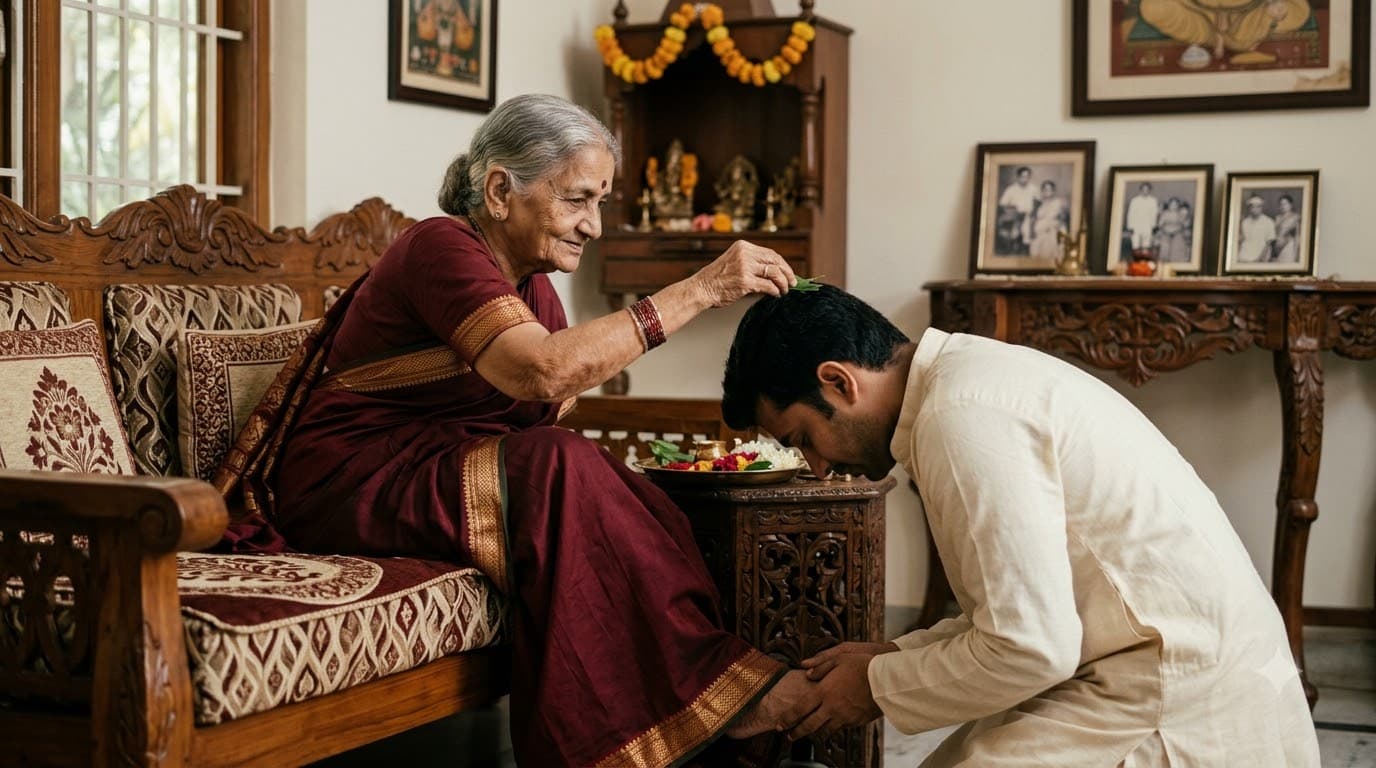
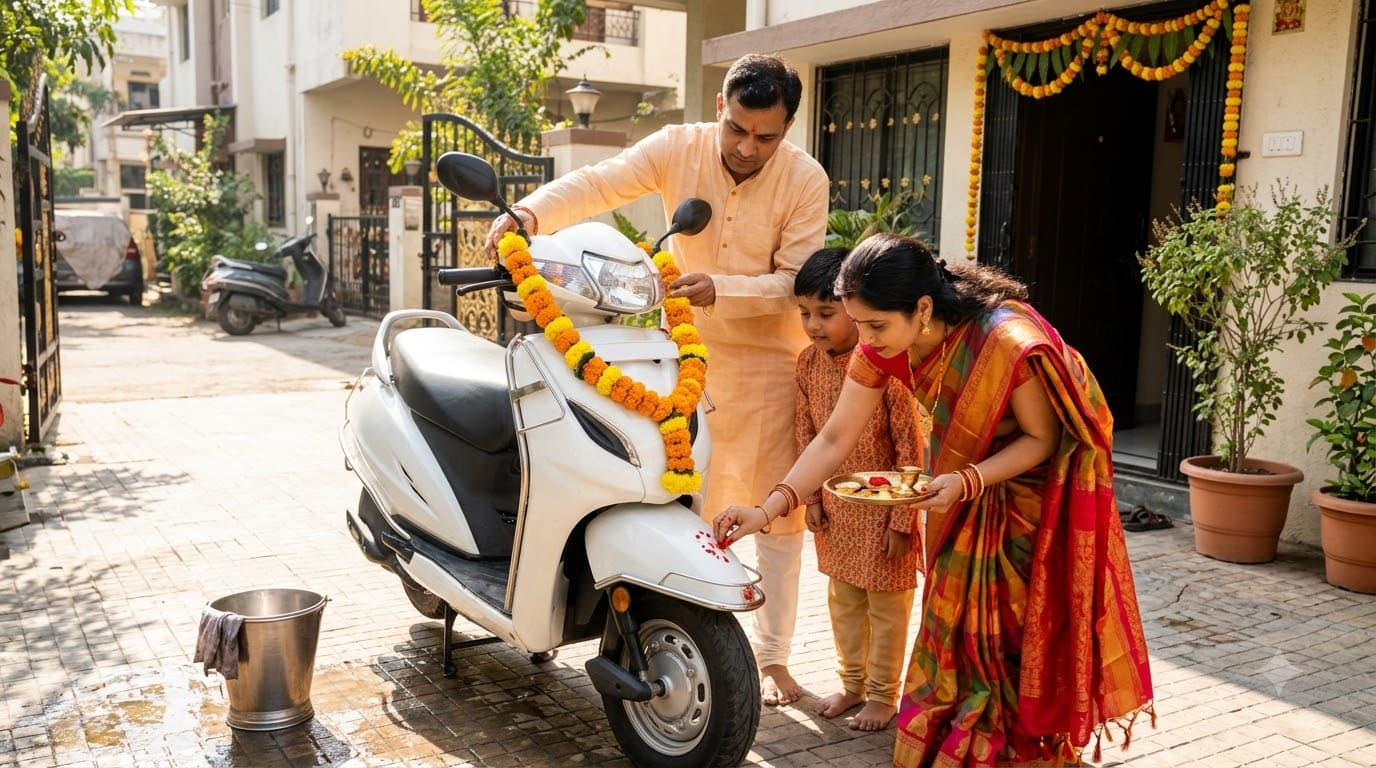
By Vijayadashami afternoon, most of the ritual heavy-lifting for Navratri is already done. What's left is smaller, more physical — a scooter wiped down and dotted with kumkum, a laptop opened just long enough for a blessing before it's closed again, a small green branch handed from one doorstep to the next. Ayudha Puja and Jammi Puja don't need a priest standing over them for hours. They need a family willing to step outside for twenty minutes and touch the ordinary things — and the ordinary people — that carried them through the year.
This guide covers both rituals together, since most households in Telangana perform them back to back on the same afternoon: what each one actually involves, the 2026 timing, and how to do them properly at home.
1. What Are Ayudha Puja and Jammi Puja?
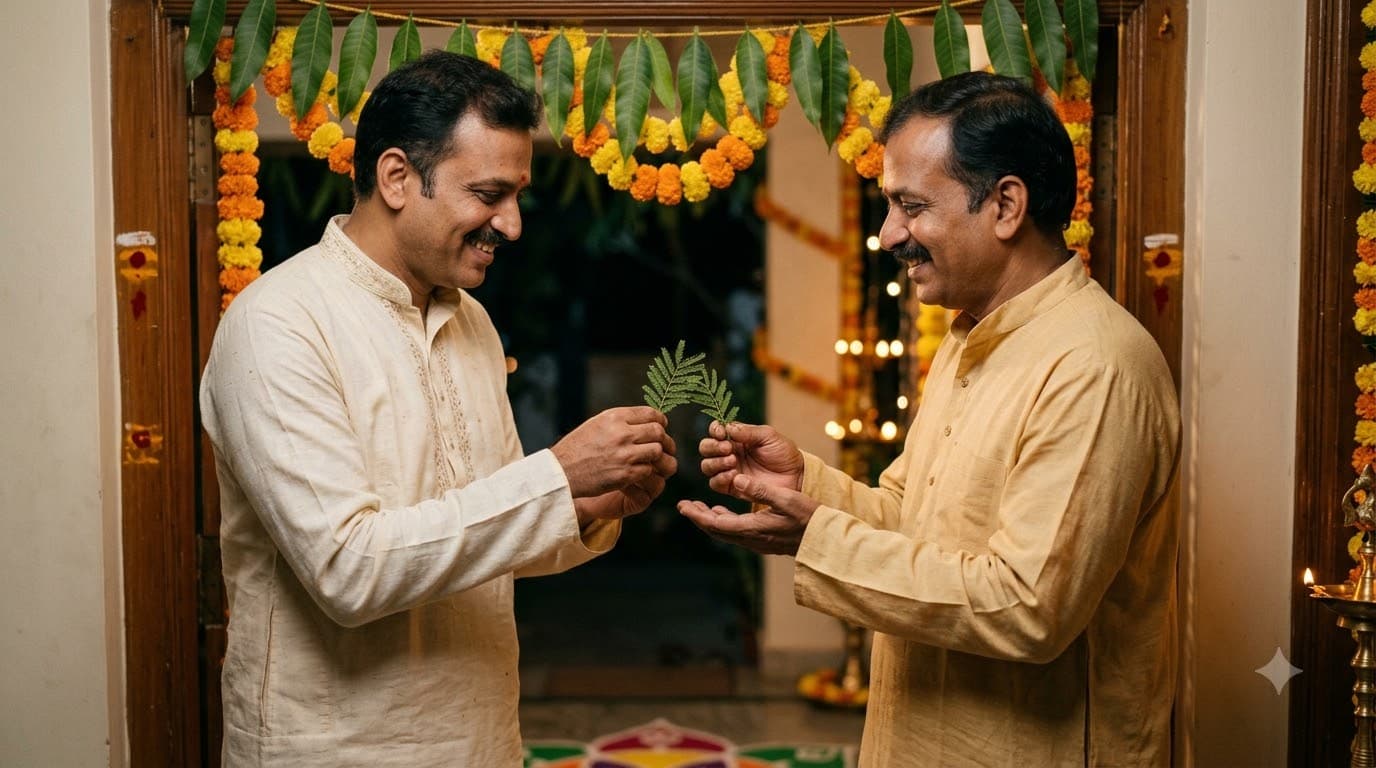
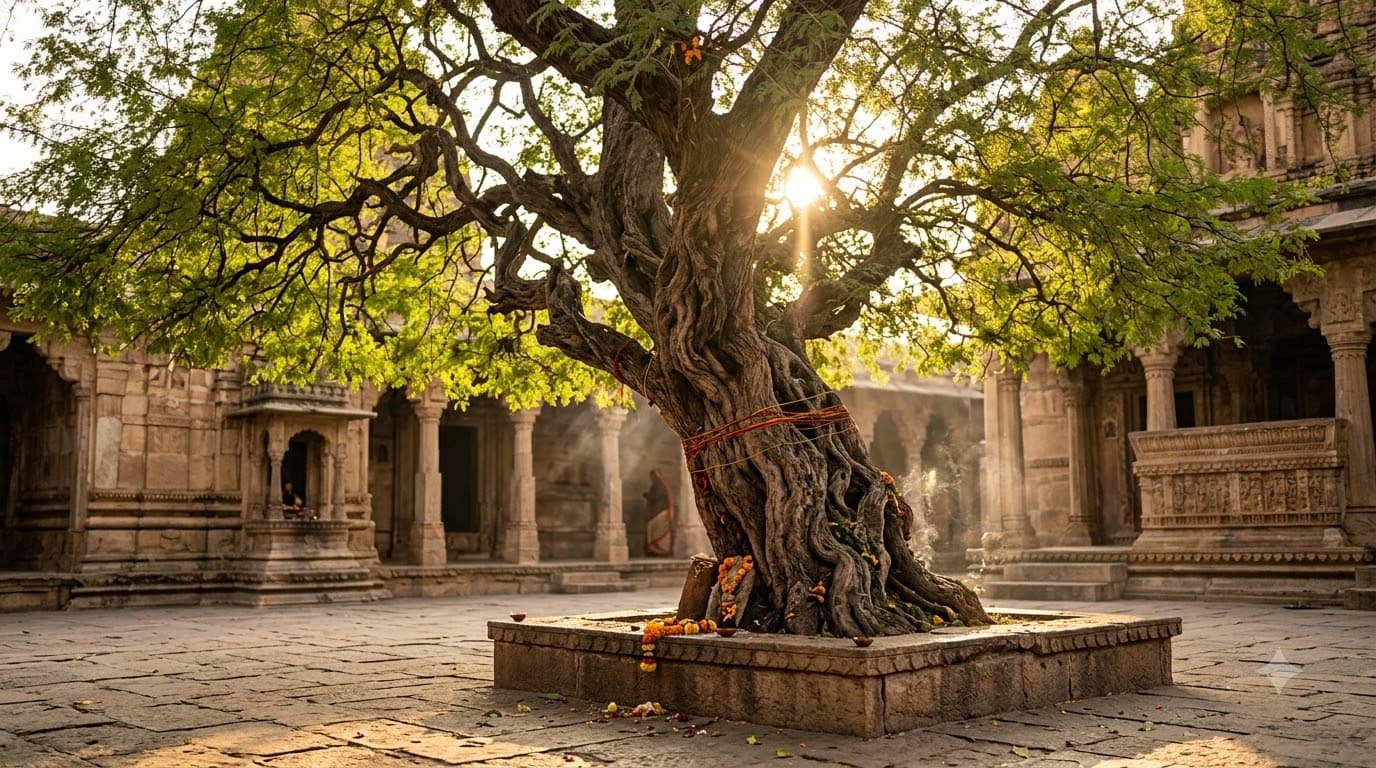
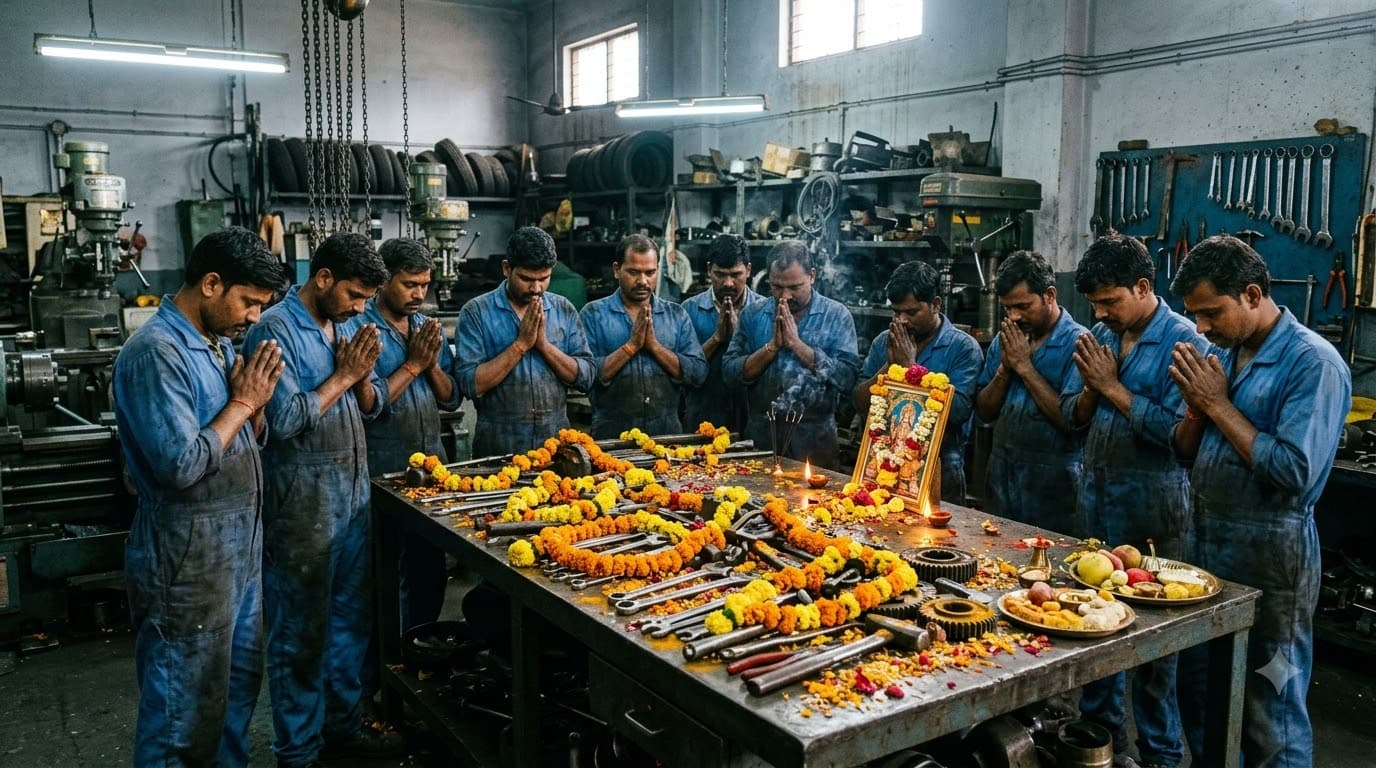
Ayudha Puja is the ritual blessing of the tools, vehicles, and instruments a person's livelihood depends on — everything from a taxi or an auto-rickshaw to a laptop, a set of kitchen knives, a musical instrument, or factory machinery. Jammi Puja is a separate but closely linked custom: the worship of the Jammi (Shami) tree, and the exchange of its leaves among family, friends, and neighbors as a gesture of goodwill and shared prosperity.
Both are performed on Vijayadashami, the tenth and final day of Navratri, and in most Telugu households they happen in the same window — tools blessed at home or at work in the morning, followed by visits to neighbors and elders with Jammi leaves in hand later in the day.
At a Glance:
- Ayudha Puja: blessing of tools, vehicles, and instruments of livelihood
- Jammi Puja: worship of the Shami tree and exchange of its leaves
- 2026 date: Tuesday, October 20, 2026 (Vijayadashami)
- Best timing: the Vijaya Muhurat, 1:57 PM to 2:44 PM
- Who performs it: individuals, families, offices, and workshops alike — no priest is strictly required for either
Did You Know? Ayudha Puja and Jammi Puja are both part of the broader Vijayadashami observance covered in our Dussehra 2026 guide — this post goes deeper into these two rituals specifically.
2. Why These Two Rituals Are Performed
Ayudha Puja's logic is fairly direct: whatever tool or vehicle supports a family's income is treated, for one day, as something worth honoring rather than just using. It's less about the object itself and more about acknowledging the livelihood it represents — a mechanic's tools, a driver's vehicle, a student's books, a musician's instrument all get the same basic treatment.
Jammi Puja carries a specific story behind it. The Mahabharata describes the Pandavas, during their year of exile in disguise, hiding their weapons inside a Shami tree to keep them safe — and retrieving them from that same tree on Vijayadashami before going on to reclaim what was theirs. Exchanging Jammi leaves as symbolic “gold” on this day is a direct echo of that story: a way of wishing someone well as they take up whatever “weapon” — a new job, a difficult decision, a fresh start — their own year ahead might require.
A common mix-up worth clearing up:
- Myth: Ayudha Puja is only for factories, workshops, and vehicles. Fact: any tool of livelihood qualifies — a laptop, a sewing machine, a chef's knives, a musician's instrument — the ritual isn't limited to heavy machinery.
- Myth: Jammi leaves are just a festive decoration exchanged out of habit. Fact: the exchange carries the specific Mahabharata reference above — it's meant as a goodwill gesture tied to that story, not a generic festival custom.
3. What's Involved in Each Ritual
Ayudha Puja:
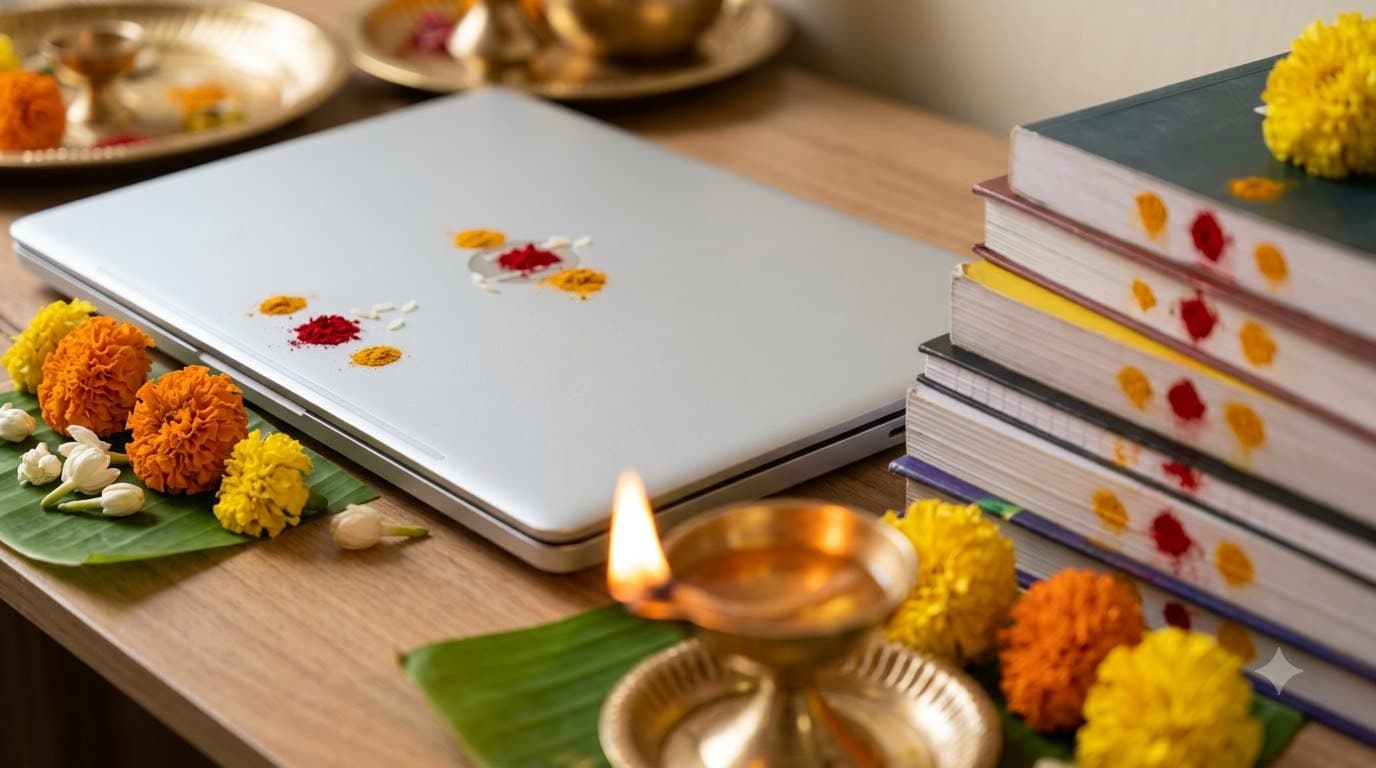
Tools and vehicles are cleaned, arranged together, and decorated with kumkum, turmeric, and flowers. A small lamp is lit nearby, and a brief prayer or archana is offered before the items are put back into use. In offices and workshops, this often becomes a small collective event — everyone's tools laid out together for one shared blessing.
Jammi Puja:
A branch or a few leaves of the Jammi (Shami) tree are worshipped briefly at home, then carried out and handed to neighbors, relatives, and friends, usually with a short greeting or blessing exchanged along with the leaves. Where a Shami tree isn't locally available, some families substitute Bengal gram (golden, coin-like) as a stand-in for the leaves, since both are treated as symbols of shared prosperity.
4. When Are Ayudha Puja and Jammi Puja Performed in 2026?
Both are performed on Vijayadashami, Tuesday, October 20, 2026. Many families and pandits treat the Vijaya Muhurat — 1:57 PM to 2:44 PM that day — as the most favorable window, particularly for Ayudha Puja if it's tied to starting something new (a purchase, a business registration, a first use of a new tool). Jammi Puja and the leaf-exchange visits are more flexible and typically happen through the afternoon and evening.
These dates follow the Telugu (Amanta) panchangam observed in Telangana and Andhra Pradesh.
Panchangam Note: Tithi-based observances are reckoned from local sunrise and can shift by a day between panchangams, or for readers outside India. It's worth confirming the exact Vijaya Muhurat timing with a local panchangam or your pandit if you're planning something around it specifically.
5. Spiritual Significance
Both rituals share an underlying idea: that the ordinary things carrying you through the year — your tools, your relationships with neighbors — deserve deliberate attention at least once. Ayudha Puja treats livelihood itself as worth honoring, not something to take for granted. Jammi Puja treats goodwill the same way — a small, physical gesture of connection rather than a vague well-wish left unsaid.
Together, they round out Vijayadashami's bigger themes of victory and new beginnings with something more grounded: the actual objects and actual people a person will rely on going into the new year.
6. How to Perform Ayudha Puja and Jammi Puja at Home
For Ayudha Puja:
- Clean and gather the tools, instruments, or vehicle you want to bless.
- Arrange them together, ideally near a small altar or a Ganesha/Lakshmi image.
- Apply kumkum and turmeric, and offer flowers to each item.
- Light a diya, offer a short prayer or archana, and let the lamp burn for a few minutes before resuming normal use of the items.
For Jammi Puja:
- Bring home a small branch or a few leaves of the Jammi (Shami) tree, or Bengal gram as a substitute.
- Offer a brief puja to the leaves at home — a simple prayer is enough.
- Set out in the afternoon or evening to visit neighbors, relatives, and elders, handing each a few leaves with a greeting.
- Accept leaves offered back to you in the same spirit — the exchange is meant to go both ways.
Quick Tip: If your household is combining this with the day's broader Vijayadashami puja (closing the Kalasham, Vidyarambham, etc.), Ayudha Puja usually comes first in the morning, with Jammi Puja and the neighborhood visits following in the afternoon.
7. Mantras & Chants
Neither ritual requires elaborate Sanskrit recitation. For Ayudha Puja, a simple prayer to Ganesha or Lakshmi — or even just a sincere, spoken acknowledgment of the tool's role in your livelihood — is considered sufficient by most families. For Jammi Puja, a short verse of thanks to the tree, sometimes just “Shami Shamayate Papam” (“the Shami tree destroys sin/difficulty”) is recited by those who know it, though many households simply offer the leaves with a spoken blessing instead.
8. The Greeting Custom — Meeting and Visiting Neighbors
The part of Jammi Puja that often means the most in practice isn't the leaf itself — it's the visiting. Vijayadashami afternoons in many Telangana neighborhoods turn into an informal round of doorstep visits: families walking to their neighbors' homes, handing over a few Jammi leaves or Bengal gram, exchanging sweets, and greeting each other with some version of “Vijayadashami subhakankshalu” (Vijayadashami greetings).
Elders are usually visited first, out of respect, with younger family members touching their feet and receiving blessings in return. It's one of the few rituals in the Hindu calendar that's built almost entirely around social visiting rather than a fixed set of prayers — the greeting itself is the ritual.
9. Do's and Don'ts
Do:
- Include every tool of livelihood in your Ayudha Puja, not just vehicles or heavy equipment.
- Visit elders and neighbors in person for Jammi Puja where possible — the gesture is meant to be face to face.
- Check the Vijaya Muhurat timing if you're planning to start something new alongside Ayudha Puja.
- Offer leaves back to anyone who visits you, rather than only receiving.
Don't:
- Don't skip Ayudha Puja for a tool just because it feels too ordinary — that's precisely the point of the ritual.
- Don't treat the Jammi leaf exchange as a formality — a brief, genuine greeting matters more than the leaf itself.
- Don't assume Bengal gram as a substitute is “less correct” — it's a widely accepted stand-in where Shami leaves aren't available.
10. Interesting Facts
- Ayudha Puja is observed well beyond Telangana — it's a major event in Karnataka and Tamil Nadu too, where it's closely tied to Mysuru Dasara's own celebrations.
- The Jammi tree exchange tradition directly references the Mahabharata's account of the Pandavas hiding, and later retrieving, their weapons in a Shami tree before the Kurukshetra war.
- In many offices and workshops, Ayudha Puja has become one of the few Hindu rituals performed collectively and openly in secular workplaces, regardless of every employee's personal faith.
- The phrase most commonly used during the greeting rounds — “Vijayadashami subhakankshalu” — translates simply to “Vijayadashami greetings/good wishes.”
11. Book Your Vijayadashami Pujas with Divine Center
Want a pandit to guide your Ayudha Puja or the full Vijayadashami closing rituals this year? Book Navratri Ghatasthapana Puja | Talk to Our Priest | Contact Divine Center
13. References & Further Reading
- Ayudha Puja — Wikipedia — background on the ritual's pan-South-Indian observance.
- Vijayadashami — Wikipedia — for the Shami/Jammi tree tradition and its Mahabharata reference.
- Vijayadashami 2026 Date & Time, Hyderabad — DrikPanchang — the Hyderabad-specific panchangam source used for this year's Vijaya Muhurat timing.
14. Final Thoughts
Neither of these rituals asks for much — a clean tool, a handful of leaves, twenty minutes of walking between doorsteps. But they're the part of Dasara that tends to stay with people longest, precisely because they're so physical and so social. A blessed laptop still gets used the next morning. A neighbor greeted with a Jammi leaf is still a neighbor you'll wave to next week. That's really the point.
Shubhamastu.
Frequently Asked Questions
Q1. What is the difference between Ayudha Puja and Jammi Puja?
Ayudha Puja is the blessing of tools, vehicles, and instruments of livelihood. Jammi Puja is the worship of the Shami tree and the exchange of its leaves as a goodwill gesture. Both are performed on Vijayadashami, often back to back.
Q2. When are Ayudha Puja and Jammi Puja in 2026?
Both fall on Vijayadashami, Tuesday, October 20, 2026. The Vijaya Muhurat that day (1:57 PM to 2:44 PM) is widely treated as the most favorable window, especially for Ayudha Puja.
Q3. Do I need a pandit for Ayudha Puja or Jammi Puja?
No — both are commonly performed by families and workplaces themselves without a priest. A pandit can help if you want the muhurat and sankalpam guided formally, but it isn't required.
Q4. What items qualify for Ayudha Puja?
Anything that supports your livelihood — vehicles, machinery, laptops, kitchen knives, musical instruments, books, sewing machines. There's no fixed list; the principle applies broadly.
Q5. What if I can't find Jammi (Shami) leaves?
Bengal gram is a widely accepted substitute, treated as a golden, coin-like symbol of the same prosperity the Jammi leaves represent.
Q6. Why are Jammi leaves specifically exchanged on this day?
The custom recalls the Mahabharata's account of the Pandavas hiding their weapons in a Shami tree during exile and retrieving them on this day before going to war — the leaf exchange echoes that story as a gesture of goodwill.
Q7. Is Ayudha Puja only observed in Telangana?
No — it's widely observed across South India, including Karnataka and Tamil Nadu, and is closely associated with Mysuru Dasara's own celebrations.
Q8. What is said when greeting someone during the Jammi Puja visits?
A common greeting is “Vijayadashami subhakankshalu” — simply, “Vijayadashami greetings” or “good wishes.”