Deepavali & Lakshmi Puja 2026: Dates, Story & Rituals for Telangana
By Divine center ·
Deepavali and Lakshmi Puja fall on November 8, 2026 in Telangana. Here's the Satyabhama-Narakasura legend, the full 2026 date calendar, and how to perform Lakshmi Puja at home.
Deepavali & Lakshmi Puja 2026
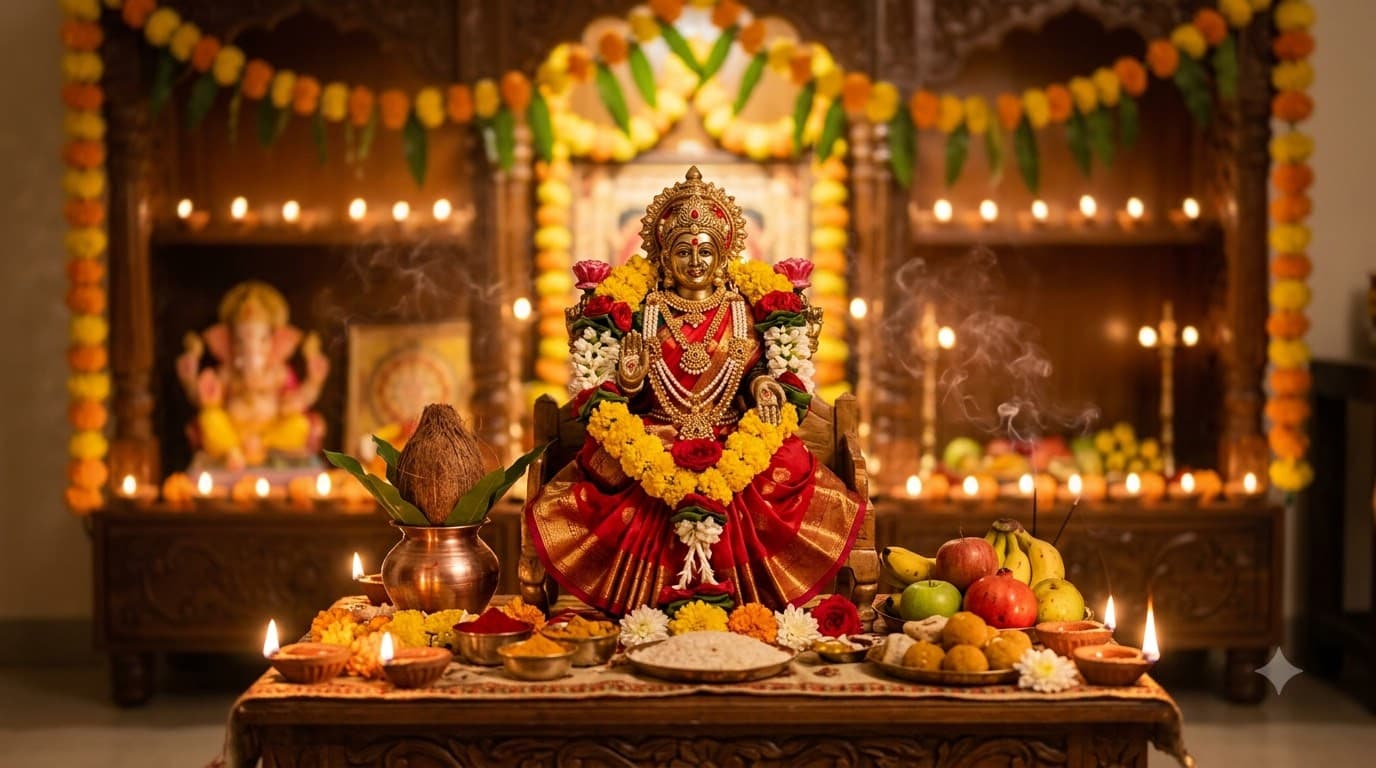
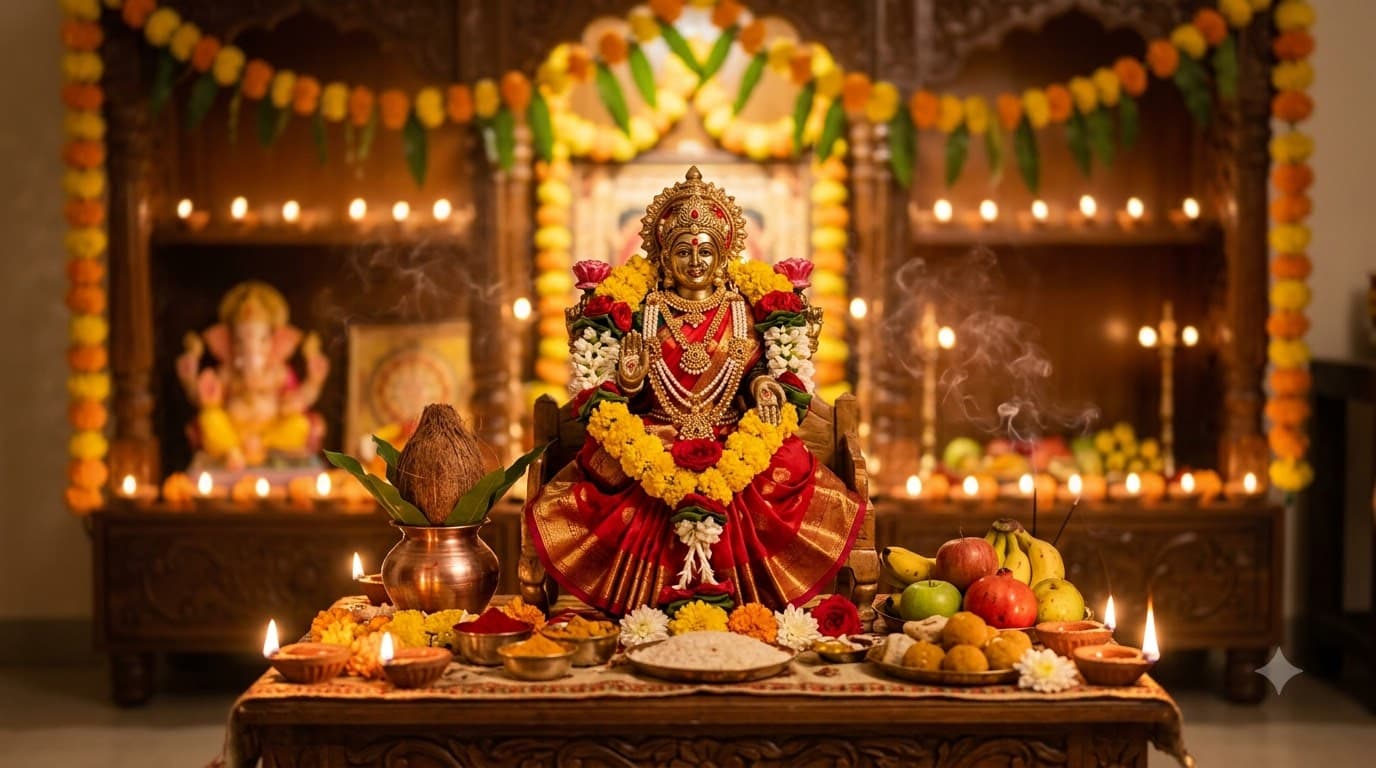
Somewhere around six in the evening on Deepavali, the whole colony seems to light up within the same twenty minutes. One house strings up its serial lights, the next sets a row of clay deepalu along the compound wall, and by the time the sky opens up with the first rockets, every terrace has someone on it. Before any of that, though, there's a quieter room somewhere in the house — a small altar, a silver Lakshmi idol freshly bathed, an account book placed open in front of it. That's Lakshmi Puja, and it's the actual center of the evening everything else builds around.
This guide covers both — Deepavali as the festival and Lakshmi Puja as its central ritual — with the verified 2026 dates for Hyderabad and Telangana, the Telugu-specific legend behind Naraka Chaturdashi, and a full walkthrough of how to perform Lakshmi Puja at home.
1. What Is Deepavali (Diwali)?
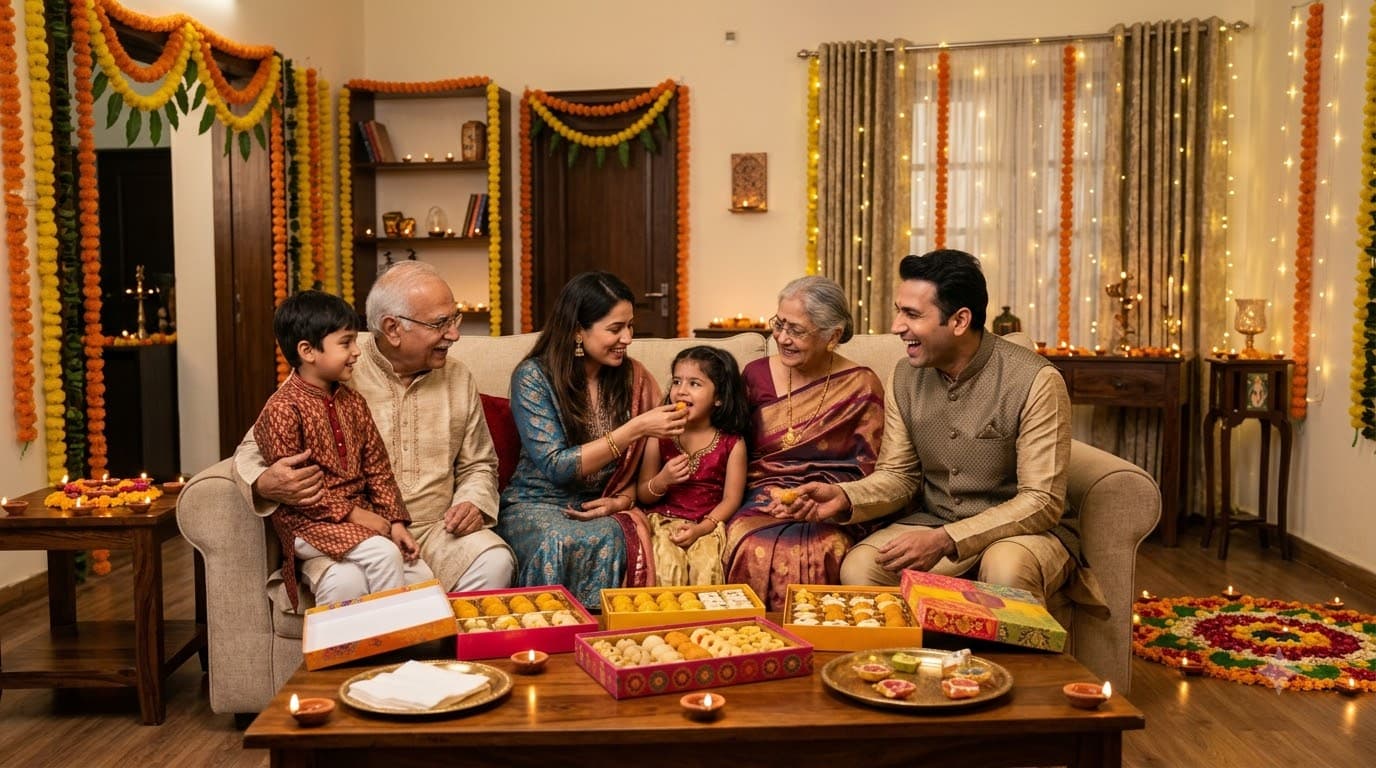
Deepavali — commonly called Diwali across India — is the festival of lights marking the victory of good over evil, observed on Ashwin Amavasya, the darkest night of the lunar month. Homes are cleaned, lit with rows of oil lamps, and opened up to welcome Goddess Lakshmi, who is believed to visit households that are clean, well-lit, and awake to receive her. Lakshmi Puja is the specific ritual performed that evening — the worship most people simply mean when they say “Diwali Puja.”
At a Glance:
- What it marks: the festival of lights, and the victory of good over evil
- Main ritual: Lakshmi Puja, performed on Amavasya night
- 2026 dates: Dhanteras Nov 6, Naraka Chaturdashi Nov 7, Deepavali/Lakshmi Puja Nov 8
- Best timing: the Pradosh Kaal muhurat, shortly after sunset on Nov 8
- Deities worshipped: Goddess Lakshmi, Lord Ganesh, and Lord Kuber
Did You Know? In Telugu households, the morning before Lakshmi Puja — Naraka Chaturdashi — is often considered just as important as the evening itself, built around an oil bath taken before sunrise.
2. The Story Behind Deepavali
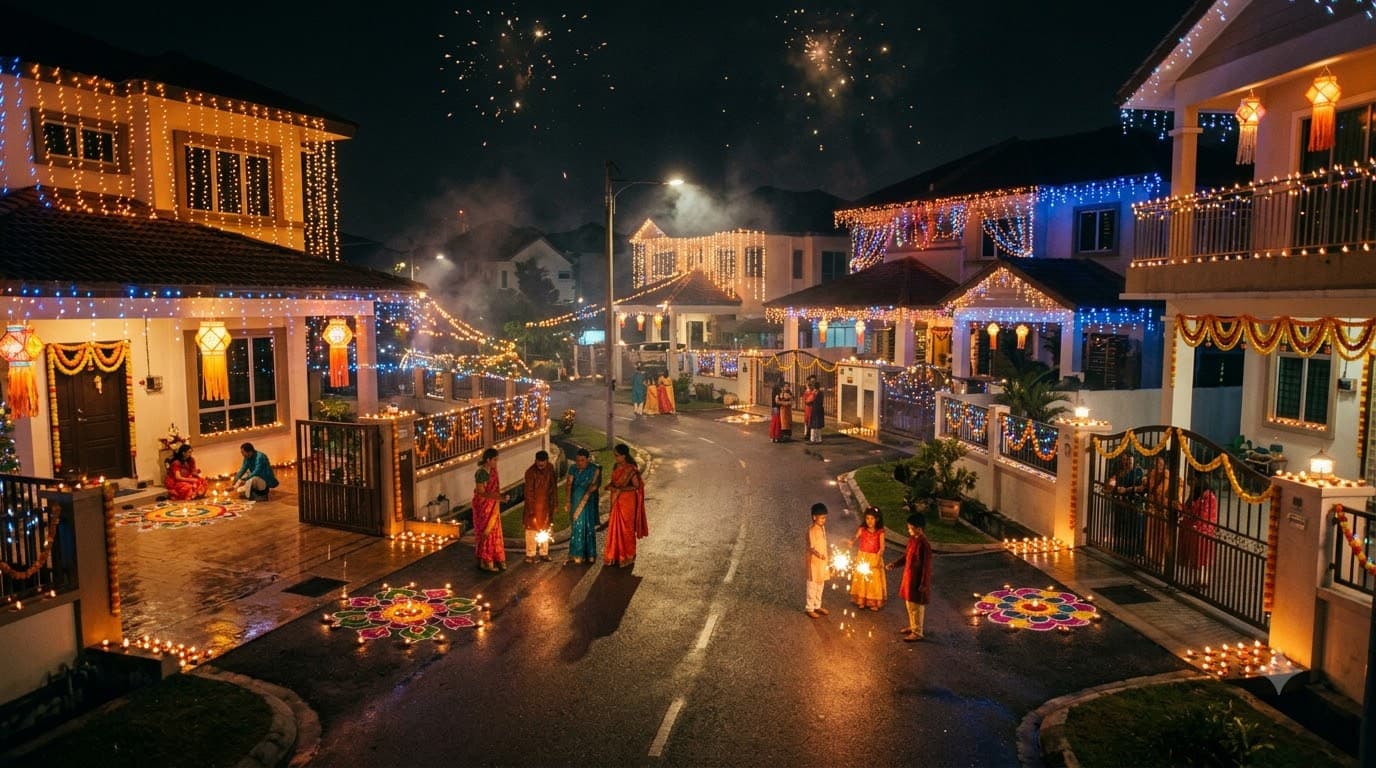
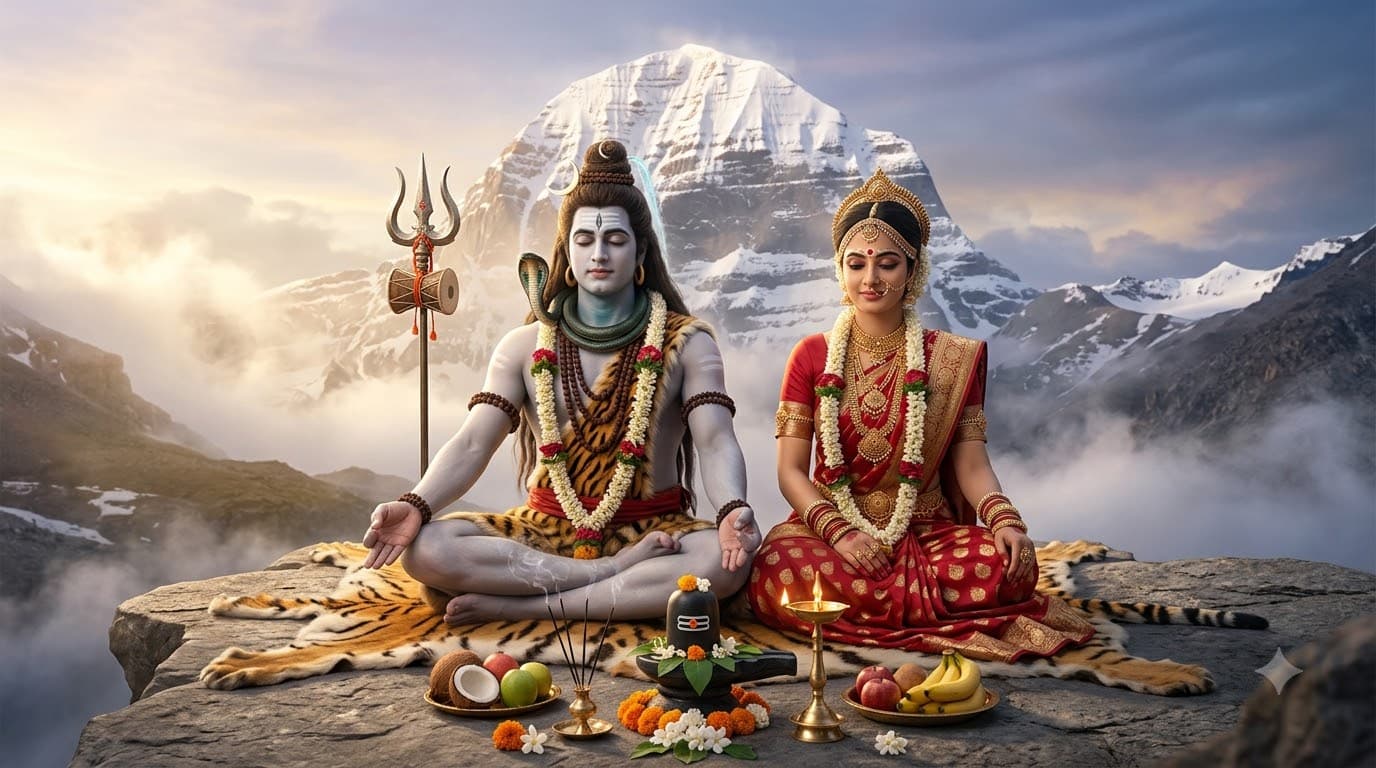
Deepavali carries more than one legend, and which one gets told often depends on the region. In Andhra and Telangana households, the story most commonly told is that of Satyabhama and Narakasura — the Bhagavata Purana's account of Krishna's wife Satyabhama accompanying him into battle against the demon king Narakasura and, in some tellings, delivering the final blow herself. Narakasura's defeat on the Chaturdashi before Amavasya is why that day is observed as Naraka Chaturdashi — an early-morning ritual oil bath said to wash away the darkness the demon represented, before the sunrise arrives.
The following evening, Amavasya night, is given over to Lakshmi Puja — inviting prosperity back into a home that, tradition holds, has just been cleared of the metaphorical darkness Narakasura stood for. The two days are meant to be read together: one clears the way, the other invites in what's wanted.
Myth vs. Fact: Whether Krishna alone killed Narakasura, or Satyabhama delivered the decisive blow, varies by which version of the Purana or regional retelling is being followed — both are told within accepted tradition, and Telugu households commonly favor the version that gives Satyabhama the central role.
3. Complete Date & Ritual Calendar for 2026
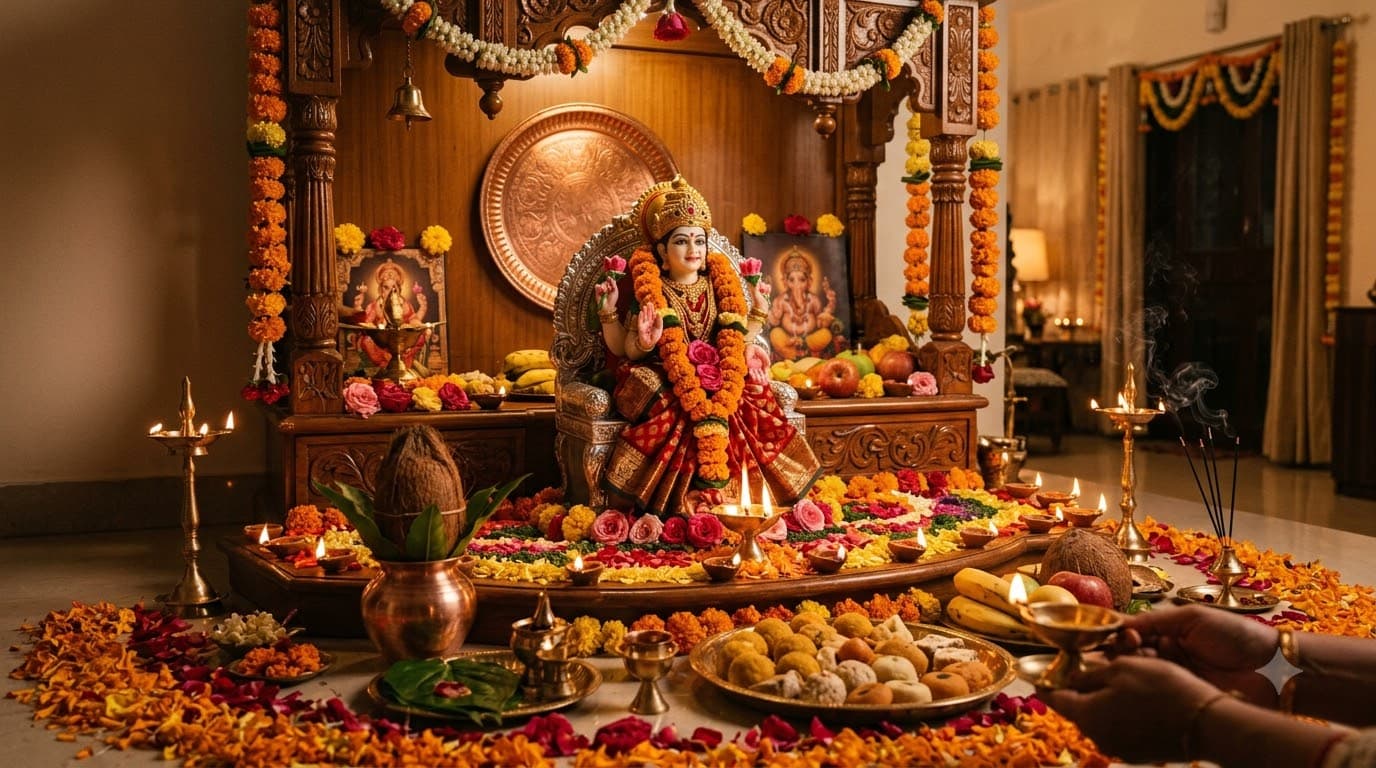
The 2026 Deepavali calendar:
- Dhanteras: Friday, November 6, 2026 — buying gold/utensils, worship of Dhanvantari and Kuber
- Naraka Chaturdashi: Saturday, November 7, 2026 — pre-dawn oil bath (Abhyanga Snanam), commemorating Narakasura's defeat
- Deepavali / Lakshmi Puja: Sunday, November 8, 2026 — the main puja night
- Govardhan Puja: Monday, November 9, 2026 — observed in some communities, less prominent in Telugu households
These dates follow the Telugu (Amanta) panchangam observed in Telangana and Andhra Pradesh. The Lakshmi Puja muhurat itself is generally the Pradosh Kaal window, shortly after sunset on November 8 — the exact start and end time shifts slightly by city, so it's worth confirming with a local panchangam or pandit rather than using a generic pan-India time.
Panchangam Note: Amavasya tithi is reckoned from local sunrise and can shift by a day between panchangams or for readers outside India. Dhanteras in particular is a pan-India observance that carries more weight in North Indian households than in traditional Telugu ones, where preparations for Deepavali itself tend to matter more.
4. Where Is Deepavali Observed?
Deepavali is observed across almost all of India, though the emphasis shifts by region — Dhanteras and Govardhan Puja carry more weight in North Indian households, while Naraka Chaturdashi's oil bath and the Satyabhama-Narakasura legend are especially prominent in Andhra and Telangana homes.
In Hyderabad, the run-up to Deepavali is visible well before the day itself — Bowenpally and Sultan Bazaar fill up with stalls selling deepalu, muggu (rangoli) powder, and crackers, and many neighborhood temples hold special Lakshmi Puja gatherings on the evening of Amavasya for families who want a priest present rather than performing the puja entirely on their own.
5. Spiritual Significance
Read together, Naraka Chaturdashi and Lakshmi Puja form a single idea: clearing something out before inviting something in. The pre-dawn oil bath is treated as a small act of purification — a fresh start before sunrise — and the evening's Lakshmi Puja is meant to welcome prosperity into a home that's ready for it, rather than one still cluttered by the old year's difficulties.
For many families, particularly those running a business, Deepavali also marks a kind of financial reset — old account books are closed and blessed, new ones opened, and the day is treated as an auspicious point to begin the coming year's ledgers.
6. How to Perform Lakshmi Puja at Home
- Clean the home thoroughly in the days before Deepavali — a cluttered or unclean space is considered unwelcoming to Lakshmi.
- On Naraka Chaturdashi morning, take an oil bath before sunrise if your family observes this custom.
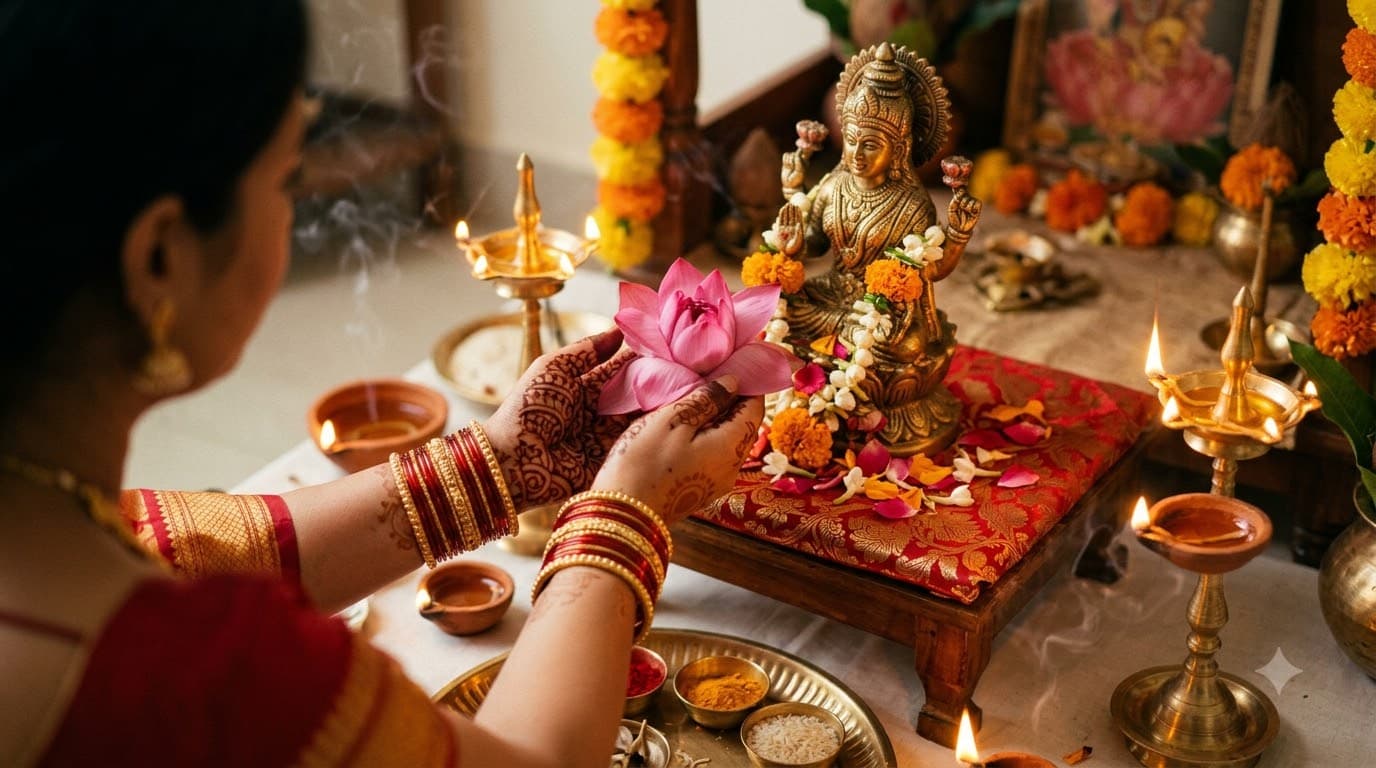
- On the evening of Amavasya, set up a small altar with images or idols of Lakshmi, Ganesh, and Kuber.
- Light diyas throughout the home, especially near the entrance, and draw a muggu (rangoli) at the doorstep.
- Perform the puja — Ganesh first, then Lakshmi's invocation and formal worship, then Kuber — followed by aarti.
- Keep account books, cash, or jewelry near the altar during the puja if your family follows this custom for business blessing.
Quick Tip: Keep the front door open (or at least unlatched) during the puja itself — tradition holds this signals the household is ready to receive Lakshmi rather than shutting her out.
7. Major Deepavali Rituals
- Abhyanga Snanam: the pre-dawn oil bath on Naraka Chaturdashi, marking the start of the festival
- Muggu/Rangoli: decorative floor patterns drawn at the entrance to welcome Lakshmi
- Deepam lighting: rows of clay oil lamps lit throughout the home and along walls and terraces
- Lakshmi Puja: the central evening worship of Lakshmi, Ganesh, and Kuber
- Fireworks: crackers and sparklers, traditionally lit after the puja is complete
8. Deepavali Sweets & Food Customs
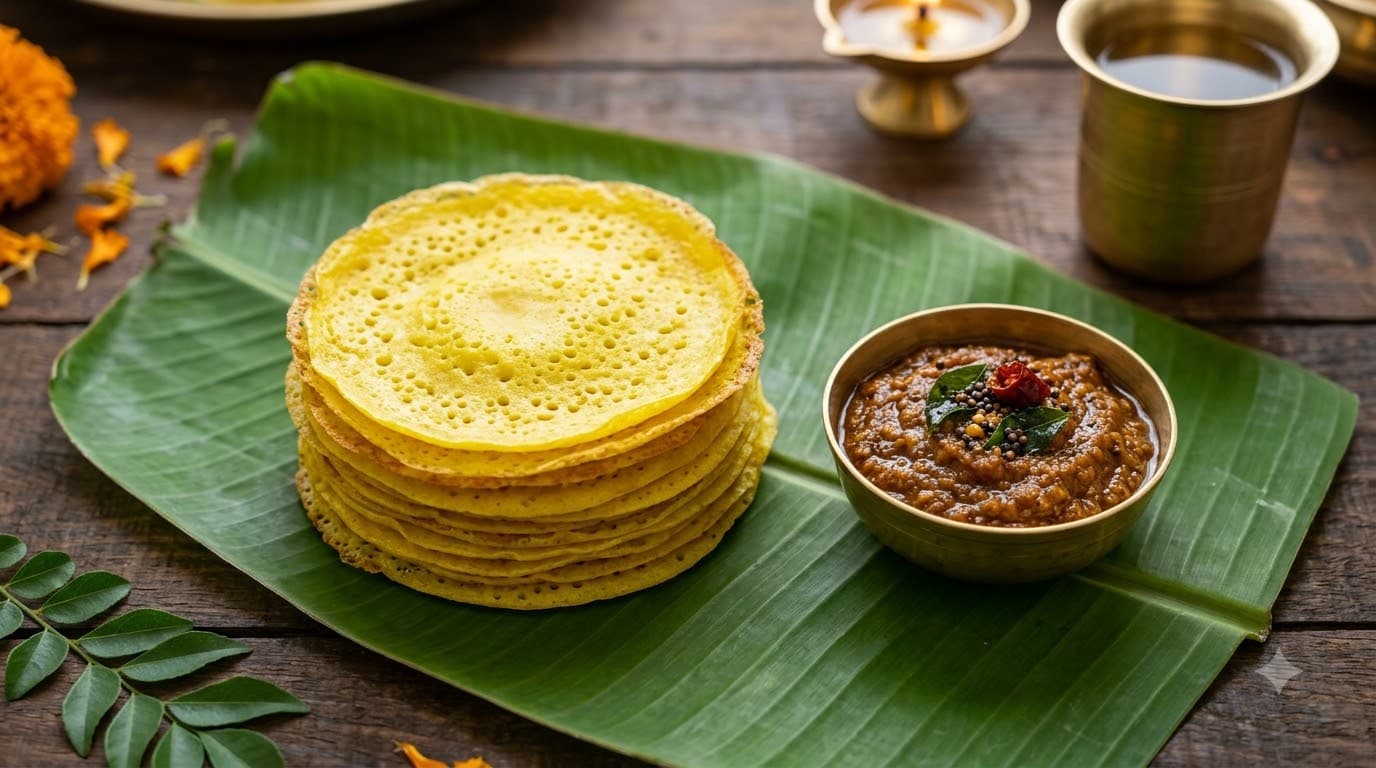
Telugu households mark Deepavali with a specific spread of sweets and savories, most of them prepared days in advance: Ariselu (a jaggery-and-rice-flour sweet unique to Andhra/Telangana), Boorelu, Kajjikayalu (a fried sweet dumpling similar to karanji), and Chekkalu or Murukulu on the savory side.
Inclusivity note: for children, elderly family members, or anyone managing a health condition that limits fried or sugary food, smaller portions of these sweets, or lighter alternatives like fruit and dry fruit offerings as prasadam, are entirely acceptable — the puja's significance doesn't depend on the quantity or richness of the food offered.
9. Do's and Don'ts
Do:
- Clean and declutter the home before Deepavali, not just on the day itself.
- Perform Ganesh Puja before Lakshmi Puja, in that order.
- Confirm the exact Pradosh Kaal muhurat for your city rather than assuming a generic time.
- Light diyas at the entrance and keep the space well-lit through the evening.
Don't:
- Don't perform Lakshmi Puja in a home that hasn't been cleaned beforehand — the preparation matters as much as the ritual itself.
- Don't burst fireworks before the puja is completed, if your family follows this sequence.
- Don't assume North Indian—style Dhanteras and Govardhan Puja customs are equally central everywhere — in Telugu households the emphasis sits more with Naraka Chaturdashi and Lakshmi Puja.
10. Interesting Facts
- The word Deepavali itself means “row of lights” — deepa (lamp) and avali (row) — describing the rows of diyas lit that night.
- In the Andhra/Telangana telling of the Narakasura legend, Satyabhama's role is often given more prominence than in North Indian retellings of the same story.
- Lakshmi Puja is one of the few Hindu rituals where business account books are formally brought into the puja space and blessed alongside the deities.
- Deepavali falls on Amavasya in every regional Hindu calendar system — unlike some festivals, there's no date disagreement between the Amanta and Purnimanta traditions here, since Amavasya itself is the same tithi in both.
11. Book Lakshmi Puja with Divine Center
Want a pandit to guide your Lakshmi Puja this Deepavali? Book Lakshmi Puja | Talk to Our Priest | Contact Divine Center
13. References & Further Reading
- Diwali — Wikipedia — background on the festival's pan-India observance and regional variations.
- Lakshmi Puja — Wikipedia — for the ritual structure and its significance.
- Diwali 2026 Date & Time, Hyderabad — DrikPanchang — the Hyderabad-specific panchangam source for confirming this year's exact muhurat.
14. Final Thoughts
Deepavali has a way of turning an entire street into one shared event — everyone's diyas lit within the same half hour, everyone's muggu fresh at the same doorstep. But the puja at the center of it is a quiet, deliberate thing: a clean home, an open door, and twenty minutes of genuine attention paid to what you're hoping the year ahead brings in. That's really what Lakshmi Puja is asking for.
Shubham.
Frequently Asked Questions
Q1. What is the difference between Deepavali and Lakshmi Puja?
Deepavali is the full festival of lights, observed over several days. Lakshmi Puja is the specific ritual performed on the main Deepavali night (Amavasya), worshipping Goddess Lakshmi, Ganesh, and Kuber — it's what most people mean by “Diwali Puja.”
Q2. When is Deepavali/Lakshmi Puja in 2026?
Deepavali and Lakshmi Puja fall on Sunday, November 8, 2026, with Dhanteras on November 6 and Naraka Chaturdashi on November 7.
Q3. Is Diwali the same as Deepavali?
Yes — Deepavali is the fuller Sanskrit/Telugu form of the name, and Diwali is the shortened form widely used across North India and in everyday conversation. Both refer to the same festival.
Q4. Why is Naraka Chaturdashi important in Telugu households?
It marks Narakasura's defeat by Krishna and Satyabhama in the Bhagavata Purana's account, and is observed with a pre-dawn oil bath believed to wash away impurity before Deepavali itself.
Q5. What is the best time for Lakshmi Puja in 2026?
The Pradosh Kaal muhurat, shortly after sunset on November 8, is generally considered the most favorable window, though the exact timing varies slightly by city — confirm with a local panchangam or pandit.
Q6. Do I need a pandit for Lakshmi Puja, or can I do it myself?
Many families perform it themselves, especially the simpler home version. A pandit is commonly booked for a more formal Shodashopachara (16-step) puja, or for business/office Lakshmi Puja bookings.
Q7. Is Dhanteras observed the same way in Telangana as in North India?
Not with quite the same emphasis — Dhanteras is a pan-India observance, but in traditional Telugu households, Naraka Chaturdashi and Lakshmi Puja tend to carry more weight than Dhanteras or Govardhan Puja.
Q8. What sweets are traditionally made for Deepavali in Andhra/Telangana?
Ariselu, Boorelu, and Kajjikayalu are among the most common, alongside savories like Chekkalu and Murukulu, usually prepared a few days ahead of the festival.