Mahalakshmi Devi: Navratri Day 6 2026 — Date & Puja Guide
By Divine center ·
Mahalakshmi Devi, worshipped on Navratri Day 6, October 16, 2026 — her legend, iconography, mantra, and how to observe her day at home in Telangana.
1. Who Is Mahalakshmi Devi?
Mahalakshmi Devi is the deity honored on the sixth day of Navratri. Her name combines "Maha" (great) and "Lakshmi" (the goddess of wealth, prosperity, and abundance) — one of the Tridevi, alongside Saraswati and Parvati, in the wider Shakta and Vaishnava traditions. In the Devi Mahatmyam itself, Mahalakshmi is described as the middle of three principal forms through which Devi manifests — an eighteen-armed, fierce form credited in that text with the slaying of the demon Mahishasura, distinct from the gentler, wealth-bestowing Mahalakshmi more commonly pictured today.
At a Glance:
- Name: Mahalakshmi Devi ("the great goddess of wealth and abundance")
- Navratri Day: Day 6
- 2026 Date: Friday, October 16, 2026
- Mount (Vahana): Lion, in her Devi Mahatmyam warrior form
- Known For: In the Devi Mahatmyam, the eighteen-armed form credited with slaying Mahishasura; in popular worship, the goddess of prosperity and abundance
2. The Legend of Mahalakshmi Devi
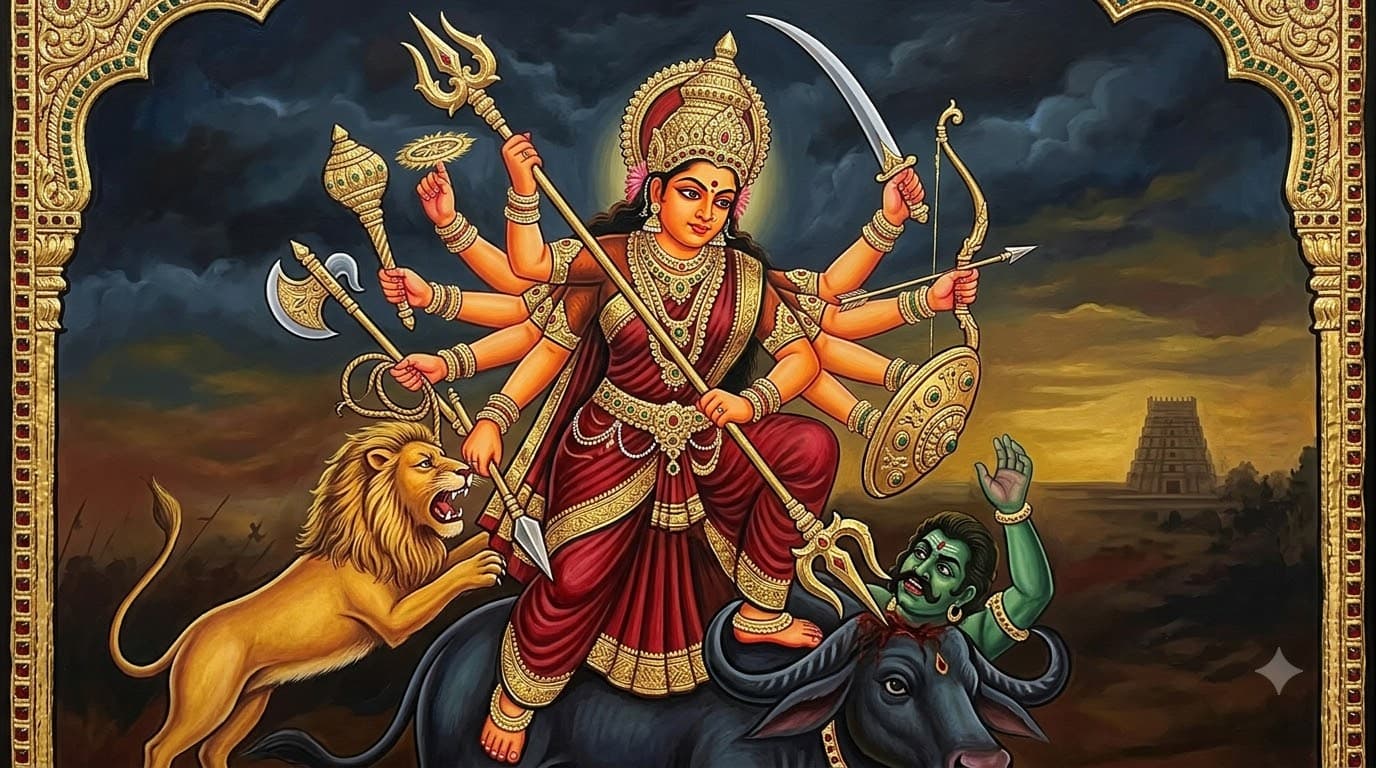
The Devi Mahatmyam is structured around three episodes, or charitas, each centered on a different principal form of Devi: Mahakali slays the demons Madhu and Kaitabha in the first; Mahasaraswati slays Shumbha and Nishumbha in the third; and in the middle episode, it is Mahalakshmi who confronts and slays Mahishasura, the shape-shifting buffalo demon. Tradition holds she was created from the combined radiance (tejas) of the gods when they could not defeat him individually, taking an eighteen-armed form armed with weapons lent by each deity before riding into battle on a lion.
This fierce, Puranic Mahalakshmi is worth holding alongside the gentler, four-armed Mahalakshmi more widely worshipped for wealth and abundance in homes and businesses — the elders who tell this story usually treat both as the same goddess in different registers, rather than two separate deities.
3. Iconography & Symbolism
Mahalakshmi Devi carries two distinct, widely recognized forms:
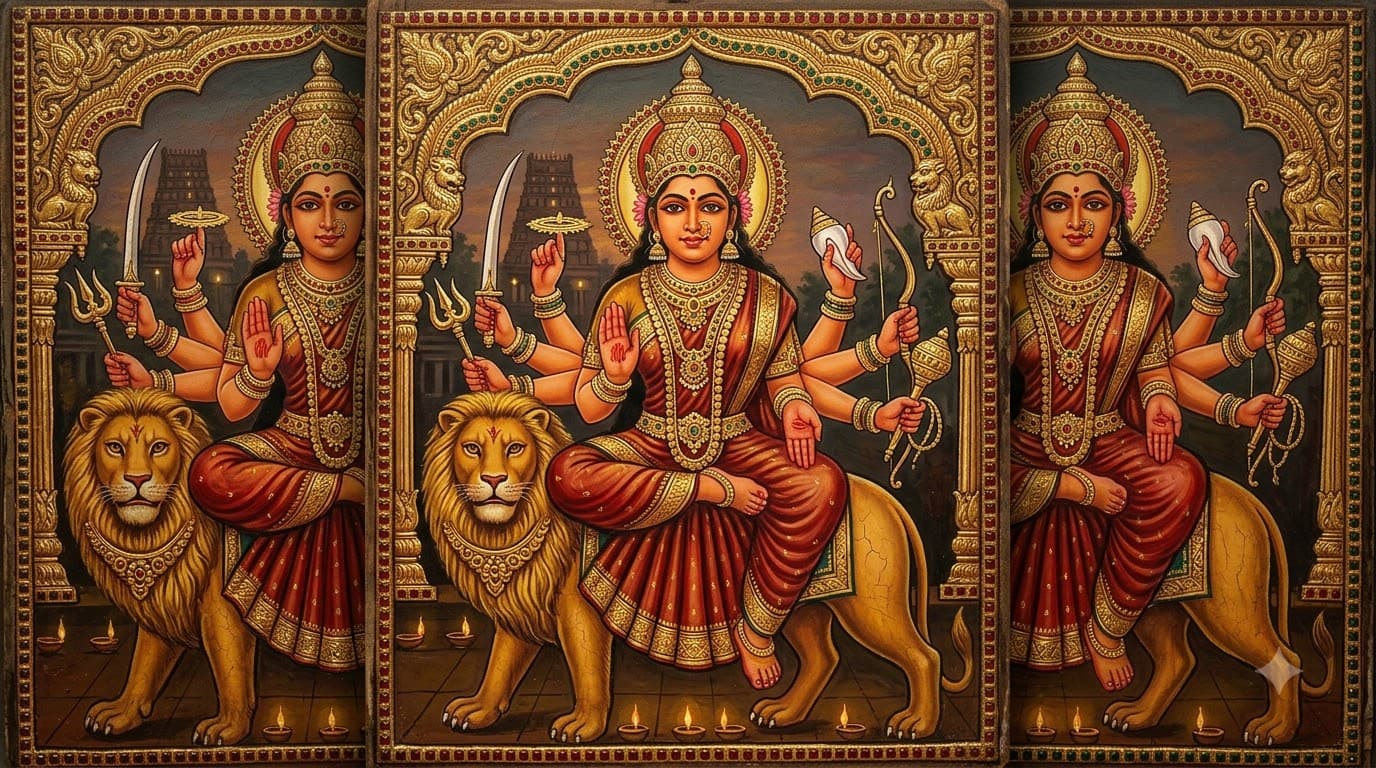
- The Devi Mahatmyam warrior form: eighteen-armed, golden or red complexion, riding a lion, carrying implements gifted by different gods — trident, discus, conch, sword, mace, bow and arrow, noose, and lotus among them
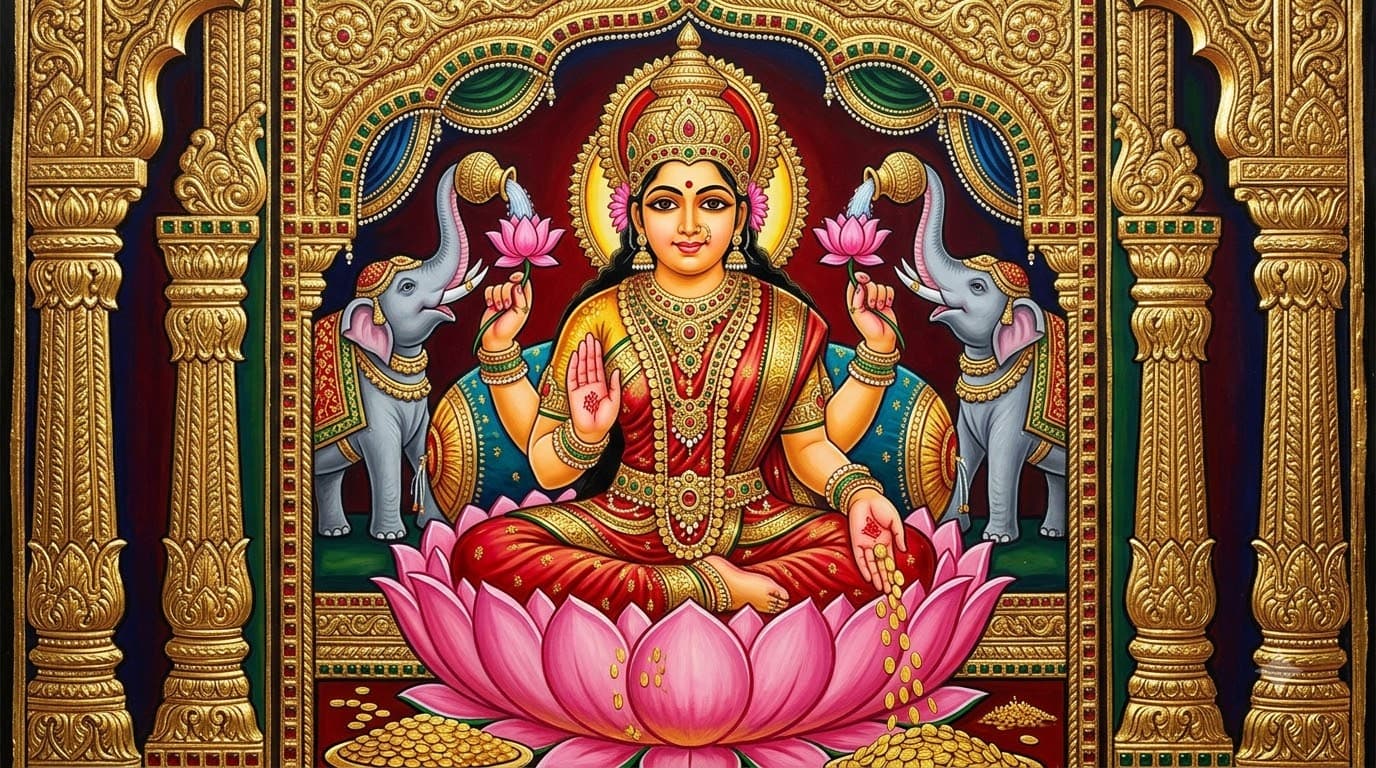
- The popular wealth-goddess form: typically four-armed, seated on a lotus, holding two lotuses, with the remaining two hands in abhaya (protection) and varada (blessing) mudras, sometimes shown with gold coins streaming from her palm
Both are honored under the same name, and Navratri worship on this day draws on both layers of her identity at once — protection and prosperity, rather than one before the other.
4. When Is Mahalakshmi Devi Worshipped in 2026?
In 2026, Mahalakshmi Devi is worshipped on Friday, October 16, the sixth day of Navratri, corresponding to Ashwin Shukla Shashthi. These dates follow the Telugu (Amanta) panchangam observed in Telangana and Andhra Pradesh, verified against a Hyderabad-set panchangam rather than a generic or North-India-default one.
Panchangam Note: as with every tithi-based day in this series, Shashthi timings are reckoned from local sunrise and can shift by a day between panchangams, or for readers outside India. If you're planning a specific puja hour, confirm the exact tithi window with a local panchangam or your pandit rather than a single online source.
5. Spiritual Significance
Devotion to Mahalakshmi on this day is associated with seeking both courage, drawing on her Devi Mahatmyam warrior form, and abundance, drawing on her more widely known identity as the goddess of wealth. Her day is often treated as a reminder that the tradition doesn't separate protection from prosperity — the same goddess who fights is the one who provides.
Tradition also holds that wealth sought through her blessing is meant to be paired with right conduct, not pursued for its own sake — a distinction worth keeping in mind rather than treating prosperity as an end in itself.
6. How to Worship Mahalakshmi Devi at Home
A home puja for Mahalakshmi Devi's day follows the broader Navratri structure, with an emphasis suited to her identity:
- Clean the puja space and refresh the kalasham water and flowers as on the previous days.
- Offer red or pink flowers if available, along with a lotus where possible.
- Place a few coins or a handful of rice near the altar as a symbolic marker of prosperity.
- Recite her dhyana shloka or a Mahalakshmi stotra if your family follows one.
- Offer the day's naivedyam (see Section 8) after the puja is complete.
7. Mantras & Chants
Mahalakshmi Devi's most widely used beej mantra is:
"Om Mahalakshmyai Namah"
This is generally chanted 108 times with a japa mala. Some households also recite the Mahalakshmi Ashtakam, an eight-verse hymn tradition attributes to Indra, as part of the day's puja. If your family doesn't follow that specific hymn, the beej mantra alone is considered sufficient.
8. Bhog & Naivedyam
A commonly cited tradition associates Mahalakshmi Devi's day with offering kheer or payasam and other rice-based sweets as naivedyam, sometimes with a coin placed on the offering plate as a symbolic link to prosperity. As with the earlier days in this series, there isn't one single dish every Telugu household treats as fixed for this day — some families simply continue with whatever they've been offering through the rest of Navratri, and that's equally valid.
9. Do's and Don'ts
Do:
- Offer red or pink flowers if available, given the tone associated with this day.
- Hold both resolve and gratitude in mind — her identity carries both a warrior form and a wealth-goddess form.
- Verify the Shashthi tithi timing against a Hyderabad-set panchangam if a specific muhurat matters to you.
Don't:
- Don't treat the coin or prosperity ritual as a guarantee of wealth — it's a symbolic devotional practice, not a financial claim.
- Don't reduce Mahalakshmi to only a wealth goddess — her Devi Mahatmyam identity is explicitly a warrior form as well.
- Don't skip the sunrise/tithi-shift caution if you're following a strict panchangam for the day's timing.
10. Interesting Facts
- In the Devi Mahatmyam, Mahalakshmi is the middle of the three principal forms of Devi and is specifically credited with slaying Mahishasura.
- Her eighteen-armed Devi Mahatmyam form is armed with weapons said to be lent by different gods, each contributing their own power to the battle.
- The more widely known four-armed Mahalakshmi, seated on a lotus with coins streaming from her palm, is the form most households picture during Diwali and other wealth-focused worship.
- Kolhapur's Mahalakshmi temple in Maharashtra is among the most prominent temples dedicated to her.
- Devotion to Mahalakshmi during Navratri is considered to draw on both layers of her identity at once — protection and prosperity together.
13. References & Further Reading
- Mahalakshmi — Wikipedia — background on her name, her place in the Devi Mahatmyam, and her wider worship as goddess of wealth.
- Navratri 2026 Date & Day 6, Hyderabad — DrikPanchang — the Hyderabad-specific panchangam source used for the 2026 date and tithi.
- Devi Mahatmyam — Wikipedia — the Puranic text describing Mahalakshmi's role in the Mahishasura battle.
14. Final Thoughts
Mahalakshmi Devi's day is a useful checkpoint in the middle of Navratri — a reminder that devotion isn't only about stillness and patience, and prosperity isn't only about material gain. Sometimes strength looks like a raised sword, and sometimes it looks like an open, giving hand. Both, in her, come from the same source.
Shubham.
Frequently Asked Questions
Q1. What does the name Mahalakshmi mean?
Mahalakshmi combines "Maha" (great) and "Lakshmi" (the goddess of wealth, prosperity, and abundance). She is one of the Tridevi in Shakta and Vaishnava tradition, alongside Saraswati and Parvati.
Q2. When is Mahalakshmi Devi worshipped in 2026?
Mahalakshmi Devi is worshipped on Friday, October 16, 2026, the sixth day of Navratri, corresponding to Ashwin Shukla Shashthi in the Telugu (Amanta) panchangam followed in Telangana and Andhra Pradesh.
Q3. Is Mahalakshmi the same goddess worshipped during Diwali?
Yes, in essence. The four-armed, lotus-seated Mahalakshmi worshipped during Diwali and other wealth-focused occasions is the same goddess honored on this Navratri day, though this day also draws on her fiercer, eighteen-armed Devi Mahatmyam form.
Q4. Is Mahalakshmi the form that killed Mahishasura?
Yes. The Devi Mahatmyam structures its narrative around three principal forms of Devi, and it is specifically Mahalakshmi, in the middle episode, who confronts and slays the demon Mahishasura.
Q5. What does Mahalakshmi hold in her eighteen hands?
In her Devi Mahatmyam form, her eighteen hands hold weapons said to be lent by different gods, including a trident, discus, conch, sword, mace, bow and arrow, noose, and a lotus, each contributing its own power to the battle against Mahishasura.
Q6. What is Mahalakshmi's beej mantra?
The widely used mantra is "Om Mahalakshmyai Namah," typically chanted 108 times with a japa mala as part of the day's puja.
Q7. Is the coin or prosperity ritual on this day necessary?
No. Placing a coin or a handful of rice near the altar is a popular, symbolic devotional practice, not a strict requirement or a guarantee of wealth. Many households simply continue with their regular Navratri offerings.
Q8. Can the Navratri date for this day differ between panchangams?
Yes. Tithi-based dates are calculated from local sunrise and can shift by a day between panchangams or for readers outside India. It's worth confirming with a Telangana-set panchangam or your pandit if a specific muhurat matters.