Bala Devi: Navratri Day 2 2026 — Date & Puja Guide
By Divine center ·
Bala Devi, worshipped on Day 2 of Navratri, represents Parvati's penance to win Shiva. Here's her legend, iconography, 2026 date, and puja steps.
1. Who Is Bala Devi?
Bala Devi means "the young goddess" — from Bala, meaning young or powerful. She is worshipped as a youthful, radiant deity in the Sri Vidya-adjacent temple tradition, and her day falls the day after Ghatasthapana opens the festival.
This day is also linked, in Puranic tradition, to Parvati in her unmarried state, before her marriage to Shiva, undertaking severe penance to win him as her husband — a decision tradition says she made against her father Himavan's own wishes for her.
At a Glance:
- Name meaning: The young/powerful form of the goddess (Bala = young, powerful)
- Navratri day: Day 2
- 2026 date: Monday, October 12, 2026
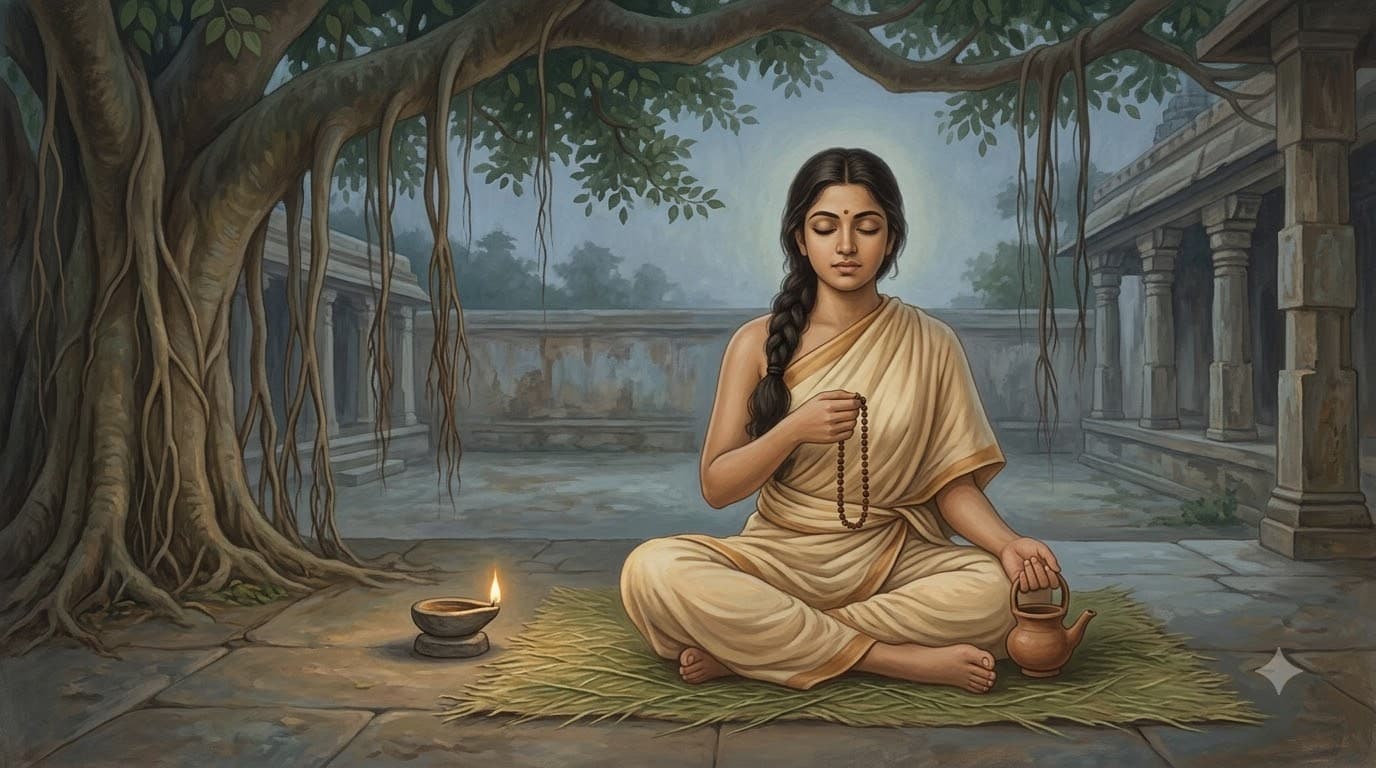
- Depicted as: A barefoot ascetic, holding a japa mala and a kamandalu
- Known for: Perseverance, self-discipline, and tapasya undertaken for a devoted goal
2. The Legend of Bala Devi
According to tradition, after being reborn as Himavan's daughter, Parvati set her mind on marrying Shiva. Her father, the story goes, disapproved and tried repeatedly to dissuade her, but Parvati left the comforts of the palace and went into the forest to undertake tapasya of a severity few could match.
Accounts describe her living for long stretches on nothing but leaves — earning her, in some retellings, the name Aparna, "one without even a leaf" — through freezing winters, punishing summers, and years of unbroken discipline. The Devi Mahatmyam tradition holds that her penance was ultimately what won Shiva's attention and, eventually, his hand — the very outcome that Gayatri Devi's form, on the following day, is said to mark.
3. Iconography & Symbolism
Bala Devi is depicted, in this penance-linked aspect, barefoot and unadorned, deliberately stripped of the ornamentation seen in other forms of the goddess, in keeping with her identity as an ascetic.
- Japa mala (rosary): held in her right hand, used for counting the repetitions of a mantra during meditation
- Kamandalu (water pot): held in her left hand, the standard possession of a wandering ascetic, symbolizing self-sufficiency and detachment
- Bare feet, simple form: read as a rejection of comfort and material attachment in pursuit of a spiritual goal
Where Swarnakavacha Durga Devi's iconography, on the previous day, leans on stillness and unbreakable protection, Bala Devi's leans entirely on motion and effort — walking, chanting, waiting — making her, in tradition, the embodiment of the discipline it takes to actually reach a goal rather than simply wanting one.
4. When Is Bala Devi Worshipped in 2026?
Bala Devi is worshipped on Monday, October 12, 2026, which falls on Dwitiya, the second tithi of Navratri.
These dates follow the Telugu (Amanta) panchangam observed in Telangana and Andhra Pradesh.
Panchangam Note: Tithi-based observances are reckoned from local sunrise and can shift by a day between panchangams, or for readers outside India. It's worth confirming Dwitiya's exact timing with a local panchangam or your pandit before planning your day's puja.
5. Spiritual Significance
Devotion to Bala Devi is traditionally believed to develop tapa shakti — the strength that comes from sustained effort and self-restraint — along with patience, moral resolve, and the willingness to keep working toward something even when the outcome is far from certain.
Where Day 1's worship of Swarnakavacha Durga Devi is about laying a steady foundation, Bala Devi's day is treated as the point where that foundation is tested by effort — a reminder, many households say, that devotion isn't only about the moment of celebration but also the quiet, unglamorous stretch of discipline that usually comes before it.
6. How to Worship Bala Devi at Home
- Continue the Kalasham worship: offer daily prayers to the Kalasham installed on Ghatasthapana day, now inviting Bala Devi's presence
- Simple offerings: kumkum, akshatalu, and a flower, kept deliberately modest in keeping with her ascetic form
- Japa: sit for a short period of japam using a mala if you have one, even a small number of repetitions, as a nod to her association with sustained practice
- Harati: close with a brief harati and share prasadam with the household
Some households also use this day to begin or recommit to a small personal discipline — a fast, an early wake time, a daily practice — for the rest of Navratri, treating it as a modest echo of her own tapasya.
7. Mantras & Chants
Bala mantras belong to a tradition that is often reserved for those who have received them through initiation, so this guide does not publish one here. Households worshipping this form on Day 2 typically use the general Durga beej mantra:
"Om Hreem Durgayai Namah"
Alongside this, households commonly recite Navadurga Stotra or Durga Saptashati verses appropriate to the second day of Navratri. If you're not confident of a longer stotra's exact Sanskrit, it's better to have a pandit lead the chanting than to guess at an unfamiliar verse.
8. Bhog & Naivedyam
A commonly cited tradition associates Bala Devi's day with an offering of sugar (chakkera/panchadara) or jaggery-based sweets, linked to the idea of building endurance and physical strength for the austerities her form represents. Beyond that specific offering, most households simply continue the same satvik naivedyam pattern — fruits, panchamritam, or a light sweet — used through the rest of Navratri.
9. Do's and Don'ts
Do:
- Keep the day's offerings simple and unadorned, in keeping with the ascetic aspect of this day.
- Use the day to start or renew a small personal discipline for the rest of Navratri if that feels meaningful to you.
- Confirm Dwitiya's timing with a Hyderabad-set panchangam if you're planning a specific puja hour.
Don't:
- Don't treat her penance story as historical fact rather than Puranic tradition — it's told as itihasa, not documented history.
- Don't skip the Kalasham's daily worship on this day — it continues through all nine days once Ghatasthapana is done.
- Don't assume the color and mantra conventions found online are uniform — they vary between sources.
10. Interesting Facts
- This day's austerities are sometimes cited as the origin of the name Aparna, "one without even a leaf," describing a stage of her penance when she gave up eating even leaves.
- Her name is also read as "seeker of Brahman," tying her form to spiritual pursuit as much as physical austerity.
- She is typically shown without a mount, standing on foot — a detail read as reinforcing her identity as a wandering ascetic rather than an enthroned deity.
- Orange is one of the colors popularly associated with her day in modern Navratri color charts, though this convention varies from list to list.
13. References & Further Reading
- Navadurga — Wikipedia — background on the Puranic tradition behind the nine forms of Durga worshipped across Navratri, including the youthful form honored on Day 2.
- Navratri 2026 Date & Time, Hyderabad — DrikPanchang — the Hyderabad-specific panchangam source used for this year's Dwitiya timing.
- Navadurga — Wikipedia — overview of all nine forms of Durga worshipped across Navratri.
14. Final Thoughts
Bala Devi's day doesn't ask for a grand gesture — if anything, tradition points the other way, toward less. A little less comfort, a little more patience, a small discipline kept for its own sake. That's the entire lesson her form is said to carry into the rest of Navratri.
Shubham.
Frequently Asked Questions
Q1. What does the name Bala Devi mean?
Bala Devi means "the young goddess," from Bala, meaning young or powerful. It refers to the youthful, radiant form of the goddess worshipped in the Sri Vidya-adjacent temple tradition on Day 2 of Navratri.
Q2. When is Bala Devi worshipped in 2026?
Bala Devi is worshipped on Monday, October 12, 2026, which is Dwitiya, the second tithi of Navratri, per the Telugu (Amanta) panchangam followed in Telangana.
Q3. How is Bala Devi's day different from Day 1?
Day 1 honors Swarnakavacha Durga Devi, the gold-armored, stable foundation Navratri opens with, while Day 2 honors Bala Devi, linked in tradition to Parvati undertaking years of penance to win Shiva as her husband. They mark different moments in the same broader story.
Q4. What does this day's iconography show her holding?
In the penance-linked aspect associated with this day, she is depicted holding a japa mala (rosary) in her right hand and a kamandalu (water pot) in her left, both standard items of a wandering ascetic, and is usually shown barefoot.
Q5. Why is she shown without a mount on this day?
Unlike most other Navratri days, this form is typically shown standing on foot rather than riding a vahana, which tradition reads as reinforcing an identity of renounced comfort rather than an enthroned deity.
Q6. Is there a specific mantra for Bala Devi?
Bala mantras belong to a tradition often reserved for initiates, so a specific one isn't published here. Households commonly use the general Durga mantra "Om Hreem Durgayai Namah" and recite Navadurga Stotra verses appropriate to Day 2 during the puja.
Q7. What is offered as bhog on this day?
A commonly cited tradition is offering sugar or jaggery-based sweets, associated with building endurance. Many households also simply continue the standard fruit and panchamritam offerings used through the rest of Navratri.
Q8. Is the penance story linked to this day historical?
No — it's a Puranic/itihasa tradition described in texts like the Devi Mahatmyam, passed down as sacred narrative rather than documented history. It's worth treating it as "tradition holds" rather than a verified historical account.